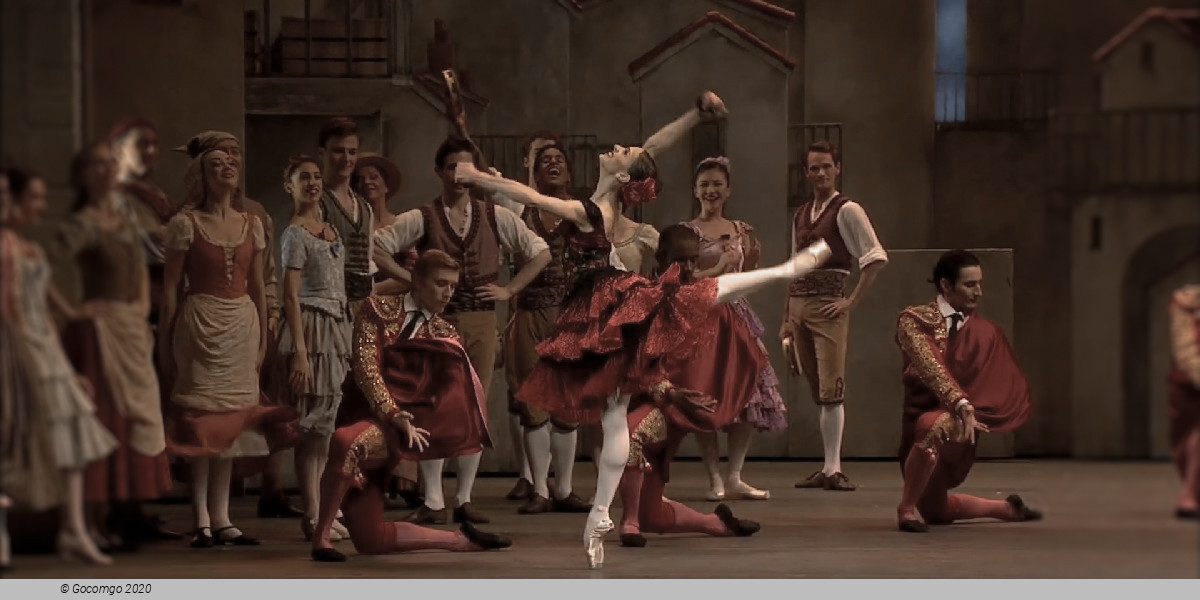
Georgian National Opera and Ballet Theater of Tbilisi tickets 12 July 2026 - Ballet Gala | GoComGo.com

Ballet Gala

Georgian National Opera and Ballet Theater of Tbilisi, Tbilisi, Georgia
All photos (5)
Select date and time
7 PM
From
US$ 56

E-tickets: Print at home or at the box office of the event if so specified. You will find more information in your booking confirmation email.

You can only select the category, and not the exact seats.
If you order 2 or 3 tickets: your seats will be next to each other.
If you order 4 or more tickets: your seats will be next to each other, or, if this is not possible, we will provide a combination of groups of seats (at least in pairs, for example 2+2 or 2+3).

Important Info
Type: Ballet
City: Tbilisi, Georgia
Starts at: 19:00
Duration: 40min

E-tickets: Print at home or at the box office of the event if so specified. You will find more information in your booking confirmation email.

You can only select the category, and not the exact seats.
If you order 2 or 3 tickets: your seats will be next to each other.
If you order 4 or more tickets: your seats will be next to each other, or, if this is not possible, we will provide a combination of groups of seats (at least in pairs, for example 2+2 or 2+3).

Cast
Performers
Ballet company: The Royal Ballet
Ballet company: State Ballet of Georgia
Orchestra: Tbilisi Symphony Orchestra
Creators
Composer: Leonard Bernstein
Composer: Alexander Glazunov
Composer: Ludwig Minkus
Choreographer: Alexei Ratmansky
Choreographer: Rudolf Nureyev
Choreography: Alexander Gorsky
Designer: Barry Kay
Staging: Christopher Carr
Librettist: Ivan Vsevolozhskiy
Light: John B. Read
Author: Lidiya Pashkova
Choreography: Marius Petipa
Librettist: Marius Petipa
Overview

Experience an extraordinary evening of dance as the State Ballet of Georgia presents a spectacular three-act Ballet Gala. Bringing together some of the world's finest classical and contemporary choreography, this curated showcase spans historic masterpieces and deeply personal modern works, offering a definitive journey through the heights of ballet artistry.

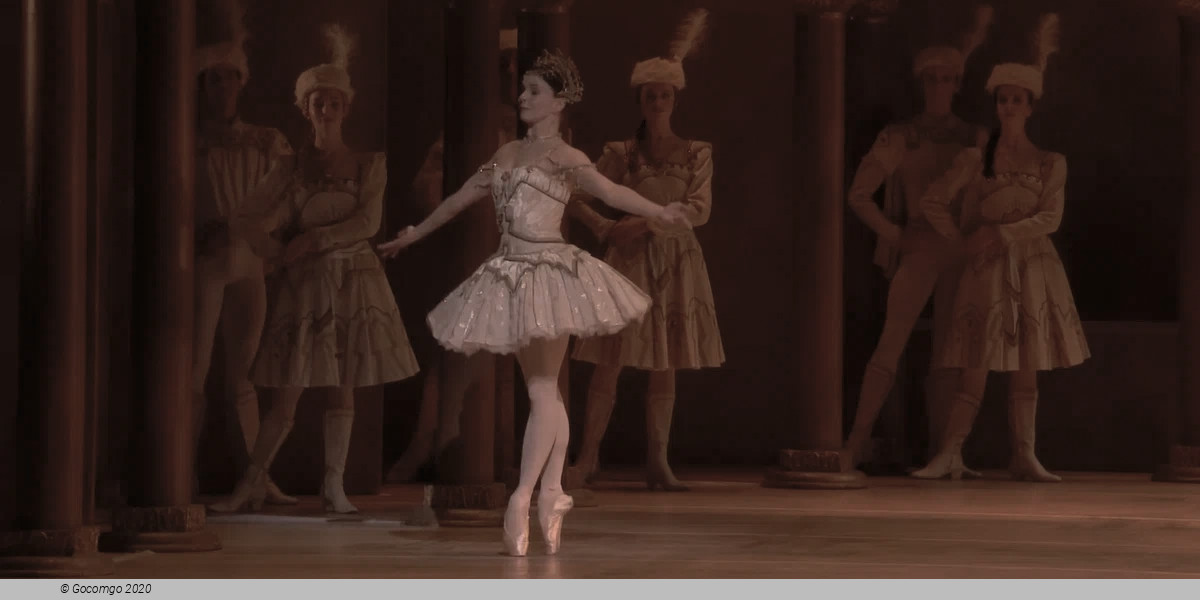
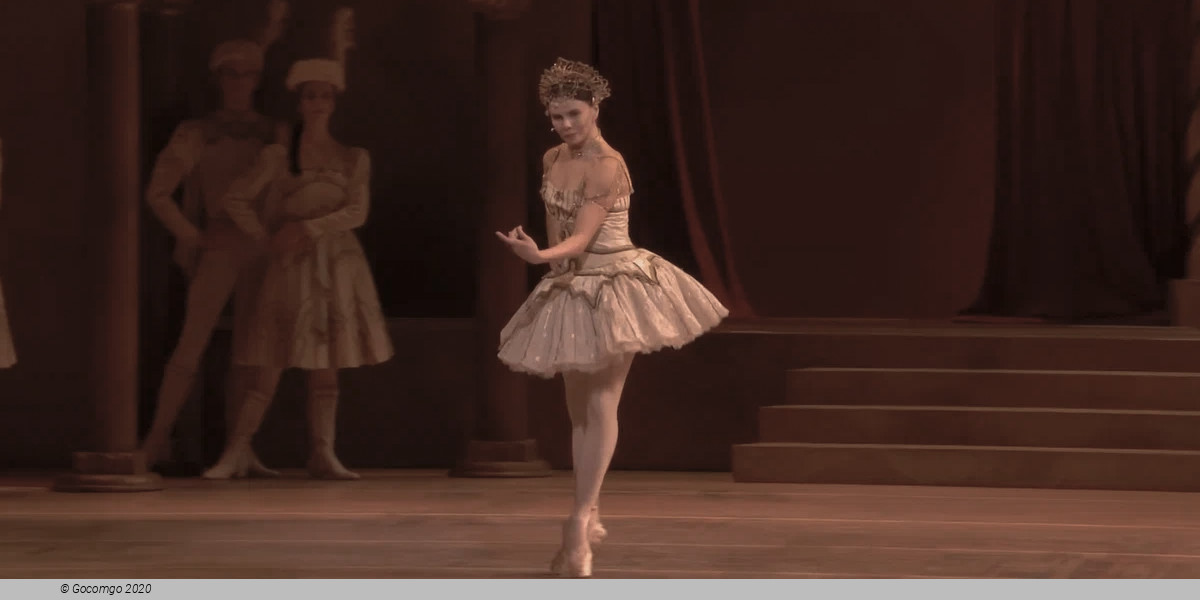
The final act of Petipa's grand ballet classic, which contains some of the greatest choreography in Russian ballet, was adapted by Rudolf Nureyev.

The full-length Raymonda has been revived many times throughout its performance history. One of the most noted production being staged Act III by Rudolf Nureyev for the Royal Ballet and the Norwegian Ballet (Oslo).


Set to the music of Leonard Bernstein, Alexei Ratmansky's Leah is a poignant ballet inspired by S. Ansky's The Dybbuk. Through powerful choreography and evocative storytelling, the work explores love, loss, and the spiritual forces that connect us beyond the boundaries of life and death.

Leah is a haunting and emotionally charged ballet by acclaimed choreographer Alexei Ratmansky, set to the evocative music of Leonard Bernstein. Inspired by S. Ansky's mystical drama The Dybbuk, the ballet explores themes of love, loss, spiritual devotion, and the enduring bonds that transcend the boundaries between life and death.

At the heart of the work is Leah, a young woman caught between earthly expectations and an all-consuming love that cannot be extinguished. As the story unfolds, Ratmansky weaves together elements of Jewish folklore, ritual, and psychological drama to create a compelling portrait of a woman confronting forces beyond her understanding and control. Through expressive choreography and powerful theatrical imagery, the ballet examines the tension between individual desire and communal obligation.

Bernstein's music provides a rich emotional landscape, shifting between lyrical tenderness, spiritual intensity, and dramatic urgency. Ratmansky's choreography responds with exceptional musical sensitivity, combining classical technique with deeply human storytelling. The result is a work of profound emotional resonance that speaks to universal experiences of grief, devotion, and the search for transcendence.

Originally created for the Bolshoi Theatre and associated with ballerina Nina Ananiashvili, Leah remains one of Ratmansky's most distinctive narrative ballets. Mysterious, passionate, and deeply moving, it offers audiences an unforgettable encounter with one of the great legends of Jewish cultural tradition.

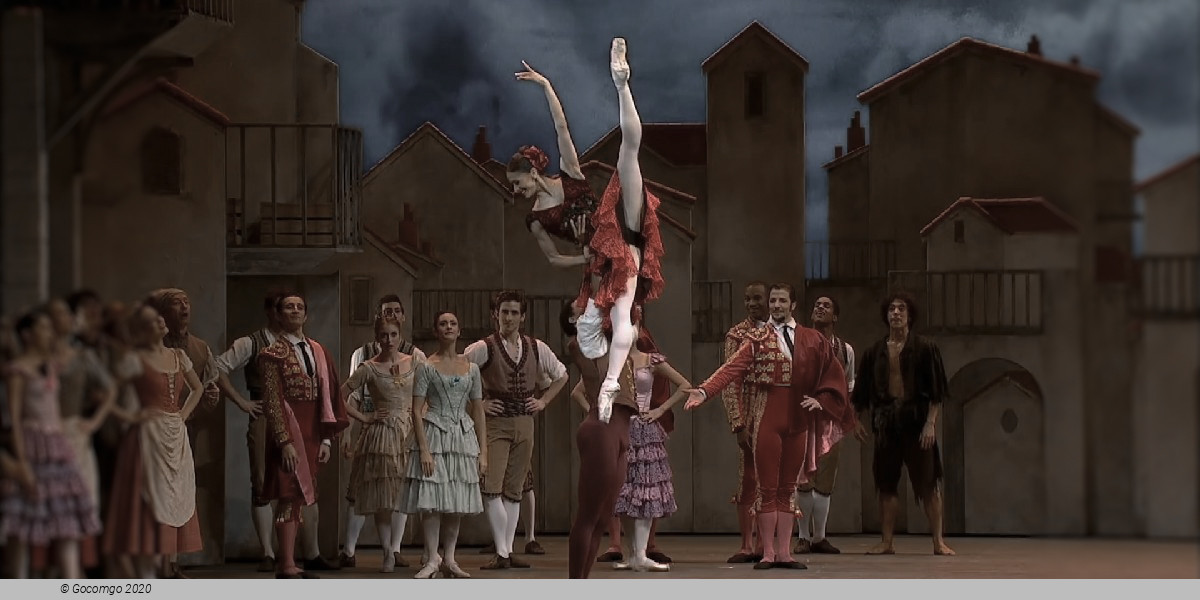
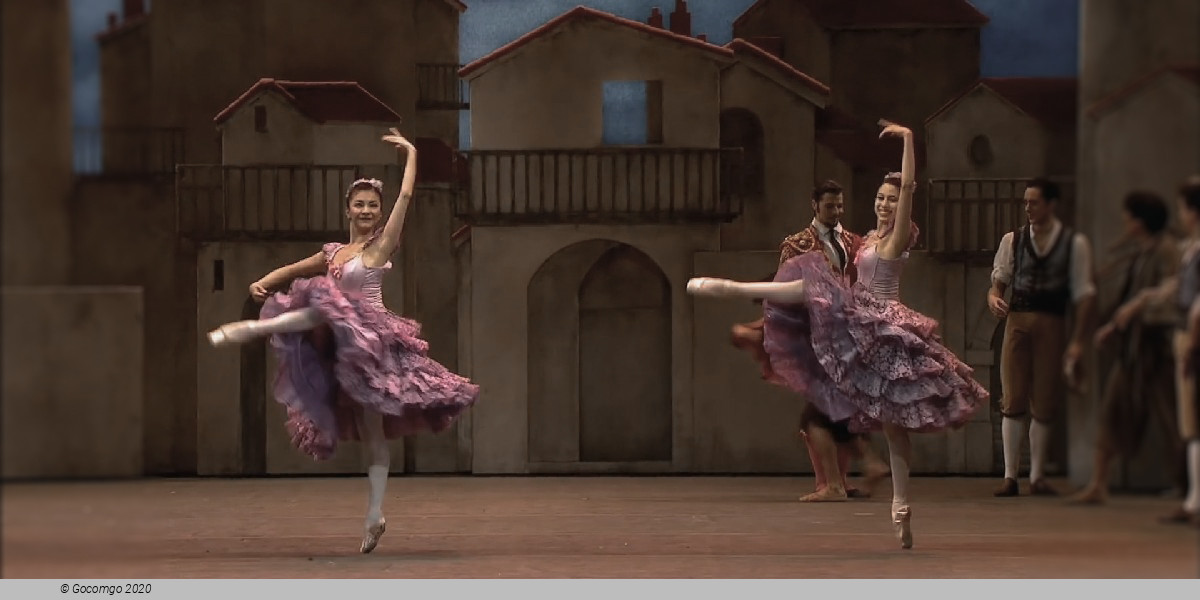
Drawn from the joyous final act of the beloved ballet Don Quixote, the Grand Divertissement is a dazzling celebration of classical virtuosity, Spanish flair, and festive spirit. Set to the vibrant score of Ludwig Minkus, this glittering showcase features a series of technically demanding variations and ensemble dances that have become some of the most treasured highlights in the ballet repertoire.

Originally inspired by Miguel de Cervantes' timeless novel, Don Quixote tells the story of the spirited Kitri and the charming Basilio, whose love triumphs over obstacles through wit, determination, and a touch of theatrical mischief. The Grand Divertissement captures the jubilant culmination of their journey, unfolding as a magnificent wedding celebration filled with color, elegance, and exuberance.

From the sparkling entrances of the corps de ballet to the breathtaking solos and the iconic grand pas de deux, the choreography demands exceptional artistry, precision, and charisma from its performers. Combining dazzling technique with infectious energy, the work embodies the brilliance and vitality of the great classical ballet tradition.

A perennial audience favorite, Don Quixote: Grand Divertissement offers a feast of spectacular dancing and irresistible charm, bringing the excitement and joy of one of ballet's most beloved masterpieces to the stage.

History
Premiere of this production: 19 January 1898, Imperial Mariinsky Theatre, Saint Petersburg, Russia

Raymonda  is a ballet in three acts, four scenes with an apotheosis, choreographed by Marius Petipa to music by Alexander Glazunov, his Opus 57. First presented by the Imperial Ballet at the Imperial Mariinsky Theatre on 19 January [O.S. 7 January] 1898 in Saint Petersburg, Russia. The ballet was created especially for the benefit performance of the Italian ballerina Pierina Legnani, who created the title role. Among the ballet's most celebrated passages is the Pas classique hongrois (a.k.a. Raymonda Pas de dix) from the third act, which is often performed independently.

Synopsis

Act III

The Wedding

Raymonda and Jean de Brienne are finally married and King Andrew II of Hungary gives the newly wedded couple his blessing. In his honour, everyone at court is dressed in Hungarian fashion and perform a range of Hungarian-style dances, ending in an Apotheosis where everyone comes together in a knightly tournament.

Act I
Scene 1: Raymonda's feast

At the castle of Doris, preparations are under way for the celebrations of the young countess Raymonda’s name day. Countess Sybille, her aunt, chides those who are present, including Raymonda's two friends Henrietta and Clémence, and the two troubadours Béranger and Bernard, for their idleness and their passion for dancing, telling them of the legendary White Lady, the protector of the castle, who warns the Doris household every time one of its members is in danger and casts punishment on those who do not fulfil their duties. The young people laugh at the countess’s superstitions and continue to celebrate. The seneschal of the Doris castle announces the arrival of a messenger, sent by Raymonda's fiancé, the noble crusader knight, Jean de Brienne, bearing a letter for his beloved. Raymonda rejoices when she reads that King Andrew II of Hungary, for whom Jean de Brienne has fought, is returning home in triumph and Jean de Brienne will arrive at the Doris castle the next day for their wedding. Suddenly, the celebrations are interrupted when the seneschal announces the arrival of an uninvited Saracen knight, Abderakhman and his entourage, who have stopped at the castle seeking shelter for the night. Captivated by Raymonda's beauty, Abderakhman falls in love with her at once and resolves to do anything to win her. The party lasts late into the night and, left alone and exhausted by the day, Raymonda lies down on a couch and falls asleep. As she sleeps, she begins to dream that the White Lady appears illuminated by the moonlight and, with an imperious gesture, orders Raymonda to follow her.

Scene 2: The Visions

The White Lady, without making a sound, advances along the terrace. Raymonda follows her in a state of unconsciousness. At a signal from the White Lady, the garden is wrapped in mist. A moment later, the mist vanishes and Jean de Brienne appears. Overjoyed, Raymonda runs into his arms and they are surrounded by glory, knights and celestial maidens. The garden is illuminated by a fantastic light and Raymonda expresses her joy to the White Lady, who interrupts her enthusiasm with a vision of what awaits her. Raymonda wants to return to her fiancé, but instead, she finds Abderakhman, who has taken Jean de Brienne's place. Abderakhman declares his passionate love for her, but Raymonda, though confused and upset, is quick to reject him. Imps and elves appear from everywhere surrounding Raymonda, who begs the White Lady to save her and Abderakhman tries to take Raymonda by force. Raymonda cries out and falls to the ground in a faint. The frightful vision disappears along with the White Lady.

Act II
The Courtyard of the Castle

The feast in honour of Jean de Brienne's arrival is taking place. Raymonda welcomes her guests, but cannot hide her uneasiness caused by Jean de Brienne’s delay. Abderakhman approaches her repeatedly and reveals his passion for her, but remembering the warnings of the White Lady, Raymonda rejects him with contempt. Abderakhman becomes even more insistent and realises the only way to possess Raymonda is by force. He calls his slaves to dance for her, after which he summons his cup bearers and they pour a potion into everyone’s cup, causing all the guests to become drunk. Seizing his chance, Abderakhman grabs Raymonda in an attempt to abduct her, but luckily Jean de Brienne arrives just in time, accompanied by King Andrew II and his knights. Jean de Brienne saves Raymonda from the hands of the Saracens and tries to seize Abderakhman. The King commands the two rivals to put an end to the matter in a duel, during which the White Lady appears on the castle tower. Abderakhman is dazed and dies, slain by Jean de Brienne's sword. Raymonda joyfully embraces her fiancé and the two reaffirm their love as the King joins their hands.

Act III
The Wedding

Raymonda and Jean de Brienne are finally married and King Andrew II of Hungary gives the newly wedded couple his blessing. In his honour, everyone at court is dressed in Hungarian fashion and perform a range of Hungarian-style dances, ending in an Apotheosis where everyone comes together in a knightly tournament.

Leah, the daughter of a respected member of the community, is promised in marriage according to tradition. Yet her heart belongs to another. When tragedy strikes and her beloved dies before they can be united, his spirit returns as a dybbuk — a restless soul seeking fulfillment of an unbreakable bond.

Possessed by the presence of the man she loves, Leah becomes the center of a desperate struggle between earthly authority and spiritual destiny. Religious leaders attempt to free her through ritual and exorcism, while Leah herself is torn between the expectations of the living and the irresistible pull of a love that transcends death.

In the end, the boundaries between the physical and spiritual worlds dissolve, and Leah's fate becomes inseparable from that of the soul that refuses to leave her. Through this mystical tale, the ballet reflects on devotion, sacrifice, and the enduring power of love.

Venue Info

Georgian National Opera and Ballet Theater of Tbilisi - Tbilisi
Location   Shota Rustaveli Ave, 25

The Georgian National Opera and Ballet Theater of Tbilisi, formerly known as the Tiflis Imperial Theater, is an opera house situated on Rustaveli Avenue in Tbilisi, Georgia. Founded in 1851, Tbilisi Opera is the main opera house of Georgia and one of the oldest such establishments in eastern Europe. Since 1896, the theatre has resided in an exotic neo-Moorish edifice originally constructed by Victor Johann Gottlieb Schröter, a prominent architect of Baltic German origin. Although definitively Oriental in its decorations and style, the building's layout, foyers and main hall are that of a typical European opera house.

The foundation of the Tiflis Imperial Opera was closely intertwined with the turbulent political processes in Georgia following the country's annexation by the Russian Empire in 1801. In the first half of the 19th century, Georgia remained a restless and poorly integrated part of the empire. Unhappy with Russian policies, in 1832 Georgian aristocracy hatched a plot against the local Russian authorities, which was discovered and resulted in multiple arrests and repressions in the subsequent years. Anxious to reconcile the Georgian opinion in view of these lingering difficulties, the new Viceroy of the Caucasus, Count Mikhail Vorontsov, implemented a number of cultural initiatives, one of which was the foundation of the opera. The declared purpose of its establishment was to benefit the "public well-being" but it also served an important political goal of fully integrating the local Georgian aristocracy into the Imperial social life, thereby distracting them from any further anti-Russian conspiracies.

To satisfy Georgians, Vorontsov went on to patronize Georgian-language theatre performances and did everything Saint Petersburg would permit to win over locals. These type of efforts were particularly relevant in light of the ongoing Shamil's rebellion in the North Caucasus, which prompted some Russians to see Georgian aristocrats as the only bulwark protecting Russia's southern imperial borders. Vorontsov's conciliatory efforts were not without controversy, as not all Russians were enthusiastic about non-Russian contributions to the city's cultural development; some objected to Georgian-language productions and had them moved to different days, rather than precede regular opera performances as it was done up to that point.

At Vorontsov's initiative, the original theatre site was chosen on Rustaveli Avenue in Erivansky Square, an area the administration correctly envisioned would be the centre of the expanding city. The land was given free of charge from the governor of the Tiflis Governorate, provided the theatre would belong to the city.

The foundations of The Tiflis Imperial Theater were laid down on 15 April 1847. Italian architect Giovanni Scudieri, who had come to Tiflis from Odessa, was hired to oversee the project. The construction was completed in 1851. The interior of the theatre was decorated by a Parisian designer, using coloured velvet, gold and silver details, and expensive silks. A massive chandelier weighing 1,218 kilograms (2,685 lb), unassembled in 12 large boxes, was shipped by a steamer from Marseille to Kulevi on the Black Sea coast. Buffalo pulled the chandelier more than 300 kilometres (190 mi) to Tiflis. Russian painter Grigory Gagarin created the artwork for the theatre and its first stage curtain. The second curtain was designed by Sergo Kobuladze in the 1950s. Vorontsov appointed writer Vladimir Sollogub as the theatre's first director.

Opening and the first performances

On 12 April 1851, the theatre held its grand opening, attended by the high society of Tiflis. As the theatre stage was not yet complete, the theatre instead held a masked ball and charity fundraiser for the Saint Nino Women's College.

Several months later the popular Parisian newspaper L'Illustration (issue 25 October 1851) printed a large article by Edmond de Bares with two pictures of the interior of the theatre. The author wrote, "This is the only theatre in the city, the interior of which is totally Moorish in style, and is doubtless one of the most elegant, beautiful and fascinating theatrical constructions, conceived by man."

In the spring of 1851, the theatre director invited an Italian opera troupe, which had been touring the Russian Empire under the conductorship of Francisco Asenjo Barbieri, to perform in Tiflis. The Italians travelled by carriage from Novocherkassk but became ill and exhausted as they made their way into the Caucasus Mountains. By the time they reached Stavropol in southern Russia, they had lost all patience and refused to continue to Tiflis. Finally, they resumed, pausing often to rest as they travelled via the Georgian Military Highway, before arriving in Tiflis on 9 October 1851.

One month later, the first theatrical season officially opened in Tiflis with Lucia di Lammermoor by Gaetano Donizetti. After the spectacle, which had great success, the hosts led Barbieri and the company to the left bank of the Kura River for a public feast, where people celebrated on boats for the whole night.

The Italians performed 12 different opera performances over the course of three months. As a consequence, the orchestra was enriched with new instruments and musical scores. Foreign orchestra performers came to Tiflis and some settled there.

Fire and reconstruction

On 11 October 1874, a fire began before a performance of Vincenzo Bellini's Norma. Though the fire brigade was across the street, the firefighters did not respond at first and did not bring ladders when they did, leading to outrage and accusations of the fire being intentional. The theatre was completely destroyed, including the rich musical library, costumes, scenery, props and all of Gagarin's paintings.

Plans were made to rebuild the opera house. The theatre decided to continue its season from the "Summer Theater", and returned on 27 December with its production of Norma.

The city held a contest for a new architectural design. Viktor Schröter, an architect of German origin from Saint Petersburg, submitted the winning design. Construction of the new theatre took years to get underway. There were repeated delays throughout the project, with the design not officially approved by Governor Grand Duke Michael Nikolaevich until 1880. Even after the construction began, it would sometimes come to a complete halt.

The theatre finally reopened in 1896.

20th century

In 1937, the theatre was renamed in honour of Zacharia Paliashvili, one of Georgia's national composers. Unrest and destabilization in Georgia in the 1990s affected the Tbilisi opera theatre, as it did many others in the country. The government could not provide sufficient resources for theatre to function: this prevented the creation of new scenery or costumes, the recruitment of artists, and maintenance of the already vulnerable building. Following the Rose Revolution, however, the newly elected government improved the situation in opera as part of its cultural reforms.

Important Info
Type: Ballet
City: Tbilisi, Georgia
Starts at: 19:00
Duration: 40min
Top of page