In the early 1990s, Furth and Sondheim revised the libretto, cutting and altering dialogue that had become dated and rewriting the end to act one. This synopsis is based on the revised libretto.
Act I
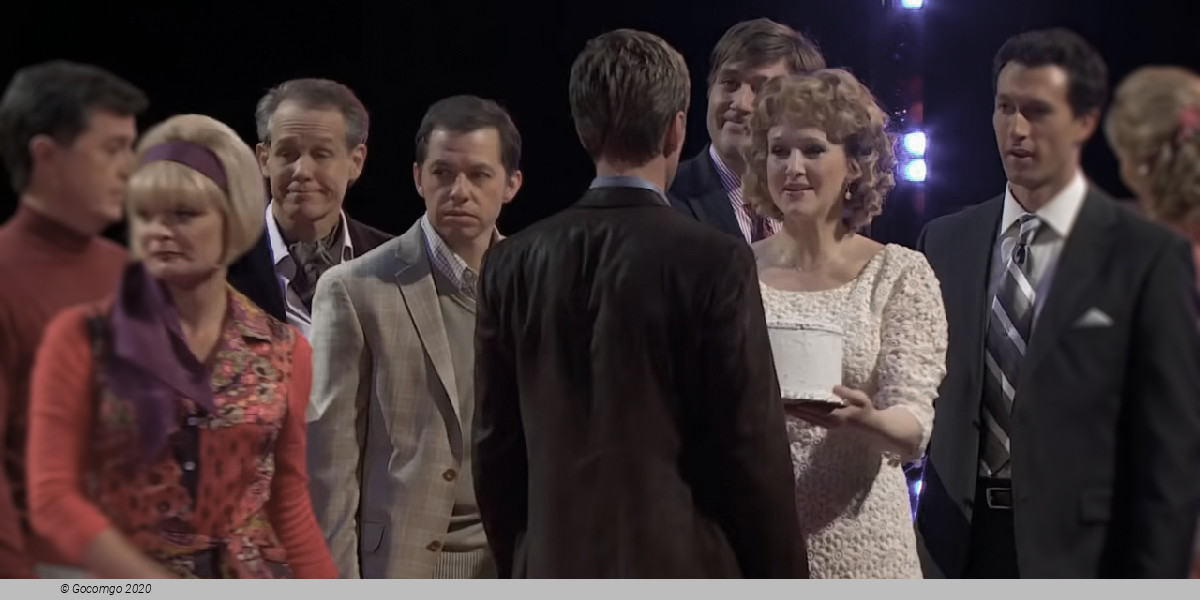
Robert is a well-liked single man living in New York City, whose friends are all married or engaged couples: Joanne and Larry, Peter and Susan, Harry and Sarah, David and Jenny, and Paul and Amy. It is Robert's 35th birthday, and the couples have gathered to throw him a surprise party. When Robert fails to blow out any candles on his birthday cake, the couples promise him that his birthday wish will still come true, though he has wished for nothing, since his friends are all that he needs ("Company"). What follows is a series of disconnected vignettes in no apparent chronological order, each featuring Robert during a visit with one of the couples or alone with a girlfriend.
The first of these features Robert visiting Sarah, a foodie supposedly now dieting, and her husband Harry, an alcoholic supposedly now on the wagon. Sarah and Harry taunt each other on their vices, escalating toward karate-like fighting and thrashing that may or may not be playful. The caustic Joanne, the oldest, most cynical, and most-oft divorced of Robert's friends, comments sarcastically to the audience that it is "The Little Things You Do Together" that make a marriage work. Harry then explains, and the other married men concur, that a person is always "Sorry-Grateful" about getting married, and that marriage changes both everything and nothing about the way they live.
Robert is next with Peter and Susan, on their apartment terrace. Peter is Ivy League, and Susan is a Southern belle; the two seem to be a perfect couple, yet they surprise Robert with the news of their upcoming divorce. At the home of the uptight Jenny and chic David, Robert has brought along some marijuana that they share. The couple turns to grilling Robert on why he has not yet gotten married. Robert claims he is not against the notion, but three women he is currently fooling around with—Kathy, Marta, and April—appear and proceed, Andrews Sisters-style, to chastise Robert for his reluctance to being committed ("You Could Drive a Person Crazy"). David tries to tell Robert privately that Jenny did not like the marijuana, after she asks for another joint. "I married a square", he reminds his wife, demanding she bring him food.
All of Robert's male friends are deeply envious about his commitment-free status, and each has found someone they find perfect for Robert ("Have I Got a Girl for You"), but Robert is waiting for someone who merges the best features of all his married female friends ("Someone Is Waiting"). Robert meets his three girlfriends in a small park on three separate occasions, as Marta sings of the city: crowded, dirty, uncaring, yet somehow wonderful ("Another Hundred People"). Robert first gets to know April, a slow-witted airline flight attendant. Robert then spends time with Kathy; they had dated previously and both admit that they had each secretly considered marrying the other. They laugh at this coincidence before Robert suddenly considers the idea seriously; however, Kathy reveals that she is leaving for Cape Cod with a new fiancé. Finally, Robert meets with Marta; she loves New York, and babbles on about topics as diverse as true sophistication, the difference between uptown and downtown New York, and how she can always tell a New Yorker by his or her ass. Robert is left stunned.
The scene turns to the day of Amy and Paul's wedding; they have lived together for years, but are only now getting married. Amy is in an overwhelming state of panic, and as the upbeat Paul harmonizes rapturously, Amy patters an impressive list of reasons why she is not "Getting Married Today". Robert, the best man, and Paul watch as she complains and self-destructs over every petty thing she can possibly think of, and finally, just calls off the wedding explicitly. Paul dejectedly storms out into the rain and Robert tries to comfort Amy, but emotionally winds up offering an impromptu proposal to her himself ("What Did I Just Do?"). His words jolt Amy back into reality, and with the parting words "you need to marry some body, not just some body", she runs out after Paul, at last ready to marry him. The setting returns to the scene of the birthday party, where Robert is given his cake and tries to blow out the candles again. He wishes for something this time, someone to "Marry Me a Little".
Act II
The birthday party scene is reset, and Robert goes to blow out his candles. This time, he gets them about half out, and the rest have to help him. The couples share their views on Robert with each other, comments which range from complimentary to unflattering, as Robert reflects on being the fifth wheel ("Side By Side By Side"), soon followed by the up-tempo paean to Robert's role as the perfect friend ("What Would We Do Without You?"). In a dance break in the middle of the number, or as in the case of the 2006 Broadway revival in a musical solo section, each man, in turn, does a dance step, or as in the revival, plays a solo on his instrument, answered by his wife. Then, Robert likewise does a step, or as in the case of the 2006 Broadway revival, plays two bad notes on a kazoo, but he has no partner to answer it.
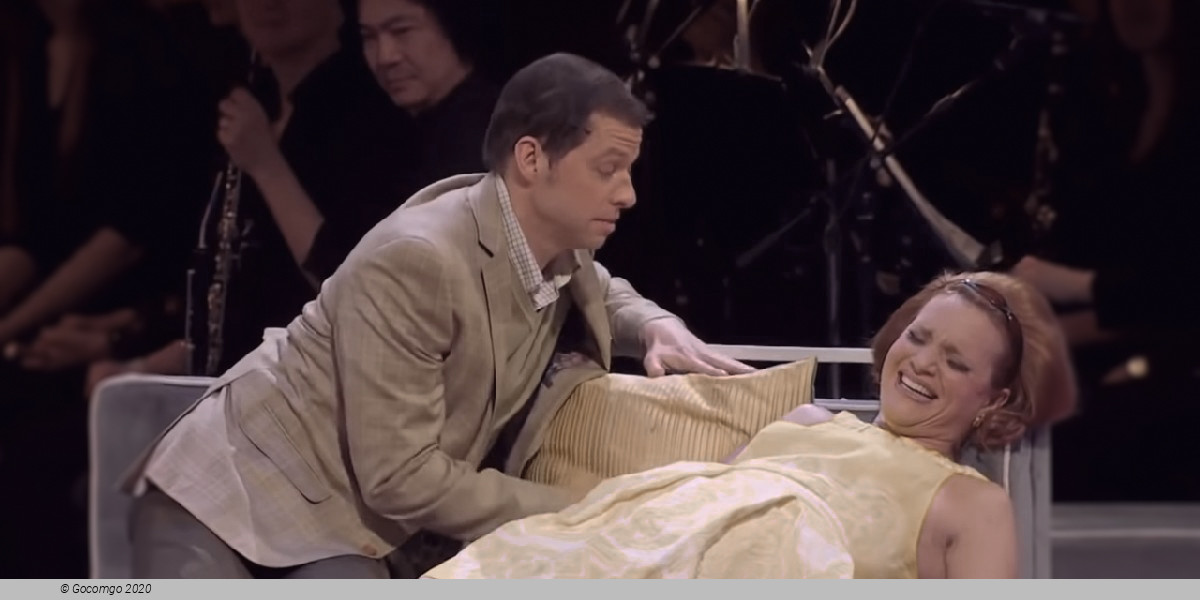
Robert brings April to his apartment for a nightcap, after a date. She marvels ad nauseam at how homey his place is, and he casually leads her to the bed, sitting next to her on it and working on getting her into it. She earnestly tells him of an experience from her past, involving the death of a butterfly; he counters with a bizarre remembrance of his own, obviously fabricated, and designed to put her in the mood to succumb to seduction. Meanwhile, the married women worry about Robert's single and lonesome status (as they see it), and particularly about the unsuitable qualities they find in the women he does date, asking, "Isn't she a little bit, well--Dumb? Tacky? Vulgar? Old? Tall? Aggressive? Where is she from?...She's tall enough to be your mother...." ("Poor Baby"). When the inevitable sex happens, we hear Robert and April's thoughts, interspersed with music that expresses and mirrors their increasing excitement. This music often, as in the original Broadway production, accompanies a solo dance by Kathy, conveying the emotions and dynamics of making love; it has also been staged as a pas de deux, a group number, or been cut altogether, in various productions ("Tick-Tock"). The next morning, April rises early, to report for duty aboard a flight to "Barcelona". Robert tries to get her to stay, at first wholeheartedly, parrying her apologetic protestations that she cannot, with playful begging and insistence. As April continues to reluctantly resist his entreaties, and sleepiness retakes him, Bobby seems to lose conviction, agreeing that she should go; that change apparently gets to her, and she joyfully declares that she will stay, after all. This takes Robert by surprise, and his astonished, plaintive "Oh, God!" is suffused not with triumph, nor even ambivalence, but with evident fear and regret.
In the following scene, Robert takes Marta to visit Peter and Susan, on their terrace. Apparently, Peter flew to Mexico to get the divorce, but he phoned Susan and she joined him there for a vacation. Bizarrely, they are still living together, claiming they have too many responsibilities to actually leave each other's lives, and that their relationship has actually been strengthened by the divorce. Susan takes Marta inside to make lunch, and Peter asks Robert if he has ever had a homosexual experience. They both admit they have, and Peter hints at the possibility that Robert and he could have such an encounter, but Robert uncomfortably laughs the conversation off as a joke.
Joanne and Larry take Robert out to a nightclub, where Larry dances, and Joanne and Robert sit watching, getting thoroughly drunk. She blames Robert for always being an outsider, only watching life rather than living it, and also persists in berating Larry. She raises her glass in a mocking toast to "The Ladies Who Lunch", passing judgment on various types of rich, middle-aged women wasting their lives away with mostly meaningless activities. Her harshest criticism is reserved for those, like herself, who "just watch", and she concludes with the observation that all these ladies are bound together by a terror that comes with the knowledge that "everybody dies". Larry returns from the dance floor, taking Joanne's drunken rant without complaint and explains to Robert that he still loves her dearly. When Larry leaves to pay the check, Joanne bluntly invites Robert to begin an affair with her, assuring him that she will "take care of him". The reply this elicits from him, "But who will I take care of?" seems to surprise him, and to strike Joanne as a profound breakthrough on his part, "...a door opening that's been stuck for a long time". Robert insists it is not, that he has studied and been open to marriages and commitment, but questions "What do you get?" Upon Larry's return, Robert asks again, angrily, "What do you get?" Joanne declares, with some satisfaction, "I just did someone a big favor". Larry and she go home, leaving Robert lost in frustrated contemplation.
The couples' recurrent musical motif begins yet again, with all of them focused anew on their "Bobby Bubbi", "Robert darling", or "Bobby baby", and again inviting him to "Drop by anytime...". Rather than the cheery, indulgent tone he had responded with in earlier scenes, Robert suddenly, desperately, shouts "STOP!" In their stunned silence, he challenges them with quiet intensity: "What do you get?" The music to "Being Alive" begins, and he sings, openly enumerating the many traps and dangers he perceives in marriage; speaking their disagreements, his friends counter his ideas, one by one, encouraging him to dare to try for love and commitment. Finally, Bobby's words change, expressing a desire, increasing in urgency, for loving intimacy, even with all its problems, and the wish to meet someone with whom to face the challenge of "Being Alive". The opening party resets a final time; Robert's friends have waited two hours, with still no sign of him. At last, they all prepare to leave, expressing a new hopefulness about their absent friend's chances for loving fulfillment, and wishing him a happy birthday, wherever he may be, as they leave. Robert then appears alone, smiles, and blows out his candles.




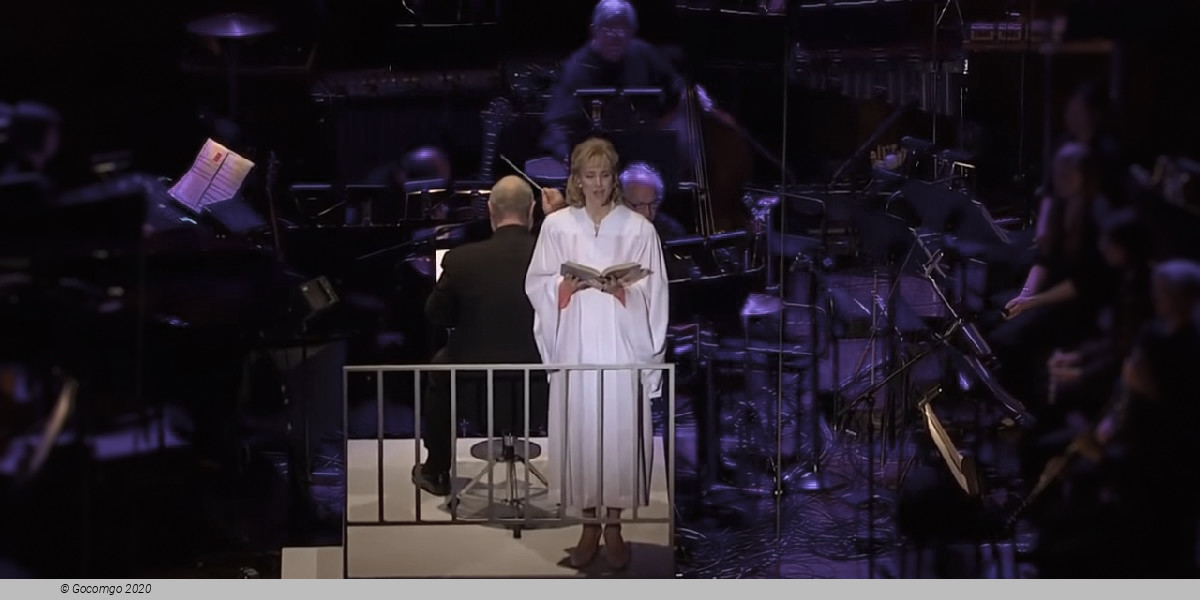
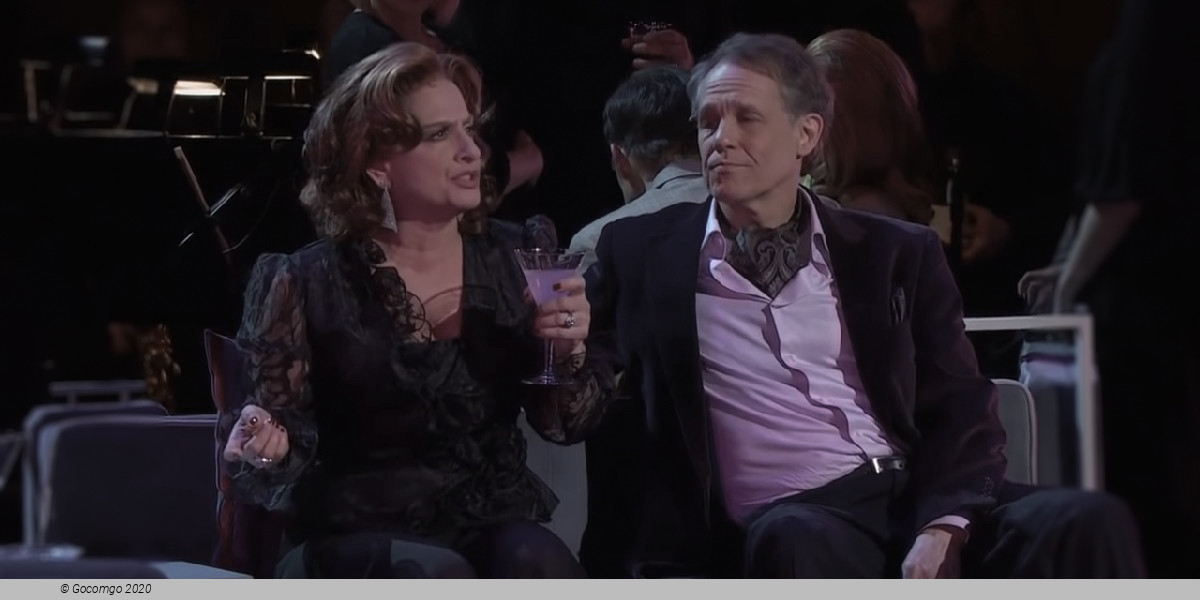
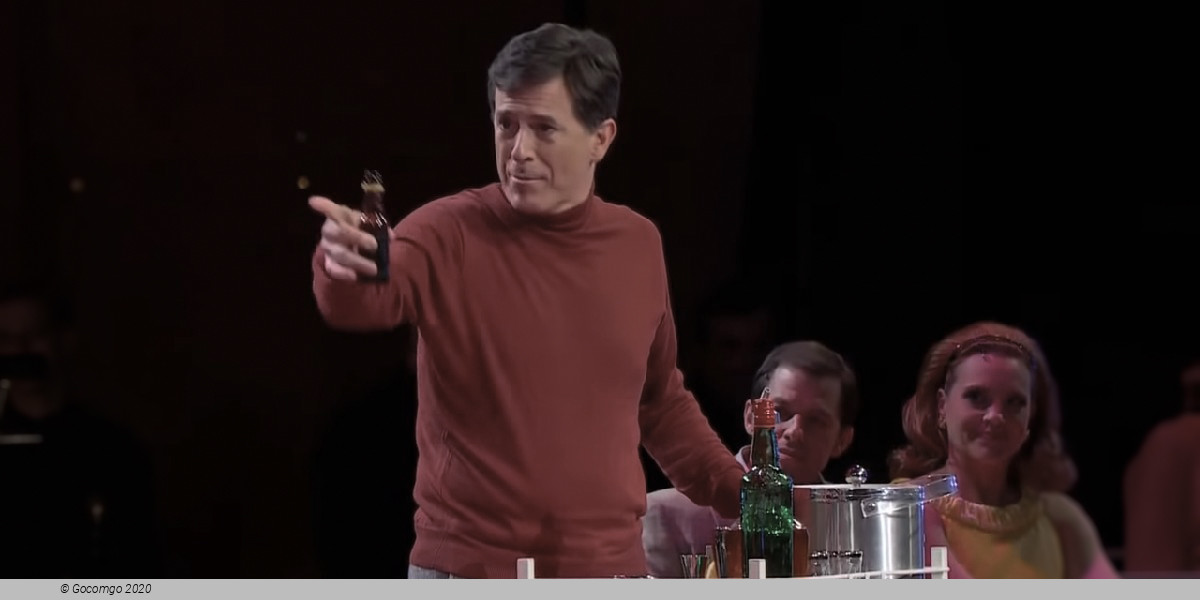
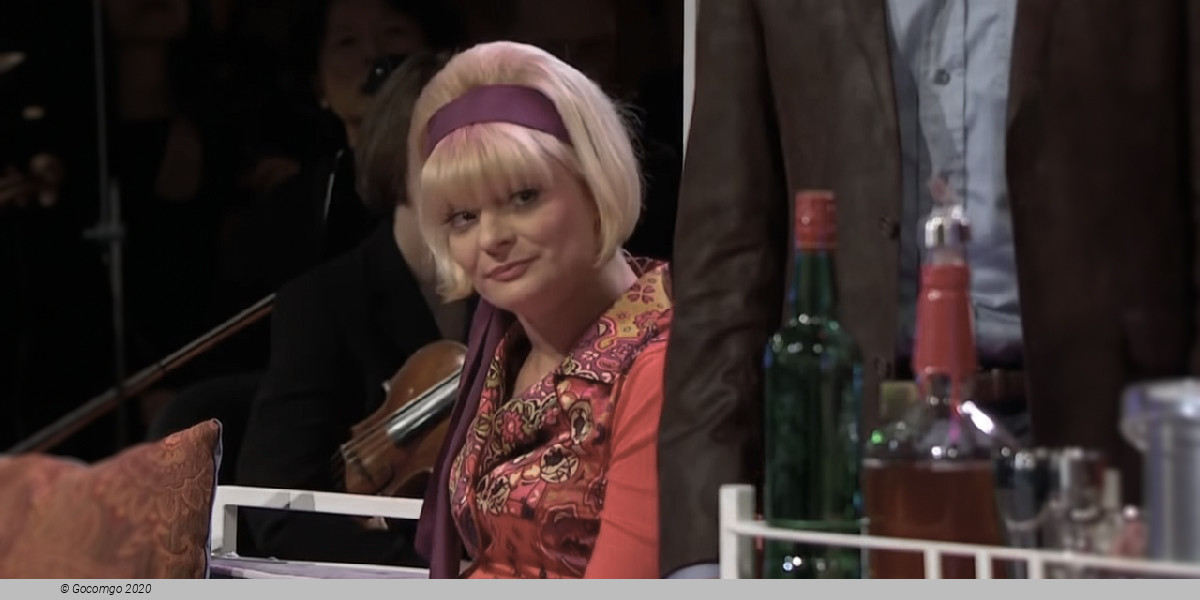
 Grand Théâtre de Genève: Boulevard du Théâtre 11; Bâtiment des Forces Motrices (BFM): Place des Volontaires 2