Grand Théâtre de Genève tickets 12 February 2027 - Il viaggio a Reims | GoComGo.com

Il viaggio a Reims

Grand Théâtre de Genève, Bâtiment des Forces Motrices (BFM), Geneva, Switzerland
All photos (5)
Select date and time
7:30 PM
From
US$ 119

E-tickets: Print at home or at the box office of the event if so specified. You will find more information in your booking confirmation email.

You can only select the category, and not the exact seats.
If you order 2 or 3 tickets: your seats will be next to each other.
If you order 4 or more tickets: your seats will be next to each other, or, if this is not possible, we will provide a combination of groups of seats (at least in pairs, for example 2+2 or 2+3).

Important Info
Type: Opera
City: Geneva, Switzerland
Starts at: 19:30
Intervals: 1
Duration: 2h 45min
Sung in: Italian
Titles in: French,English

E-tickets: Print at home or at the box office of the event if so specified. You will find more information in your booking confirmation email.

You can only select the category, and not the exact seats.
If you order 2 or 3 tickets: your seats will be next to each other.
If you order 4 or more tickets: your seats will be next to each other, or, if this is not possible, we will provide a combination of groups of seats (at least in pairs, for example 2+2 or 2+3).

Overview

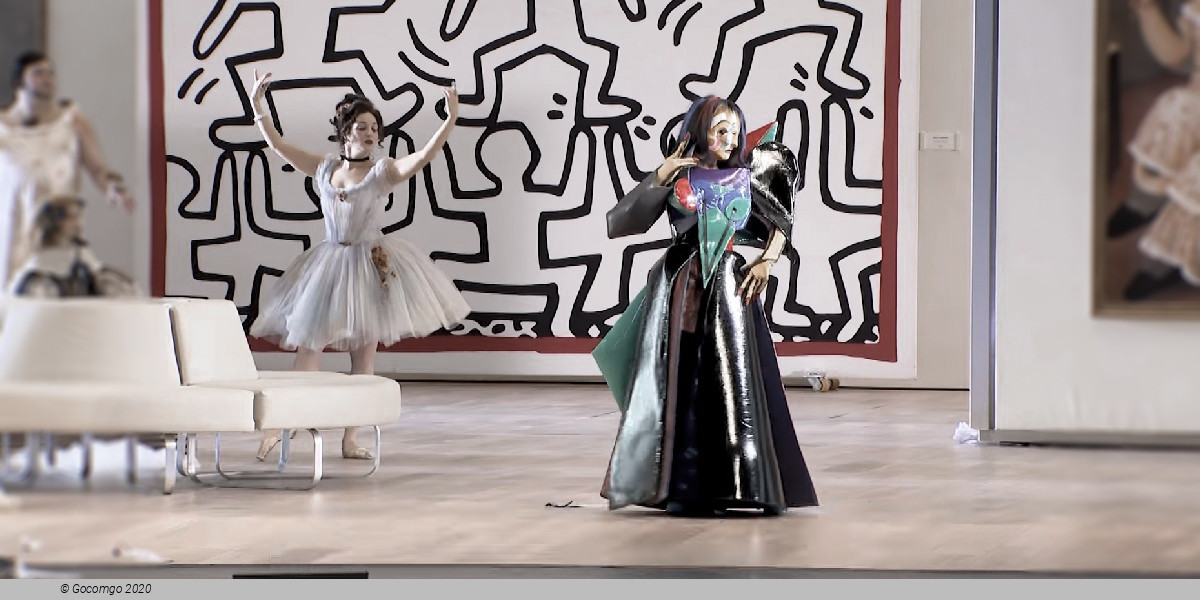
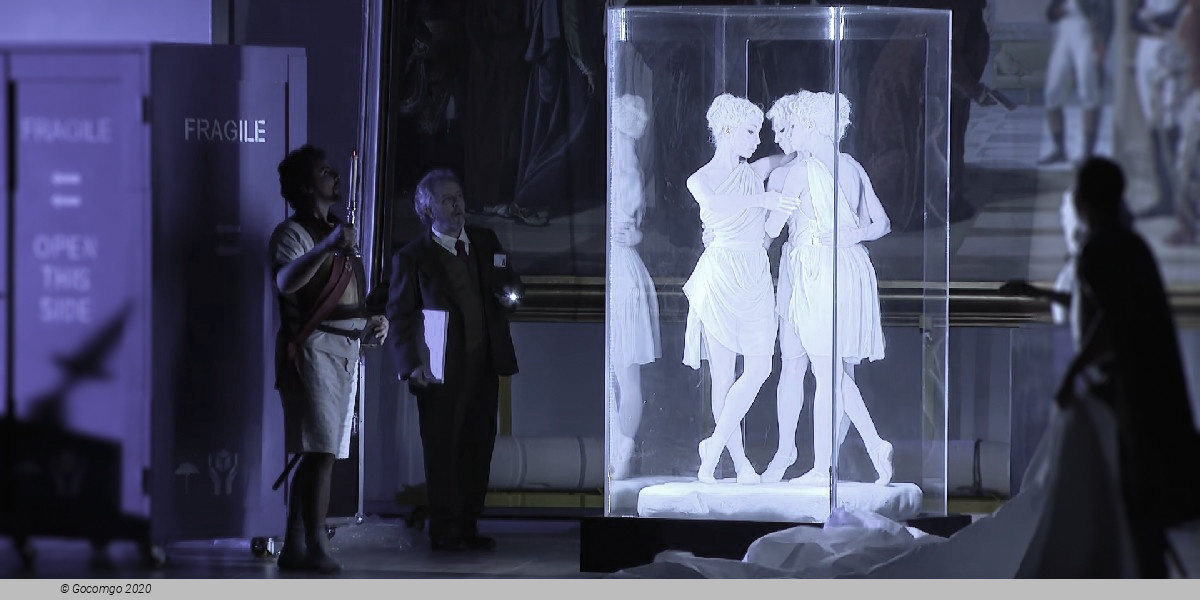
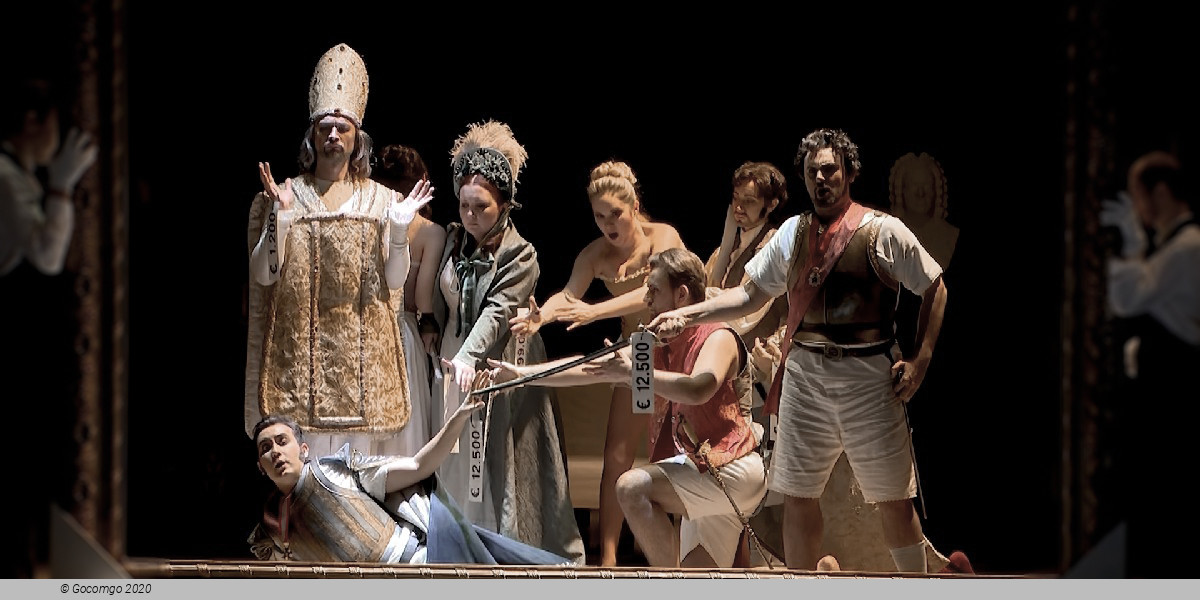
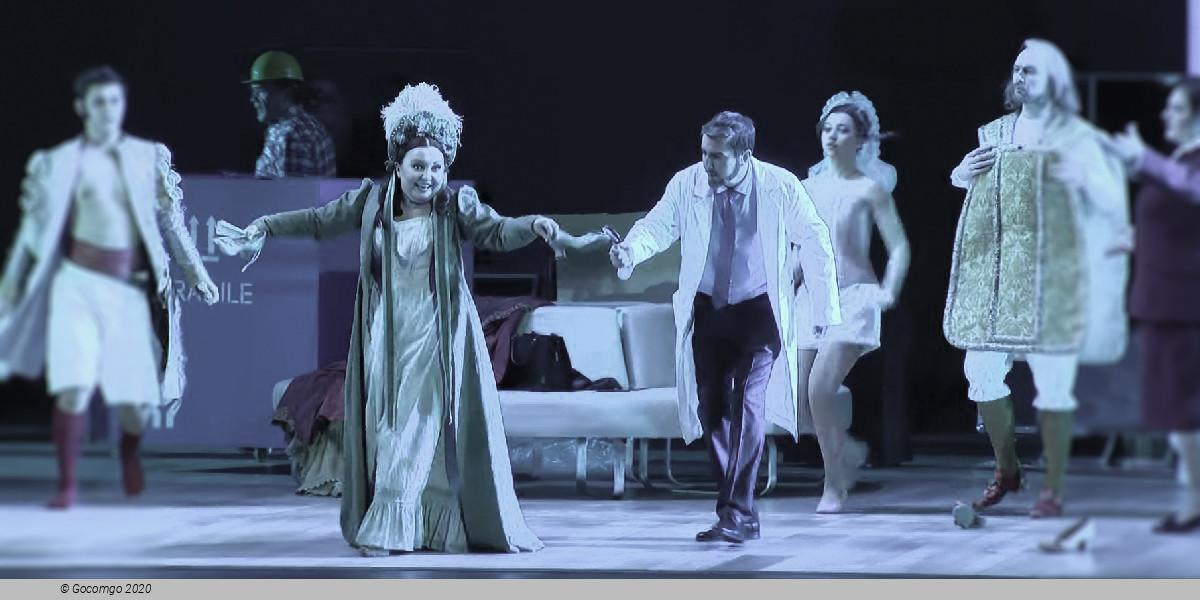
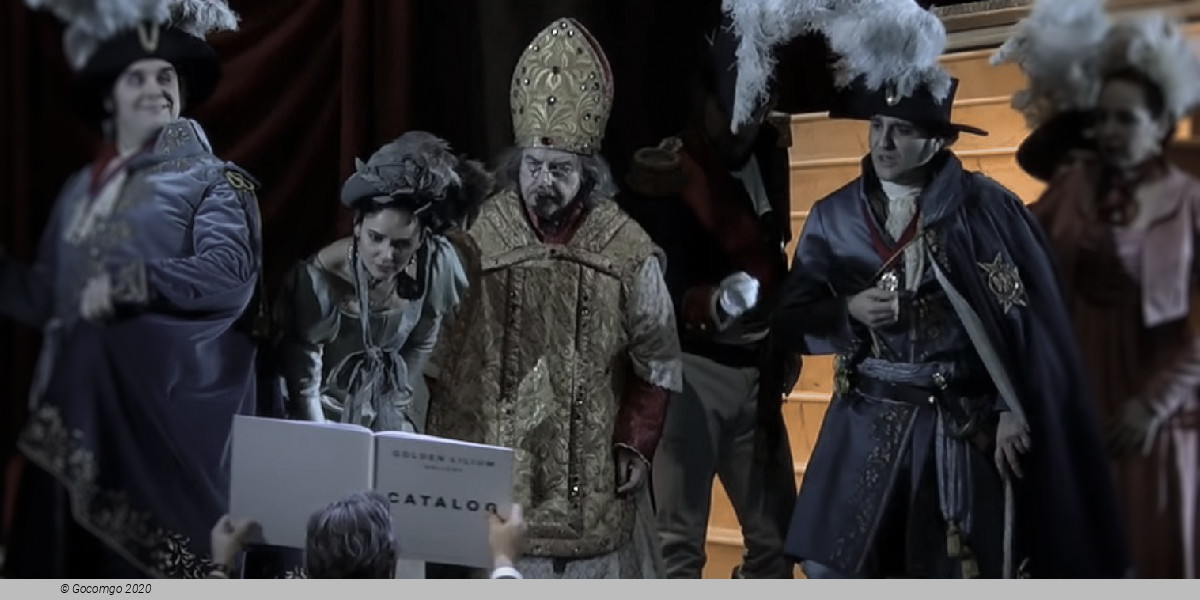
Commissioned from Rossini for the coronation of Charles X, “The Journey to Reims” follows the misadventures of a glamorous group of European aristocrats on their way to the coronation ceremony. A one-off, this virtuoso opera is also a masterpiece of wit, playing with all the codes of opera and the circumstances of its composition. With conductor Jader Bignamini, Laurent Pelly embraces this ‘meta-operatic’ dimension in a production that takes the Victoria Hall as its stage.

There's a buzz of excitement at the Lys d'Or! On the eve of Charles X's coronation in Reims, prominent figures from European high society have stopped at this elegant hotel in the most fashionable spa town of the Restoration period. The wait for their departure naturally lends itself to romantic intrigues. While the Countess of Folleville laments the loss of her wardrobe, her lover, the Chevalier Belfiore, lusts after the poet Corinna, secretly loved by Lord Sydney, while Admiral Don Alvaro and the Count of Libenkov vie for the affections of the Marchioness Melibea, under the watchful eyes of Baron Trombonok and Don Profondo. An unforeseen event, however, will force this merry, cosmopolitan group to improvise a rather unusual ceremony on the spot in honor of the new king.

Barely installed as director of the Théâtre-Italien in Paris, Rossini drew inspiration from a novel by Madame de Staël to create this comic opera, presented during the official celebrations of Charles X's coronation in June 1825. A work of circumstance, tailored for the greatest soloists of the time, Il viaggio a Reims was no longer performed after the coronation festivities, and Rossini reused passages from it in Le Comte Ory . The reconstruction of its score in the 1980s offers a new perspective, that of an opera about opera, brilliantly playing with the conventions of the lyric art. With the collaboration of conductor Jader Bignamini, Laurent Pelly embraces this "metallyric" dimension, staging this virtuoso masterpiece in the gilded halls of Victoria Hall – a venue with a royal name for a work and cast that are equally regal.

New production of the Grand Théâtre de Genève

History
Premiere of this production: 19 June 1825, The Théâtre Italien, Paris

Il viaggio a Reims, ossia L'albergo del giglio d'oro (The Journey to Reims, or The Hotel of the Golden Fleur-de-lis) is an operatic dramma giocoso, originally performed in three acts, by Gioachino Rossini to an Italian libretto by Luigi Balocchi, based in part on Corinne ou l'Italie by Germaine de Staël.

Synopsis

Act 1
Scene 1: Introduction

The housekeeper Maddalena is unhappy with the preparations made by the servants for the arrival of the important people who are travelling to Reims for the coronation of Charles X of France. ("Presto, presto ... su, corraggio") The servants repudiate her assertions. The hotel's doctor, Don Prudenzio, announces that, because of the impending arrivals, the normal business of the spa will be suspended. The spa attendants rejoice and depart. He checks with Antonio that his instructions about the necessary meals for the visitors have been followed.

Madame Cortese, the proprietress of the hotel, appears. She regrets that she will be unable to attend the coronation ("Di vaghi raggi adorno"), but is keen to show off the hotel to the visitors in the hope that they will return some day to take the waters. She particularly requests that everyone should be enthusiastic about each of the travellers' specific interests. Everyone agrees, and she is left alone.

Scene 2: The Countess of Folleville's arrival

The Countess calls for her maid, Modestina, and Madame Cortese goes to search for her. Modestina appears, and the Countess, worried that her clothes have not yet arrived, asks why there has been no reply to a letter that she had sent. Modestina had entrusted the letter to the Countess's cousin, Don Luigino, who immediately arrives to say that the stagecoach which he had hired to carry the boxes had overturned on the way. The Countess faints and Don Luigino calls for help.

Maddalena, Antonio, Don Prudenzio and the servants arrive, together with Baron Trombonok. Don Prudenzio and the Baron argue about how to resuscitate the Countess, but she recovers sufficiently to lament the loss of her garments. ("Partir, o ciel! desio") However, when Modestina appears with a large box containing a beautiful Paris bonnet, she rejoices that it, at least, has been saved from the accident. ("Che miro! Ah! Quel sorpresa!") Everyone is amused by this sudden turn of events, and all except Antonio and the Baron depart.

Scene 3: Sextet

After agreeing with the Baron the arrangements for party's departure in the evening, Antonio leaves. The Baron cannot help laughing at the Countess's sudden recovery and the insanity of the world in general. He is joined by Don Profondo, Don Alvaro, the Marquise Melibea, Count Libenskof. It is clear that Don Alvaro and the Count are rivals for the Marquise's affections. They are all waiting for the new horses which will be necessary for the continuation of the journey, but Madame Cortese, who now arrives, says that she cannot understand why they have not arrived. Alvaro and Libenskof quarrel, the ladies are alarmed, and the Baron and Don Profondo are amused by the idiocy of lovers. ("Non pavento alcun periglio")

A harp prelude is heard, and the poetess Corinna sings offstage of brotherly love, to everyone's delight. ("Arpa gentil")

Act 2
Scene 1: Lord Sidney's aria

Madame Cortese is still waiting for the return of her servant Gelsomino with news of the horses. Lord Sidney approaches, and she muses on his unwillingness to approach Corinna who, she is sure, reciprocates his love.

Sidney, alone, laments his situation. ("Invan strappar dal core") His mood lifts when girls singing in praise of Corinna enter with flowers, but then he is disturbed by Don Profondo's strange requests for information about the location of antiquities, and departs.

Scene 2: Corinna's duet with the Chevalier Belfiore

Profondo is joined by Corinna and her companion Delia. Corinna asks when the party is to depart, and he and Delia leave Corinna alone while they go to see whether the horses have arrived.

Corinna is joined by the Chevalier, who declares his love. ("Nel suo divin sembiante") She is taken aback and repudiates him. The Chevalier retreats, hoping to try again later, and Corinna returns to her room.

Scene 3: Don Profondo's aria

Don Profondo, who has seen the Chevalier with Corinna, reflects that the Countess will scratch the Chevalier's eyes out if she finds out what he has been doing. He then turns his attention to enumerating the effects of his fellow-travellers (as requested by the Baron), noting that their possessions tend to sum up their each of their nations' characteristics. ("Medaglie incomparabili") He looks forward to the impending departure.

The Countess appears, looking for the Chevalier. She is not pleased when Don Profondo tells her that he has been having a poetry lesson. Don Alvaro and Count Libenskof join them, asking about the horses, and the Baron, too, appears, looking woebegone. What has happened? The rest of the travellers arrive, and the Baron produces the courier Zefirino, who is obliged to report that there are no horses to be had anywhere, not even for ready money. There will be no journey to Reims for the coronation!

Scene 4: Grand concerted ensemble for 14 voices

Everyone is horrified. ("Ah! A tal colpo inaspettato") But Madame Cortese appears with a letter from Paris. Don Profondo reads it out: the King will return from Reims in a few days and there will be great festivities. Anyone who was unable to get to Reims will be consoled by an even finer spectacle. The Countess steps forward to invite the entire company to her home in Paris for the celebrations. A stagecoach will convey them there on the following day, but in the meantime a grand banquet, with invitations to the public, will be held at the Golden Lily, paid for with the money that would have been spent at the coronation. Any money left over will be given to the poor.

Act 3
Scene 1: Duet for the Count and the Marquise

When everyone else has left, the Baron tries to reconcile the jealous Count with the Marquise, who has been seen with Don Alvaro. When he departs, the misunderstanding is resolved and harmony is restored. ("D'alma celeste, oh Dio!")

They depart, and the scene changes to the hotel's garden. Antonio and Maddalena ensure that all is prepared for the banquet. The Baron has engaged a travelling company to provide entertainment with singing and dancing.

Scene 2: Finale

After the opening chorus ("L'allegria è un sommo bene"), the Baron introduces a series of short national songs sung by each of the travellers, some of them set to well-known tunes, and ending with, first, a French anthem (the Marche Henri IV) for the Duchesse de Berry, then a rustic Tyrolean duet for Madame Cortese and Don Profondo, and finally an improvised solo for Corinna on one of a number of mostly French subjects suggested by each traveller and drawn from an urn. The winning subject turns out, appropriately enough, to be "Charles X, King of France". The opera ends with dances and a chorus.

Venue Info

Grand Théâtre de Genève - Geneva
Location   Grand Théâtre de Genève: Boulevard du Théâtre 11; Bâtiment des Forces Motrices (BFM): Place des Volontaires 2

The main stage is temporarily unavailable. From January 1, 2026, until the end of June 2027, the historic theater building will be closed for renovations. The stage equipment will be completely replaced and the orchestra pit acoustics will be modernized. During this period, all opera and ballet productions will be held at the Bâtiment des Forces Motrices (BFM) cultural center, Place des Volontaires 2.

Grand Théâtre de Genève is the main opera house of Geneva. The venue is a majestic building, towering over Place Neuve, officially opened in 1876, partly destroyed by fire in 1951 and reopened in 1962, after extensive refurbishments, which houses the largest stage in Switzerland. As an institution, it is the largest production and host theatre in French-speaking Switzerland, featuring opera and dance performances, recitals, concerts and, occasionally, theatre.

Built in 1879, the Grand Théâtre de Genève is the largest artistic stage in Switzerland and home to the Geneva opera house and the Geneva Ballet Company. Every season, it features nine performance runs of opera, three of dance and a broad range of recitals and cultural, youth-friendly or festive events to develop its audience and honour its public service mission. Gutted by fire in 1951, the building and the front of house retain its original Beaux-Arts style whereas the wood-panelled auditorium, completed in 1961, seats 1500 and boasts a spectacular metalwork security curtain that extends into the ceiling, where 1200 glass stars shine as the house lights. The Grand Théâtre de Genève employs its own opera chorus of 40 singers and has an artistic partnership with the Orchestre de la Suisse Romande for its opera season. Since 2019, Aviel Cahn is the general manager of the Grand Théâtre de Genève and since 2022, the Geneva Ballet Company is directed by Sidi Larbi Cherkaoui. The Grand Théâtre de Genève was named Opera Company of the Year in 2020 (Opernwelt).

Designed by Jacques­Elisée Goss on a design by Henri Sylvestre, the Grand Théâtre de Genève opened in 1879, in a Beaux­Arts and Second Empire­style building, with a horseshoe­shaped auditorium. In 1951, there was a terrible fire, during a rehearsal of Wagner’s Walkyrie: the auditorium, stage area and roofs were destroyed. It reopened in 1962 after a reconstruction project led by Charles Schopfer, Marco Zavelani­Rossi and Jacek Stryjenski (the latter having designed the huge ceiling inspired by the Milky Way called Alto). The foyers and adjoining areas were then hurriedly restored. The stage area was modernized in 1997 and the stage decks in 2006. Between 2016 and 2019, the Grand Théâtre was closed for renovations and its activities were held at the Opéra des Nations. The Place de Neuve site underwent an architectural renovation (new rehearsal rooms and changing rooms in the basement, meeting room in the attic area), also involving security (upgrading of comfort and fire standards) and heritage items. The foyers and hallways were refurbished, tapestries repaired, damaged marble and faux marble surfaces were restored and the parquet floors recreated. Several modern improvements were introduced, such as the box office reception desks and a Milky Way­type lighting introduced in the Upper Circle and Basement bars. The building reopened on 12 February 2019 with Wagner’s Das Rheingold and an Open Doors day followed by a Mapping on the place de Neuve on 23 March 2019 gathering 14000 people.

In 1962, the Grand Théâtre de Genève acquired a permanent ballet company, made up of 22 artists, offering two original choreographic creations per season. Collaborating with choreographers of international renown, over the course of its performances, it has built a worldwide reputation for itself. Today, whilst the premieres are always held in Geneva, the Geneva Ballet frequently performs outside Switzerland (France, Italy, United States, Russia, Australia, China, Brazil, South Africa…). From the 22–23 Season, the Ballet is under the management of Sidi Larbi Cherkaoui.

Founded in 1962, the Choir of the Grand Théâtre de Genève is an ensemble of forty-two professional singers from a wide variety of nationalities.
An essential part of the artistic department of the Grand Théâtre de Genève, the Choir takes part in the productions that contribute to the institution’s renowned reputation. For certain specific productions requiring a larger ensemble, additional professional singers join the group, allowing for flexibility and adaptability according to the program’s demands.
Thanks to the quality of its performances and its dedication, the Choir of the Grand Théâtre is not only recognized for its level of excellence by the press, but its performances are also praised by directors, conductors, and audiences alike. In 2023, the Choir was once again nominated for the Opera Awards.

Important Info
Type: Opera
City: Geneva, Switzerland
Starts at: 19:30
Intervals: 1
Duration: 2h 45min
Sung in: Italian
Titles in: French,English
Top of page