Director András Almási-Tóth’s The Fairy Queen is a paraphrase of Purcell’s semi-opera. The unknown librettist of three centuries ago used Shakespeare’s A Midsummer Night’s Dream merely as a starting point, and created a new “companion work”, with different text and incorporating different characters. Continuing down this same path, András Almási-Tóth reconceived the piece, creating a new work with a different story, and introducing yet new characters.
Prologue
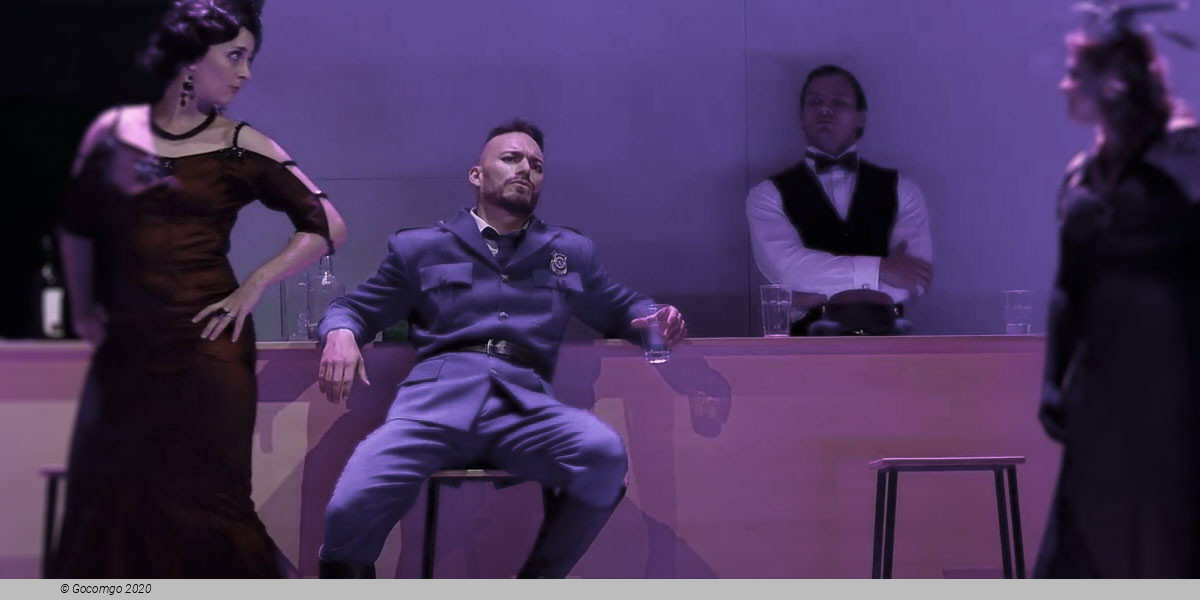
The Lover stands at the center of the bar with a pistol in his hand. He’s just shot the Fairy Queen, “F”. The woman’s dead body lies on the floor. The bar is empty.
Part One
F and her lover, the Stranger, decide to run away from the city together (Come, come, come, let us leave the town). In the bar, F gets into a nasty fight with her drunk husband, the Poet. Soon he starts to flirt with two strange girls (Fill up the bowl then).
Later out on the street, F sees her husband with the girls. She hurries into the bar.
I. The Lover
THE BAR
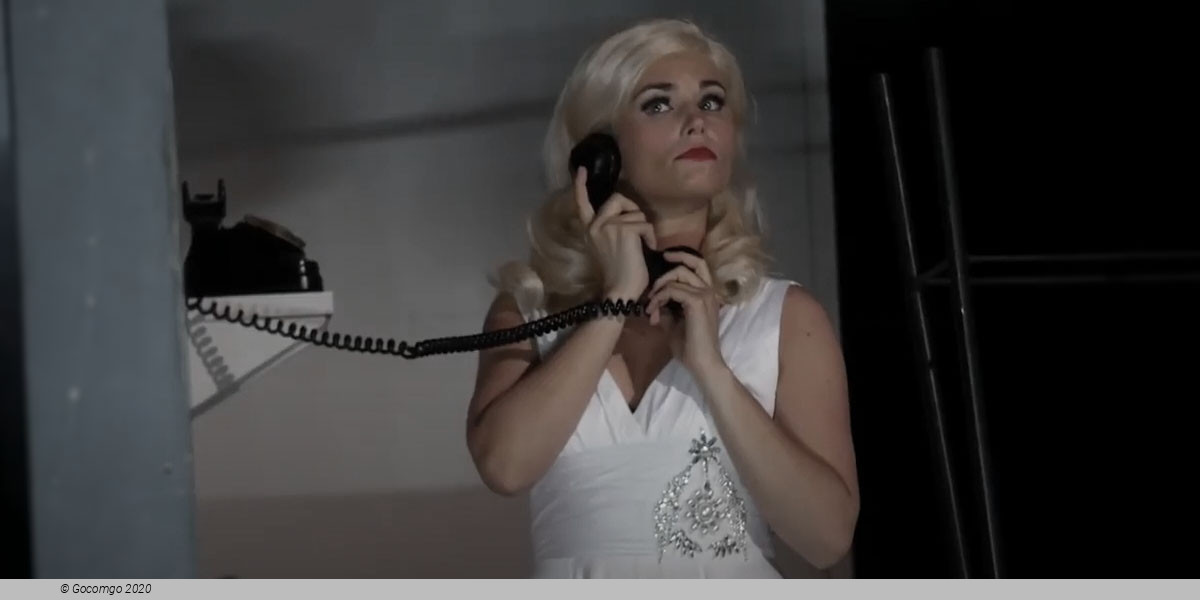
An elegant-looking man is sitting in the bar (Come all ye songsters of the sky). The man settles down next to F. They strike up a conversation. He is the Lover. F thinks this dashing man might be the one to rescue her from her mixed-up life. F takes the Lover home.
The two girls are with a group hanging out on the street having fun. They see the couple kissing in the window (Now join your warbling voices all). Soon F is jittery. She can’t shake the bad feeling that some disaster she can’t fix might be around the corner. She’d better run (See, even Night herself is here). Her man tries to calm her and pull her out of her funk (One charming Night). F lets her senses take over. Nobody has ever beenas nice with her as the Lover, she thinks. Finally she’s being treated like a woman: she feels pretty and attractive.
II. The Stranger
The Poet comes home at night with the whole crowd. The Lover is forced to make his escape (Hush, no more, be silent all).
MURDER
The Stranger helps F murder the Poet. They make it look like a robbery: the Stranger ties up F and gives her a few token smacks. F is terrified: she recognizes that the Stranger is showing his bona fide self. But now they’ve committed the crime together, and he considers her his own property (Thrice happy lovers, may you be). Police show up at the scene. They free F.
THE BAR
F is in bad shape. She races off to the bar to find the Lover. Now they can finally be together. Everybody is watching them. This unsettles her (If Love’s a sweet passion, why does it torment). The Stranger realizes he’s been played. The two carefree girls flirt with the Stranger (Ye gentle spirits of the Air, appear). Now blotto, the Stranger has a vision of a masculine-looking femme fatale who can never be his (Now the maids and the men are making of hay). F tries to sober up the Stranger so she can talk with him. He answers her with a slap on the face. F breaks up with the Stranger. She tells him that she already has somebody in her life. She asks for her apartment key back (When I have often heard young maids complaining).
For a couple of moments F feels happy.
The Chinese man shows up (Thus the gloomy world). He knows everything about the murder and has blackmail on his mind. F races off. The Chinese man dreams of a better world, where people can live a pure life (Thus happy and free). He organizes a party and plies everyone with drugs and drinks until they’re in a stupor.
The Lover and the Stranger meet on the street. Both of them figure out that they’re just playthings for F (A thousand, thousand ways we’ll find). F is left alone. What’s she going to do now?
Part Two
III. The “Chinese” Man
The story gets more dreamlike. F is perched on the border of reality and fantasy, escaping from herself.
FUNERAL
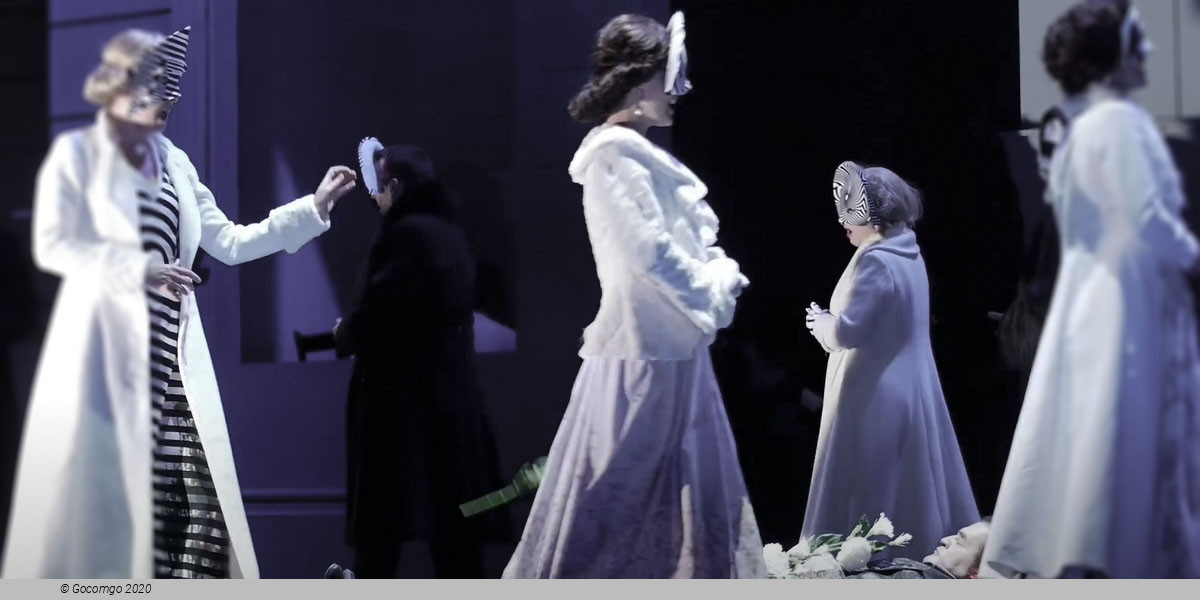
F is hallucinating that she’s celebrating the Poet’s birthday. The mysterious Chinese man is there too (Now the night is chas’d away).
The two girls bring the Poet back to life. Undead, there to haunt F (Let the fifes and the clarions, and shrill trumpets sound). The Chinese man takes F away with him.
The despairing Lover realizes he’s lost the woman. In the bar, the Chinese man gives F a choice: she can be his, or she can go to hell. If she chooses him, then she’ll have wealth, money and glamour (When a cruel long winter has frozen the Earth).
The Stranger watches F’s transformation and puts a bullet in his head (Hail! Great parent of us all).
F is left alone in a rush of memories from when she was young, when everything was still full of hope and expectation (Thus the ever grateful Spring).The Lover appears. His devotion is starting to get ridiculous (Here’s the Summer, sprightly, gay).
The Chinese man gets back at F for not falling in love with him, even after he gave her all those diamonds (See, see my many colour’d fields). The Poet is an undead spook: even from beyond the grave, he wants F (Now Winter comes slowly, pale, meager, and old).
F is at the centre of the glittering crowd. She wants to run away (Hail! Great parent of us all).
IV. The Fairy Queen
THE BAR
F comes back to the bar. This time nobody’s there. She tries to seduce the bartenders, whom she sees as animals.
F faces herself and her defeats. She roams the empty city and the places from her previous life. She’s lost Paradise forever (O let me weep, for ever weep).
The Chinese man gives the Lover a gun.
V. The Boy
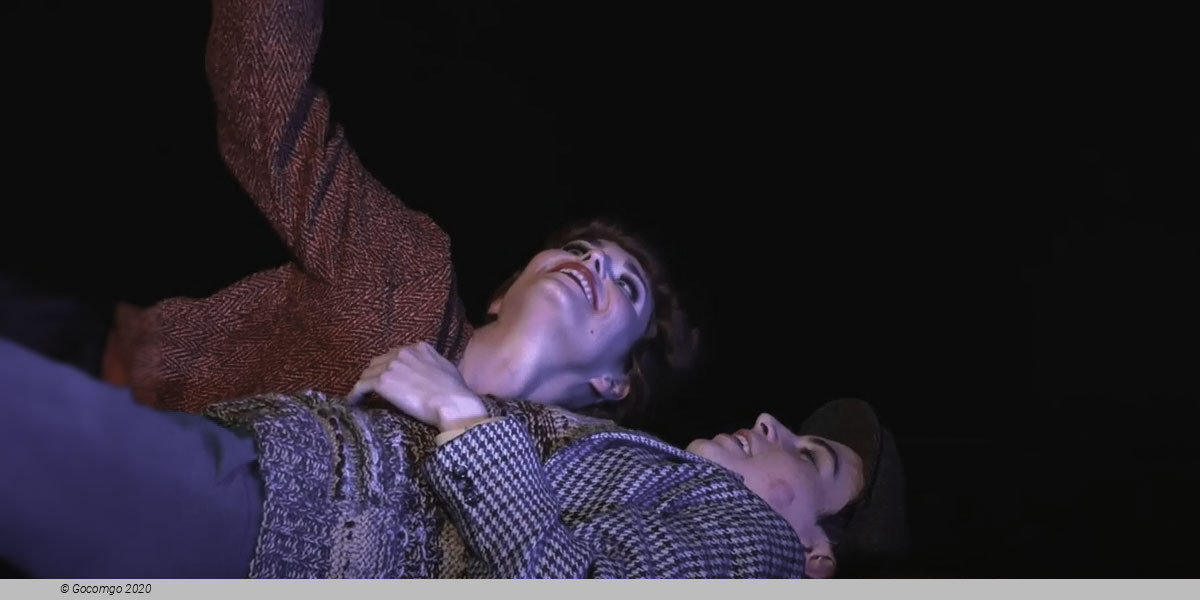
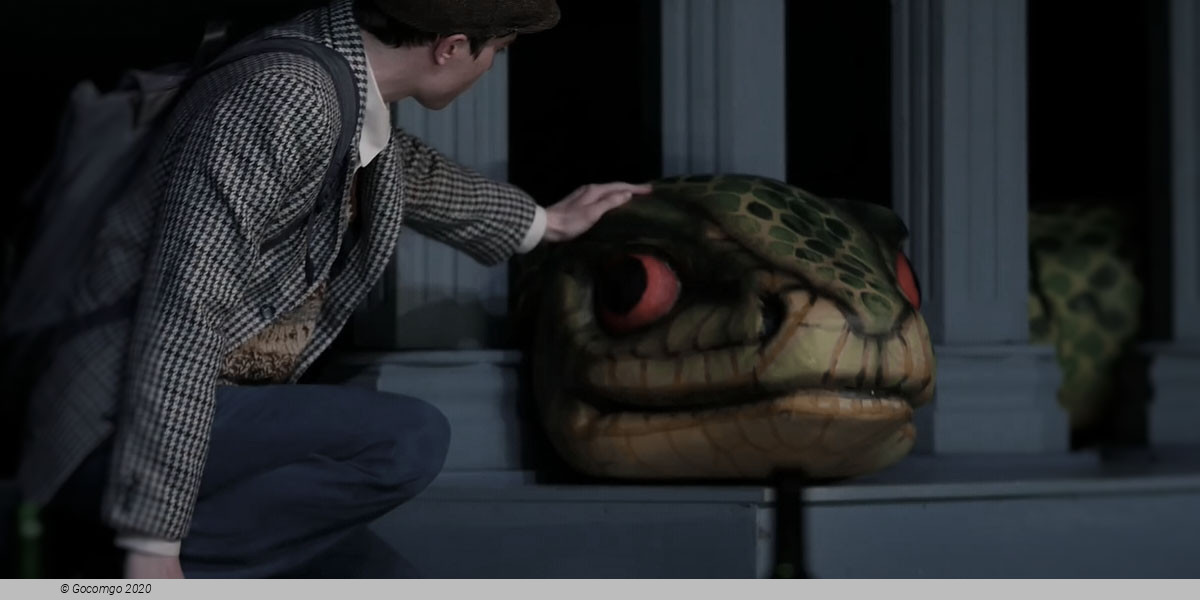
F finds herself next to a young boy. His innocence touches her (Yes, Daphne, in your looks I find). F plays with the Boy like she did when she was a child. But it’s all just a fantasy.
VI. The Past
THE BAR
F goes back to the bar. Haunted by the past.
It’s five years earlier: F is getting to know the ageing Poet. The Stranger appears.
F leaves with the Poet (See, see, I obey). Six months later, though, their marriage has gone down the drain. The Poet takes up drinking, and the two girls appear in his life (Turn then thine eyes upon those glories there).
F can’t stand the alcoholic Poet. She seeks refuge with the Stranger. F leaves with the Stranger (My torch, indeed, will from such brightness shine).
VII. Nothing Left
THE BAR
Back in the present. The bar is emptying out. F tries to restore her relationship with the Lover. He shoots her (They shall be as happy as they’re fair).Soon the bar fills up again. As if nothing had happened. It's morning.
For the plot of the play see A Midsummer Night's Dream. Only a synopsis of scenes provided with music is given here.
Act 1
The first scene set to music occurs after Titania has left Oberon, following an argument over the ownership of a little Indian boy. Two of her fairies sing of the delights of the countryside ("Come, come, come, come, let us leave the town"). A drunken, stuttering poet enters, singing "Fill up the bowl". The stuttering has led many to believe the scene is based on the habits of Thomas d'Urfey. However, it may also be poking fun at Elkanah Settle, who stuttered as well and was long thought to be the librettist, due to an error in his 1910 biography.
The fairies mock the drunken poet and drive him away. With its quick repartee and its broadly "realistic" portrayal of the poor victim, the Masque of the Drunken Poet is the closest episode in Purcell's London stage works to full-fledged opera as the Italians knew it.
Act 2
It begins after Oberon has ordered Puck to anoint the eyes of Demetrius with the love-juice. Titania and her fairies merrily revel ("Come all ye songsters of the sky"), and Night ("See, even Night"), Mystery ("Mystery's song"), Secrecy ("One charming night") and Sleep ("Hush, no more, be silent all") lull them asleep and leave them to pleasant dreams.
Act 3
Titania has fallen in love with Bottom (now equipped with his ass' head), much to Oberon's gratification. A Nymph sings of the pleasures and torments of love ("If love's a sweet passion") and after several dances, Titania and Bottom are entertained by the foolish, loving banter of two haymakers, Corydon and Mopsa.
Act 4
It begins after Titania has been freed from her enchantment, commencing with a brief divertissement to celebrate Oberon's birthday ("Now the Night", and the abovementioned "Let the fifes and the clarions"), but for the most part it is a masque of the god Phoebus ("When the cruel winter") and the Four Seasons (Spring; "Thus, the ever grateful spring", Summer; "Here's the Summer", Autumn; "See my many coloured fields", and Winter; "Now Winter comes slowly").
Act 5
After Theseus has been told of the lovers' adventures in the wood, it begins with the goddess Juno singing an epithalamium, "Thrice happy lovers", followed by a woman who sings the well-known "The Plaint" ("O let me weep"). A Chinese man and woman enter singing several songs about the joys of their world. ("Thus, the gloomy world", "Thus happy and free" and "Yes, Xansi"). Two other Chinese women summon Hymen, who sings in praise of married bliss, thus uniting the wedding theme of A Midsummer Night's Dream, with the celebration of William and Mary's anniversary.





 Andrássy út 22