




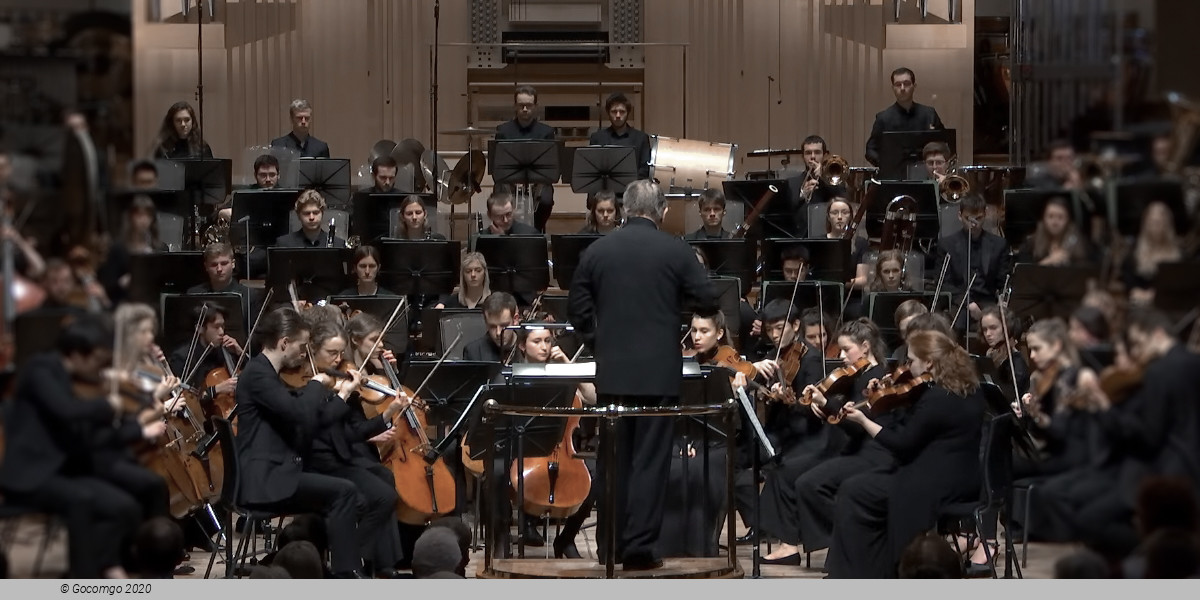
Salle des Combins is the Verbier Festival’s main concert hall. It normally seats 1,419. Each row is on a separate tier, which guarantees an excellent view of the stage. Improvements to the soundproofing and heat insulation make this a very high-quality non-permanent venue. All of the Festival’s symphonic concerts, operas, large world music, jazz, dance events and some recitals are presented here.
Verbier Festival Orchestra, Gianandrea Noseda and Mikhaïl Pletnev
Salle des Combins,
Verbier, Switzerland
All photos (1)
Select date and time
7 PM
Request for Tickets
Important Info
E-tickets: Print at home or at the box office of the event if so specified. You will find more information in your booking confirmation email.
You can only select the category, and not the exact seats.
If you order 2 or 3 tickets: your seats will be next to each other.
If you order 4 or more tickets: your seats will be next to each other, or, if this is not possible, we will provide a combination of groups of seats (at least in pairs, for example 2+2 or 2+3).
Festival
Verbier Festival 2022
The classical world's most anticipated, highest-altitude festival of the year returned in summer 2022. The Verbier Festival came back on July 15 – 31, 2022. It brought the biggest and brightest stars in classical music, revisiting favorite works and taking on brand-new repertoire in the storied Salle des Combins and Verbier Église. Beloved performers of Verbiers past are once again on the docket—alongside some exciting Verbier debuts—in this blockbuster event from the gorgeous Swiss Alps, where the only thing more breathtaking than the view is the music.
Programme
Rodion Shchedrin: Beethovens Heiligenstädter Testament, Symphonic Fragment for Orchestra
Ludwig van Beethoven: Piano Concerto no. 3 in C minor, Op.37
Dmitri Shostakovich: Symphony no. 15 in A major, Op.141
Overview
A bold programme of works by Shchedrin and Shostakovich in a concert with the Verbier Festival Orchestra and Gianandrea Noseda, completed by Beethoven's Concerto No. 3 with Mikhaïl Pletnev on piano.
In the “Heiligenstadt Testament”, a letter Beethoven wrote to his brothers in 1802 but never sent, the composer details the despair he is experiencing in the face of his ever increasing and incurable deafness. Shchedrin’s “Testament”, written in 2008, offers the audience a similar dive into what is best described as an “emotional maelstroem”. A symphonic work of remarkable expressivity, this piece evokes Beethoven’s journey “from darkness into the light”. Beethoven’s Concerto No.3 in C-major, completed in the months following the “Heiligenstadt crisis”, remains deeply rooted in the style of Mozart, yet in this piece, Beethoven pioneers a new concept: the orchestra and soloist are now equal partners in the musical dialogue. The first movement is dark and passionate, followed by a peaceful and tranquil largo. A virtuosic and humorous rondo brings the symphony to a close. Shostakovich’s Symphony No.15 opens on a joyful note. Written four years before the composer’s death, this piece marks Shostakovich’s “symphonic goodbye” to the world in general, and to the world of music in particular. In this symphony, Shostakovitch quotes many composers: Rossini, Glinka, Mahler, Wagner, and even himself. While this work was written for a large symphonic orchestra, the writing style resembles more what one would expect from a piece composed for chamber orchestra. The final moments of the symphony are gripping: the music dissipates, life comes to a close.
Venue Info
Salle des Combins - Verbier
 Chemin de Plan Pra
Chemin de Plan Pra
Important Info
Festival: Verbier Festival 2022
Type: Classical Concert
City: Verbier, Switzerland
Starts at: 19:00