




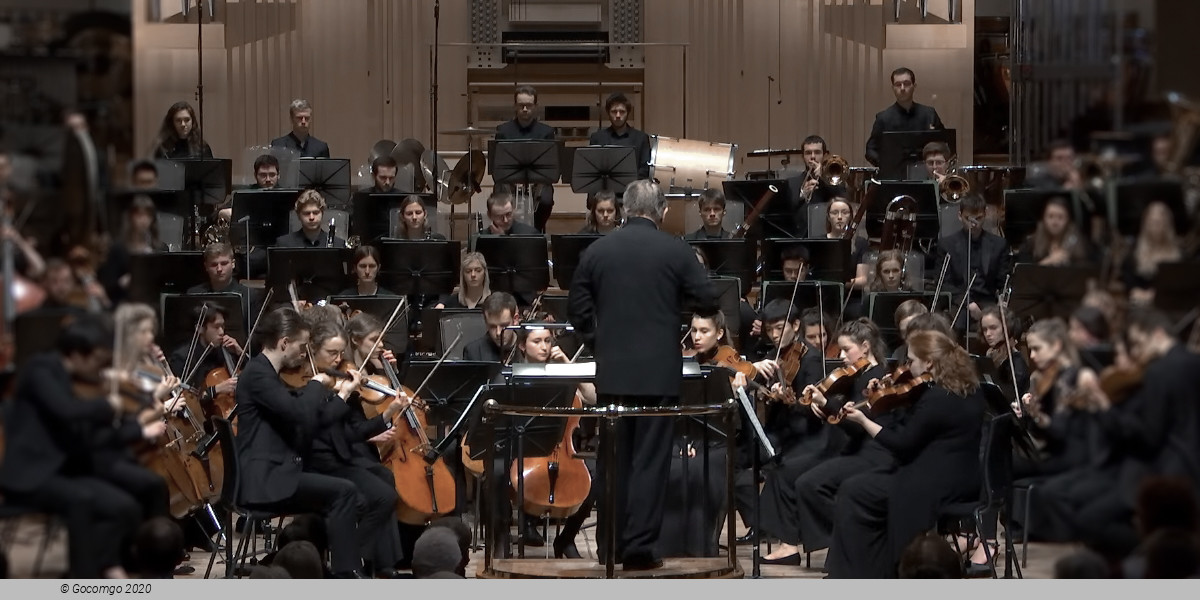
Salle des Combins is the Verbier Festival’s main concert hall. It normally seats 1,419. Each row is on a separate tier, which guarantees an excellent view of the stage. Improvements to the soundproofing and heat insulation make this a very high-quality non-permanent venue. All of the Festival’s symphonic concerts, operas, large world music, jazz, dance events and some recitals are presented here.
Verbier Festival Chamber Orchestra, Reinhard Goebel (conductor), Martin Fröst (clarinet), Anna Lucia Richter (mezzo-soprano) and Bruno de Sá (countertenor)
Salle des Combins,
Verbier, Switzerland
All photos (1)
Select date and time
7 PM
Request for Tickets
Important Info
E-tickets: Print at home or at the box office of the event if so specified. You will find more information in your booking confirmation email.
You can only select the category, and not the exact seats.
If you order 2 or 3 tickets: your seats will be next to each other.
If you order 4 or more tickets: your seats will be next to each other, or, if this is not possible, we will provide a combination of groups of seats (at least in pairs, for example 2+2 or 2+3).
Festival
Verbier Festival 2022
The classical world's most anticipated, highest-altitude festival of the year returned in summer 2022. The Verbier Festival came back on July 15 – 31, 2022. It brought the biggest and brightest stars in classical music, revisiting favorite works and taking on brand-new repertoire in the storied Salle des Combins and Verbier Église. Beloved performers of Verbiers past are once again on the docket—alongside some exciting Verbier debuts—in this blockbuster event from the gorgeous Swiss Alps, where the only thing more breathtaking than the view is the music.
Programme
Antonio Vivaldi: Clarinet Concerto No. 3 in F major "Il Mezzetino"
Joseph Haydn: Symphony no. 101 in D major "The Clock"
Giovanni Battista Pergolesi: Stabat Mater, P. 77
Overview
When the clarinet was still in its infancy in Vivaldi’s day, he never wrote a solo concerto for it. The four-movement ‘Il Mezzetino’ is thus a ‘hypothetical’ creation by Andreas Tarkmann. Mezzetin was an astute, cynical servant character of the commedia dell’arte, and you hear him in the third movement with its flits between minor and major, as the clarinet glides over tiptoeing plucked strings. Pizzicato lower strings equally feature in the Andante second movement of Haydn’s 1793 ‘Clock’ Symphony, creating the ticking effect that inspired its own nickname; the ensuing Menuet’s grand theme meanwhile was adapted from one he’d penned for mechanical organ. Bach’s late-life transcriptions of works by his contemporaries, Vivaldi included, arose from both admiration and a desire to keep up with the latest styles. His flowing arrangement of Pergolesi’s Stabat Mater enriched its orchestration and switched its Marian Passion text to forgiveness-beseeching Psalm 51.
Venue Info
Salle des Combins - Verbier
 Chemin de Plan Pra
Chemin de Plan Pra
Important Info
Festival: Verbier Festival 2022
Type: Classical Concert
City: Verbier, Switzerland
Starts at: 19:00