




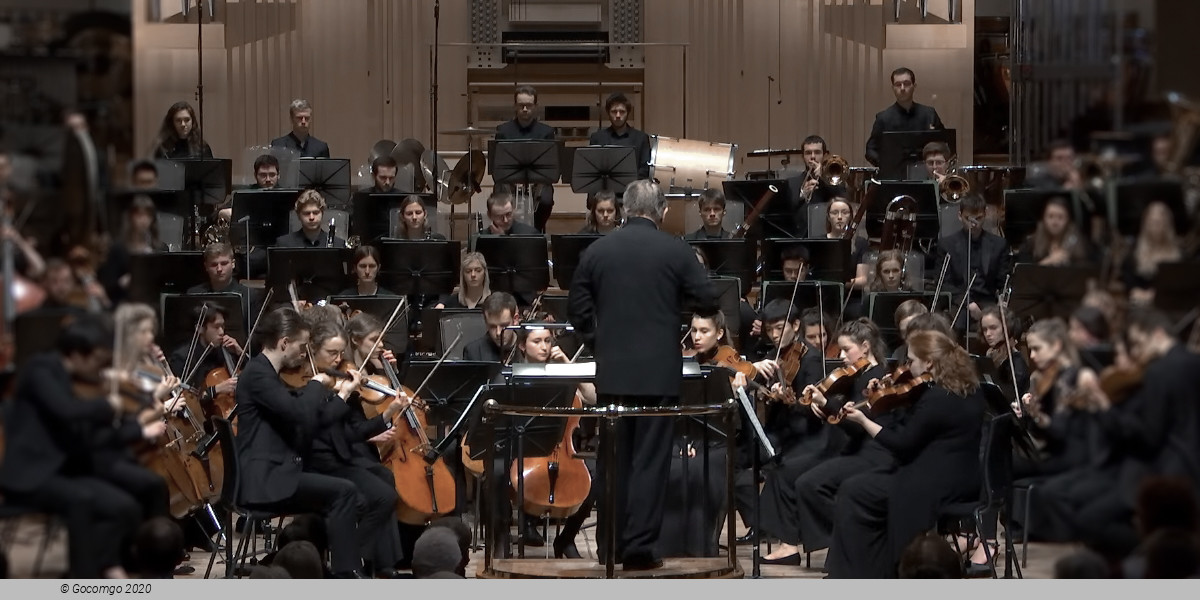
Salle des Combins is the Verbier Festival’s main concert hall. It normally seats 1,419. Each row is on a separate tier, which guarantees an excellent view of the stage. Improvements to the soundproofing and heat insulation make this a very high-quality non-permanent venue. All of the Festival’s symphonic concerts, operas, large world music, jazz, dance events and some recitals are presented here.
Verbier Festival Orchestra, Charles Dutoit and Alexander Malofeev
Salle des Combins,
Verbier, Switzerland
All photos (1)
Select date and time
7 PM
Request for Tickets
Important Info
E-tickets: Print at home or at the box office of the event if so specified. You will find more information in your booking confirmation email.
You can only select the category, and not the exact seats.
If you order 2 or 3 tickets: your seats will be next to each other.
If you order 4 or more tickets: your seats will be next to each other, or, if this is not possible, we will provide a combination of groups of seats (at least in pairs, for example 2+2 or 2+3).
Festival
Verbier Festival 2022
The classical world's most anticipated, highest-altitude festival of the year returned in summer 2022. The Verbier Festival came back on July 15 – 31, 2022. It brought the biggest and brightest stars in classical music, revisiting favorite works and taking on brand-new repertoire in the storied Salle des Combins and Verbier Église. Beloved performers of Verbiers past are once again on the docket—alongside some exciting Verbier debuts—in this blockbuster event from the gorgeous Swiss Alps, where the only thing more breathtaking than the view is the music.
Programme
Zoltán Kodály: Háry-János Suite, op. 15
Sergei Prokofiev: Piano Concerto no. 3 in C major, Op.26
Igor Stravinsky: Le Sacre du printemps (The Rite of Spring)
Overview
The 29th edition of the Festival will come to an unforgettable end with Charles Dutoit leading the Verbier Festival Orchestra in Stravinsky’s revolutionary masterpiece Rite of Spring and Kodály’s brilliant Háry János-Suite Op. 15.
In Háry János (1927), a lyrical comedy by Zoltán Kodály, full of humour and reverie, the audience gets to follow a veteran of the Napoleonic wars who invents outlandish adventures with the empress Marie-Louise and the emperor. This piece serves as the source material for a symphonic suite that immediately delights due to its cheerfulness, its parodying of marches, and its colorful pages full of popular themes. Eight years after the uproar caused by his iconoclastic Concerto No. 2 (1913), Prokofiev completed in Bretagne a third concerto that rivals the dazzling virtuosity of the second one, while being more traditional in its structure and more flush with lyricism. All the elements Prokofiev is known for are present: forward motion, cantabile moments, irony, and explosive percussion. After having heard this concerto, the poet Balmont exclaimed that Prokofiev was an “Invincible Scythian, beating the tambourine of the sun.” Jarring dissonances, rhythmic changes, musical accents that appear out of place, and an aggressive tonal landscape that is unprecedented. With the Rite of Spring (1913), a “tempest from the depths of time, come to grab our lives at the roots” (Louis Laloy), Stravinsky ushers the music of the 20th century into a new era.
Venue Info
Salle des Combins - Verbier
 Chemin de Plan Pra
Chemin de Plan Pra
Important Info
Festival: Verbier Festival 2022
Type: Classical Concert
City: Verbier, Switzerland
Starts at: 19:00