Semperoper Dresden tickets 26 June 2027 - Premiere Rienzi, the last of the Tribunes | GoComGo.com

Premiere
Rienzi, the last of the Tribunes

Semperoper Dresden, Semperoper Dresden, Dresden, Germany
All photos (8)
Select date and time
6 PM
From
US$ 99

E-tickets: Print at home or at the box office of the event if so specified. You will find more information in your booking confirmation email.

You can only select the category, and not the exact seats.
If you order 2 or 3 tickets: your seats will be next to each other.
If you order 4 or more tickets: your seats will be next to each other, or, if this is not possible, we will provide a combination of groups of seats (at least in pairs, for example 2+2 or 2+3).

Important Info
Type: Opera
City: Dresden, Germany
Starts at: 18:00
Acts: 5
Sung in: German
Titles in: English,German

E-tickets: Print at home or at the box office of the event if so specified. You will find more information in your booking confirmation email.

You can only select the category, and not the exact seats.
If you order 2 or 3 tickets: your seats will be next to each other.
If you order 4 or more tickets: your seats will be next to each other, or, if this is not possible, we will provide a combination of groups of seats (at least in pairs, for example 2+2 or 2+3).

Cast
Performers
Conductor: Patrick Hahn
Soprano: Sinéad Campbell-Wallace (Irene)
Bass: Andreas Bauer Kanabas (Steffano Colonna)
Mezzo-Soprano: Catriona Morison (Adriano)
Tenor: Klaus Florian Vogt (Cola Rienzi)
Tenor: Matthias Stier (Baroncelli)
Bass-Baritone: Oleksandr Pushniak (Paolo Orsini)
Bass: Tilmann Rönnebeck
Creators
Composer: Richard Wagner
Writer: Edward Bulwer-Lytton
Director: Eva-Maria Höckmayr
Sets: Paul Zoller
Librettist: Richard Wagner
Overview

Rienzi, the Last of the Tribunes is a monumental grand opera by the composer Richard Wagner, performed at the historic Semperoper Dresden. Set in medieval Rome, the opera tells the dramatic story of the political leader Cola di Rienzi, whose idealistic struggle for justice and freedom ultimately leads to tragedy. With powerful choruses, dramatic orchestration, and large-scale theatrical scenes, the work reflects Wagner’s early operatic style.

Rienzi, the Last of the Tribunes is one of the earliest operas by Richard Wagner and stands as a remarkable example of nineteenth-century grand opera. Inspired by historical events in medieval Rome, the work combines political drama, personal conflict, and large-scale musical spectacle.

The opera tells the story of Cola di Rienzi, a charismatic political figure who seeks to restore justice and republican ideals in a city divided by corruption and aristocratic power. Determined to defend the rights of the people, Rienzi rises to become a powerful leader and tribune of Rome. However, his noble vision is soon challenged by political intrigue, betrayal, and growing opposition from those who fear his influence.

Wagner’s score reflects the grandeur and dramatic intensity of the story. Monumental choruses, powerful orchestral passages, and heroic vocal lines create an atmosphere of political tension and epic theatrical scale. The opera reveals Wagner’s early style, influenced by the traditions of French grand opera, while already hinting at the dramatic ambition that would later define his mature works.

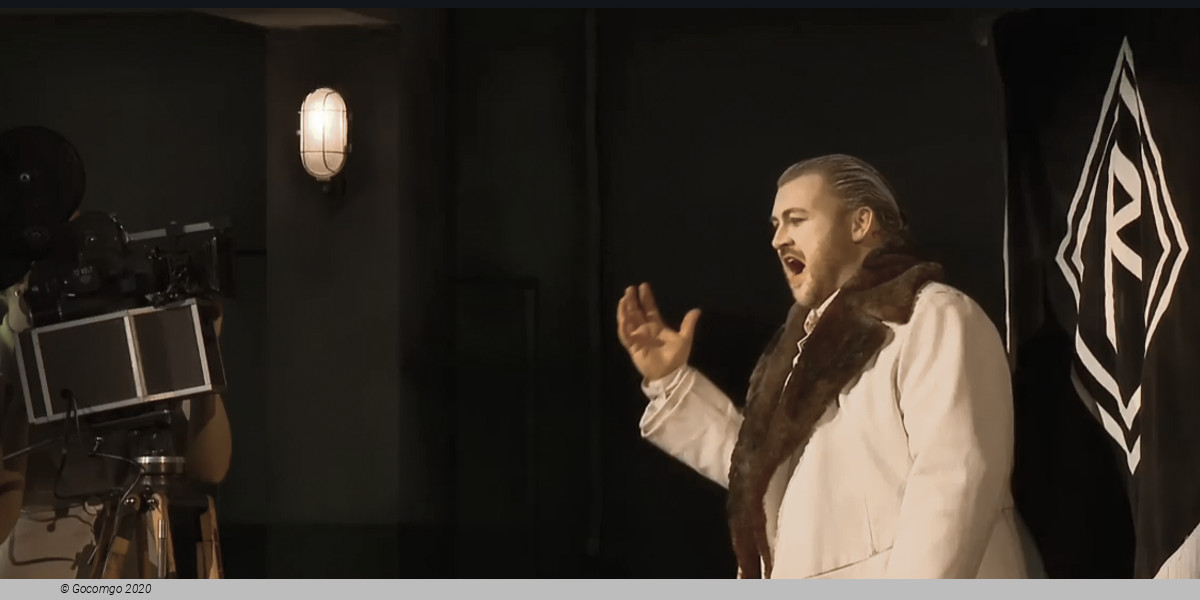
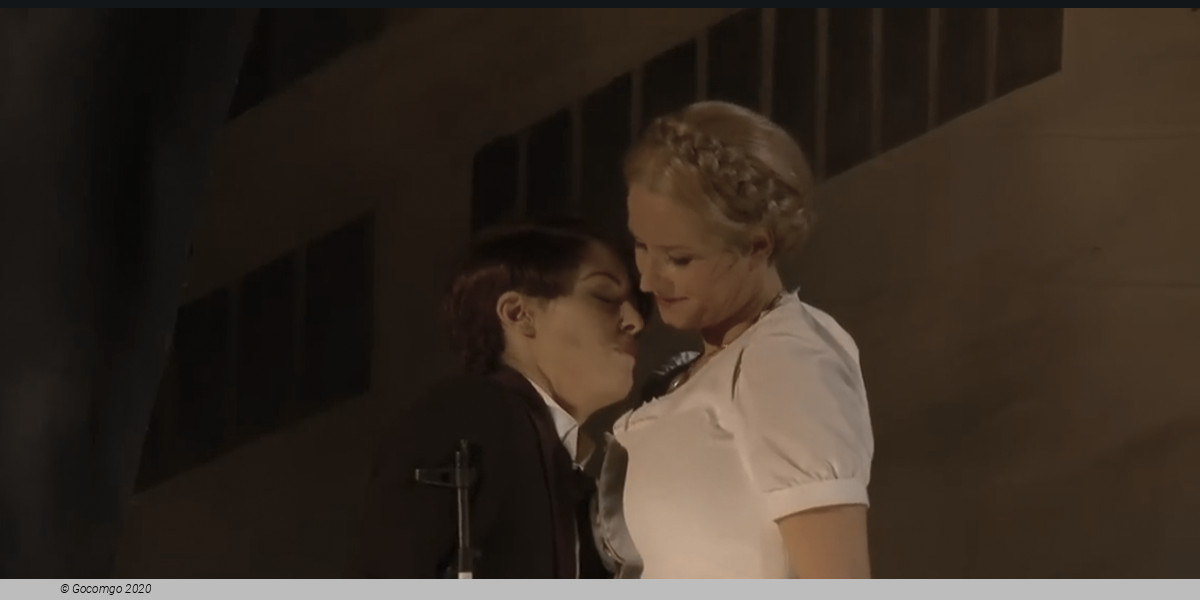
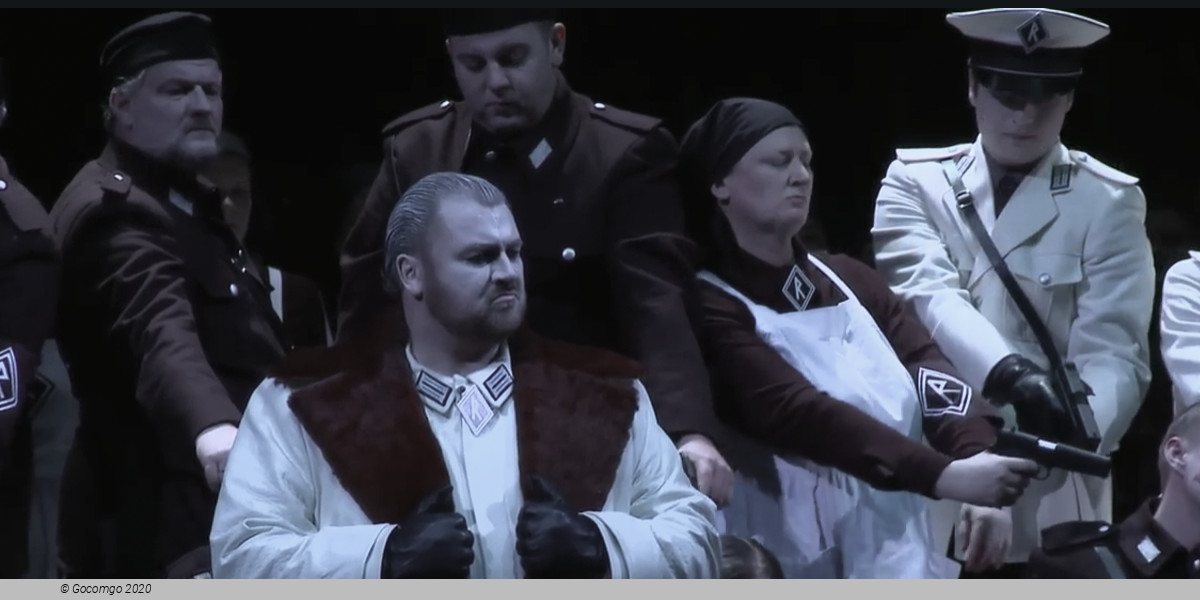
Presented at the Semperoper Dresden — the theatre where several of Wagner’s works premiered — this production highlights the historical significance of the opera as well as its dramatic power. Rich stage design, striking costumes, and large choral scenes bring the political and emotional conflicts of the story vividly to life.

Rienzi, the Last of the Tribunes remains a compelling exploration of leadership, ambition, and the fragile nature of political power. Through its sweeping music and dramatic storytelling, the opera portrays the rise and fall of a visionary leader whose ideals ultimately collide with the forces of fate and human conflict.

History
Premiere of this production: 20 October 1842, Königliches Hoftheater, Dresden

The opera is set in Rome and is based on the life of Cola di Rienzi (1313–1354), a late medieval Italian populist figure who succeeds in outwitting and then defeating the nobles and their followers and in raising the power of the people. Magnanimous at first, he is forced by events to crush the nobles' rebellion against the people's power, but popular opinion changes and even the Church, which had urged him to assert himself, turns against him. In the end the populace burns the Capitol, in which Rienzi and a few adherents have made a last stand.

Synopsis

Overture

The opera opens with a substantial overture which begins with a trumpet call (which in act 3 we learn is the war call of the Colonna family) and features the melody of Rienzi's prayer at the start of act 5, which became the opera's best-known aria. The overture ends with a military march.

Act 1
Outside Rienzi's house

The patrician Orsini and his cronies attempt to kidnap Rienzi's sister Irene. Stefano Colonna, also a patrician but inclined to support Rienzi, prevents them. Raimondo appeals to the parties in the name of the Church to stop their fighting; Rienzi's eventual appearance (marked by a dramatic key shift, from D to E flat) quells the riot. The Roman people support Rienzi's condemnation of the nobles. Irene and Adriano realise their mutual attraction (duet "Ja, eine Welt voll Leiden" – Yes, a world of sorrows). A gathering crowd of plebeians, inspired by Rienzi's speeches, offers Rienzi the crown; he demurs, insisting that he wishes only to be a Tribune of the Roman people.

Act 2
A hall in the Capitol

The patricians plot the death of Rienzi; Adriano is horrified when he learns of this. Rienzi greets a group of ambassadors for whom an entertainment is laid on (a lengthy ballet). Orsini attempts to stab Rienzi, who however is protected by a vest of chain mail. Adriano pleads with Rienzi for mercy to the nobles, which Rienzi grants.

The act 2 ballet is noteworthy as Wagner made a clear attempt to make it relevant to the action of the opera (whereas in most Grand Operas the ballet was simply an entertaining diversion). The Rienzi ballet was intended to tell the tale of the 'Rape of Lucretia'. This storyline (in which Tarquinius, the last king of Rome, attempts to rape the virtuous Lucretia), parallels both the action of Rienzi (Orsini's attempt on Irene) and its background (patricians versus the people). In its original form the ballet lasts for over half an hour – in modern performances and recordings it is generally drastically cut.

Act 3
The Roman Forum

The patricians have recruited an army to march on Rome. The people are alarmed. Rienzi rouses the people and leads them to victory over the nobles, in the course of which Adriano's father Stefano is killed. Adriano swears revenge, but Rienzi dismisses him.

Act 4
Before the Lateran Church

Cecco and other citizens discuss the negotiations of the patricians with the Pope and with the Emperor of Germany. Adriano's intention to kill Rienzi wavers when Rienzi arrives together with Irene. Raimondo now announces that the Pope has laid a papal ban on Rienzi, and that his associates risk excommunication. Despite Adriano's urgings, Irene resolves to stay with Rienzi.

Act 5
Scene 1: A room in the Capitol

Rienzi in his prayer "Allmächt'ger Vater" (Almighty Father!) asserts his faith in the people of Rome. He suggests to Irene that she seek safety with Adriano, but she demurs. An apologetic Adriano enters and tells the pair that the Capitol is to be burnt and they are at risk.

Scene 2: The Capitol is ablaze

Rienzi's attempts to speak are met with stones and insults from the fickle crowd. Adriano, in trying to rescue Rienzi and Irene, is killed with them as the building collapses.

In the original performances, Rienzi's final words are bitter and pessimistic: "May the town be accursed and destroyed! Disintegrate and wither, Rome! Your degenerate people wish it so." However, for the 1847 Berlin performance Wagner substituted a more upbeat rhetoric: "Ever while the seven hills of Rome remain, ever while the eternal city stands, you will see Rienzi's return!".

Venue Info

Semperoper Dresden - Dresden
Location   Theaterplatz 2

Not only one of the most beautiful opera houses in the world, the Semperoper is renowned both in Germany and abroad for the brilliant star-studded performances by Saxon State Opera as well as numerous international guest artists.

This is the home of the Staatskapelle Dresden, an orchestra which looks back on 460 years of uninterrupted music-making. The State Opera Chorus was founded by Carl Maria von Weber in 1817. Operatic history has been written here, with the Semperoper playing host to numerous important premieres, such as Richard Wagner’s "Rienzi", "Der fliegende Holländer" and "Tannhäuser". There is also an indissoluble link to Richard Strauss, nine of whose 15 operas were premiered in Dresden, including "Salome", "Der Rosenkavalier" and "Elektra". The small venue Semper Zwei provides space for diverse forms of music theatre as well as theatrical experiments, and is also the venue for performances of Semperoper Junge Szene.

The magnificent Semperoper dominates the Theaterplatz be-side the river Elbe, forming the centrepiece of the historic old city. The original building opened its doors in 1841, constructed to a design by Gottfried Semper which combined a late Classical style with Renaissance elements. Following a devastating fire in 1869, the citizens of Dresden immediately set about rebuilding their beloved opera house. This was completed in 1878, also to a design by Semper. In 1945, during the final months of World War II, the Semperoper was once again razed to the ground.

After a second reconstruction was successfully completed in 1985, the reopening of one of Europe’s most beautiful opera houses was celebrated with a performance of Carl Maria von Weber’s "Freischütz".
The dazzling interiors were painstakingly reconstructed by local craftsmen and artists according to original plans, with state-of-the art stage machinery and technical fittings in the auditorium. A modern annex was added to house the administrative offices and rehearsal rooms. Internationally renowned for its brilliant acoustics and incomparable performances, audiences from around the world continue to flock here to enjoy unforgettable experiences at the Semperoper Dresden.

Important Info
Type: Opera
City: Dresden, Germany
Starts at: 18:00
Acts: 5
Sung in: German
Titles in: English,German
Top of page