Teatro del Maggio Musicale Fiorentino: Bluebeard's Castle Tickets | Event Dates & Schedule | GoComGo.com

Bluebeard's Castle Tickets

Teatro del Maggio Musicale Fiorentino, Florence, Italy
All photos (4)
1 / 4
Available Dates: 14 - 22 Mar, 2026 (3 events)
Important Info
Type: Opera
City: Florence, Italy

E-tickets: Print at home or at the box office of the event if so specified. You will find more information in your booking confirmation email.

You can only select the category, and not the exact seats.
If you order 2 or 3 tickets: your seats will be next to each other.
If you order 4 or more tickets: your seats will be next to each other, or, if this is not possible, we will provide a combination of groups of seats (at least in pairs, for example 2+2 or 2+3).

Cast
Performers
Choose the date to see the peformers
Creators
Composer: Béla Bartók
Composer: Francis Poulenc
Librettist: Béla Balázs
Author: Charles Perrault
Director: Claus Guth
Poet: Jean Cocteau
Overview

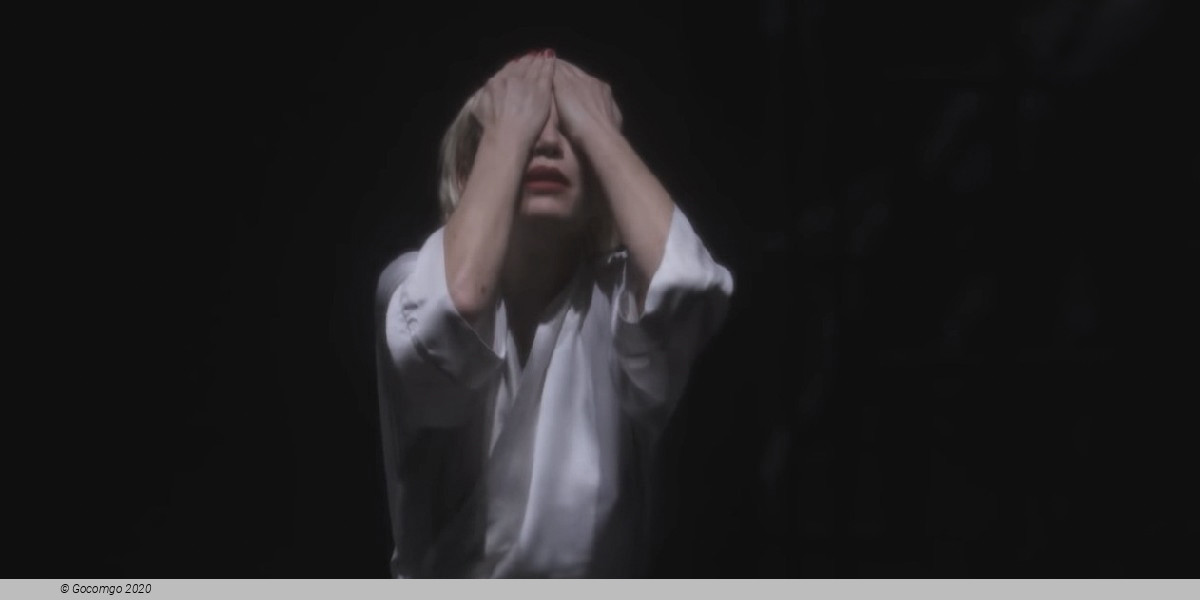
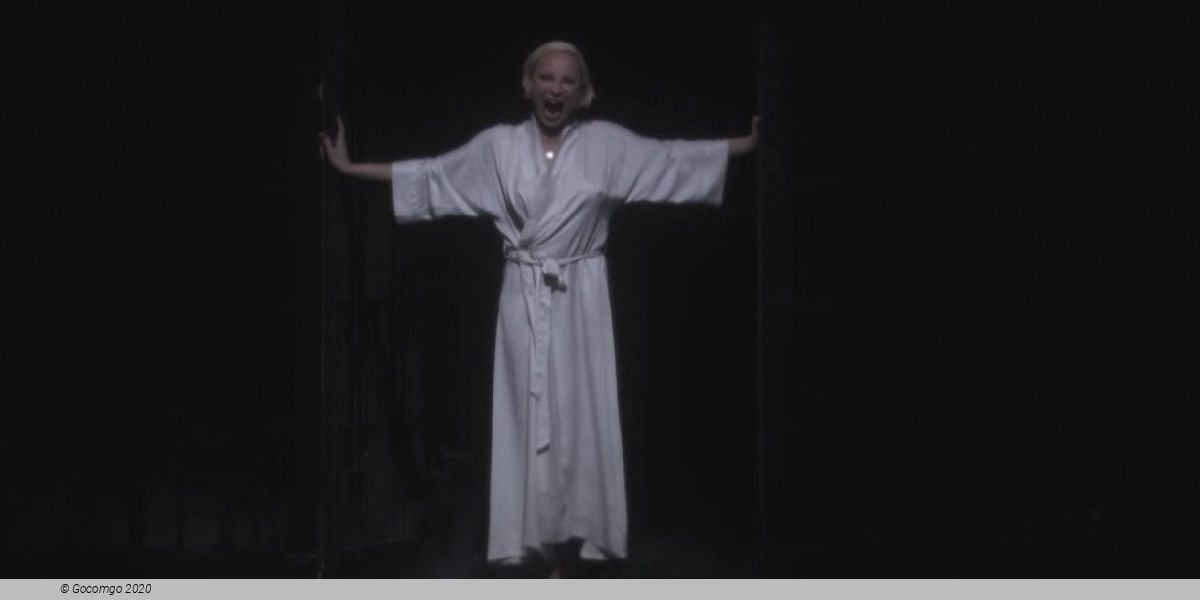
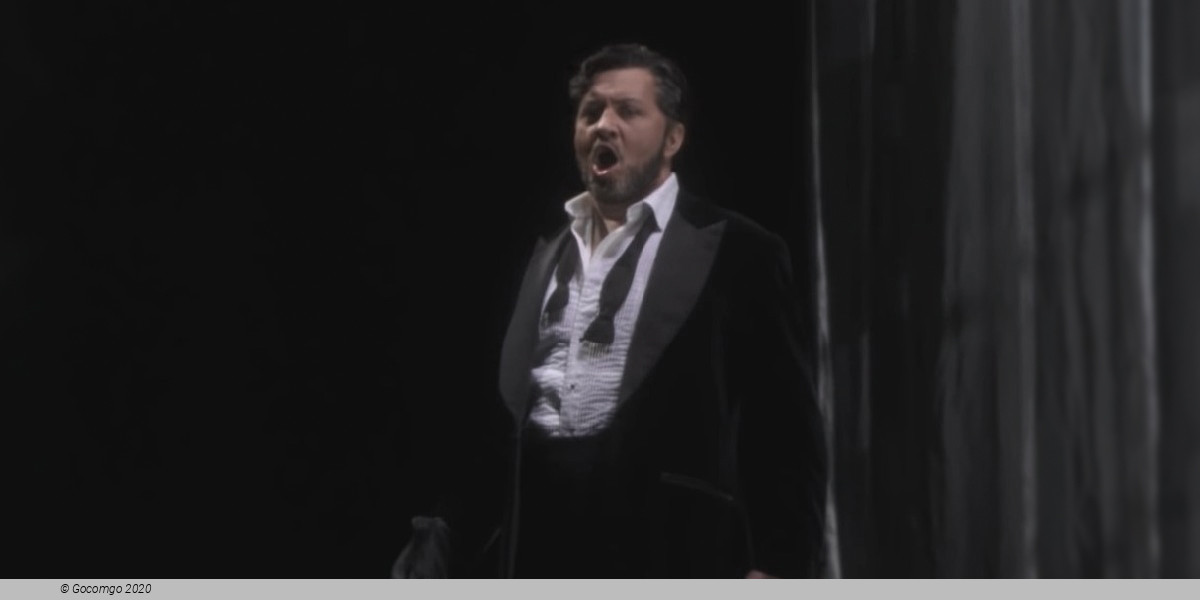
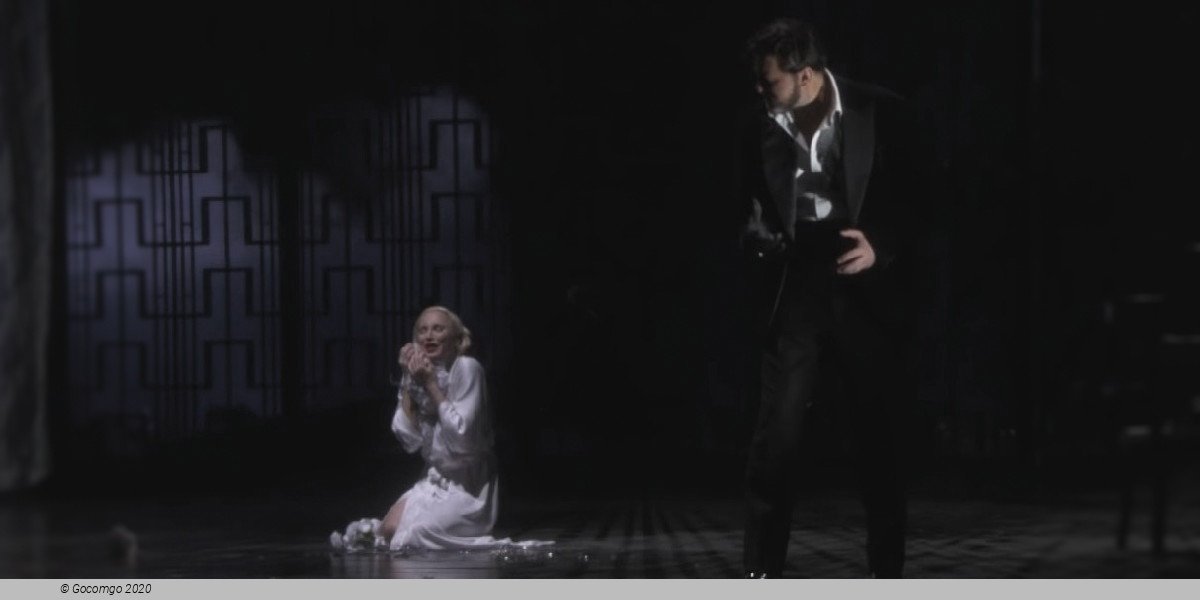
Prince Bluebeard's Castle, a one-act opera to a libretto by Béla Balàzs was composed by Bartók in 1911 but not performed until seven years later, on 24 May 1918 at the Budapest Opera House. The libretto proposed by Balàzs retrieves the figure from the fairytale tradition of the ruthless Bluebeard to cast it in a symbolist frame in the wake of Debussy-Maeterlinck's Pelléas et Melisande. The opera, divided into nine scenes, has only two protagonists: Bluebeard and his wife Judith, who express themselves with a song, mainly recitative, based on pentatonic scales of Hungarian folk tradition. The action takes place in the prince's castle in medieval times. A prologue recited by a bard introduces the first scene describing Judith's resolve to follow her husband into his gloomy and mysterious castle. However, the woman wants to know Bluebeard's past and starts to open the castle's seven secret doors one after the other. With dismay she discovers sinister rooms and places stained with blood, a pivotal element of the opera associated by Bartók with the minor second chord, the most dissonant of all. On opening the seventh and final door, Judith fears to find the corpses of her previous murdered wives, but instead she sees three richly dressed, living women parading before her eyes. They are the women of morning, noon and evening who now belong only to the world of Bluebeard's memories. Judith, as the woman of the night, after being crowned and covered in jewels by her husband, will follow them forever into the seventh room, whose door closes, plunging the castle back into darkness.

New staging in coproduction with Tiroler Festspiele Erl

History
Premiere of this production: 24 May 1918, Royal Hungarian Opera House, Budapest

Bluebeard's Castle is a one-act expressionist opera by Hungarian composer Béla Bartók. The libretto was written by Béla Balázs, a poet and friend of the composer, and is written in Hungarian, based on the French literary tale La Barbe bleue by Charles Perrault. The opera lasts only a little over an hour and there are only two singing characters onstage: Bluebeard (Kékszakállú), and his new wife Judith (Judit); the two have just eloped and Judith is coming home to Bluebeard's castle for the first time.

Synopsis

Place: A huge, dark hall in a castle, with seven locked doors.
Time: Not defined.

Judith and Bluebeard arrive at his castle, which is all dark. Bluebeard asks Judith if she wants to stay and even offers her an opportunity to leave, but she decides to stay. Judith insists that all the doors be opened, to allow light to enter into the forbidding interior, insisting further that her demands are based on her love for Bluebeard. Bluebeard refuses, saying that there are private places not to be explored by others, and asking Judith to love him but ask no questions. Judith persists, and eventually prevails over his resistance.

The first door opens to reveal a torture chamber, stained with blood. Repelled, but then intrigued, Judith pushes on. Behind the second door is a storehouse of weapons, and behind the third a storehouse of riches. Bluebeard urges her on. Behind the fourth door is a secret garden of great beauty; behind the fifth, a window onto Bluebeard's vast kingdom. All is now sunlit, but blood has stained the riches, watered the garden, and grim clouds throw blood-red shadows over Bluebeard's kingdom.

Bluebeard pleads with her to stop: the castle is as bright as it can get, and will not get any brighter, but Judith refuses to be stopped after coming this far, and opens the penultimate sixth door, as a shadow passes over the castle. This is the first room that has not been somehow stained with blood; a silent silvery lake is all that lies within, "a lake of tears". Bluebeard begs Judith to simply love him, and ask no more questions. The last door must be shut forever. But she persists, asking him about his former wives, and then accusing him of having murdered them, suggesting that their blood was the blood everywhere, that their tears were those that filled the lake, and that their bodies lie behind the last door. At this, Bluebeard hands over the last key.

Behind the door are Bluebeard's three former wives, but still alive, dressed in crowns and jewellery. They emerge silently, and Bluebeard, overcome with emotion, prostrates himself before them and praises each in turn (as his wives of dawn, midday and dusk), finally turning to Judith and beginning to praise her as his fourth wife (of the night). She is horrified and begs him to stop, but it is too late. He dresses her in the jewellery they wear, which she finds exceedingly heavy. Her head drooping under the weight, she follows the other wives along a beam of moonlight through the seventh door. It closes behind her, and Bluebeard is left alone as all fades to total darkness.

Venue Info

Teatro del Maggio Musicale Fiorentino - Florence
Location   Piazza Vittorio Gui, 1

Teatro del Maggio Musicale Fiorentino is a major opera house in Florence and the main concert venue of the international festival "Maggio Musicale Fiorentino".

The white marble veined with green of the Baptistery of San Giovanni, the brickwork of the dome of Santa Maria del Fiore and finally the dazzling gold of the precious paintings that have made the city of Tuscany one of the world capitals of art: the materials and colors of the Renaissance they meet at the Teatro del Maggio to celebrate the power of music, and the enchantment of melodrama, right in the city where this exceptional form of theater was born. Conceived by the architect Paolo Desideri of the ABDR studio, the “new house” of the Maggio Musicale Fiorentino rises at the meeting point between the monumental center and the Parco delle Cascine, the green lung of the city.

An important connective function also reaffirmed by the vast system of open areas that can be reached through the two areas of the city and the different volumes of the building. Moreover, the proximity to the Stazione Leopolda helps to create a cultural pole of European importance.

Above a sort of wide base, a sloping skirting, there are the large music rooms and the enigmatic volume of the 35 meter high stage tower. Three rooms, which can work simultaneously: the 1800-seat opera theater, distributed between the stalls, boxes and gallery, an outdoor 2000-seat auditorium and finally an auditorium, dedicated to maestro Zubin Mehta, which varies its capacity from 500 to 1000 spectators.

As in a great musical instrument, the walls of the main hall are covered in pear wood to guarantee perfect acoustics. A dense network of thin copper chains also helps to transport the sound without distortion. The stage has a depth doubled compared to the average of Italian and foreign theaters and, thanks to its flexibility, is able to accommodate in its side pockets up to two sets ready to be moved during the intervals. The Cavea is positioned in the theater’s roof to complement and conclude the extensive system of squares, terraces and belvedere.

Its usability is therefore not limited to representations only, but is extended to the entire day to turn its stone steps into real urban salons. Inaugurated on December 21, 2011 with the Ninth Symphony of Ludwig van Beethoven directed by Zubin Mehta, the Teatro del Maggio is the permanent venue of the Orchestra and Chorus of the Maggio Musicale Fiorentino and has already hosted Masters such as Claudio Abbado, Riccardo Muti, Gustavo Dudamel , Daniele Gatti, Fabio Luisi, leading groups such as the Berliner Philharmoniker, the St. Petersburg Philharmonic Orchestra and the National de France Orchestras. Among the many artists who performed there are Alessandra Ferri, Mariella Devia, Sumi Jo, Anja Harteros, Aldo Ciccolini, Uto Ughi, Maurizio Pollini, Krystian Zimerman, Gregory Kunde, Ambrogio Maestri. In 2014 he received the National Award for the best architectural work made in Italy in the last 5 years.

Important Info
Type: Opera
City: Florence, Italy

E-tickets: Print at home or at the box office of the event if so specified. You will find more information in your booking confirmation email.

You can only select the category, and not the exact seats.
If you order 2 or 3 tickets: your seats will be next to each other.
If you order 4 or more tickets: your seats will be next to each other, or, if this is not possible, we will provide a combination of groups of seats (at least in pairs, for example 2+2 or 2+3).

From
$ 104
Top of page