Act 1
Sinfonia
Scene 1: The grove of the druids
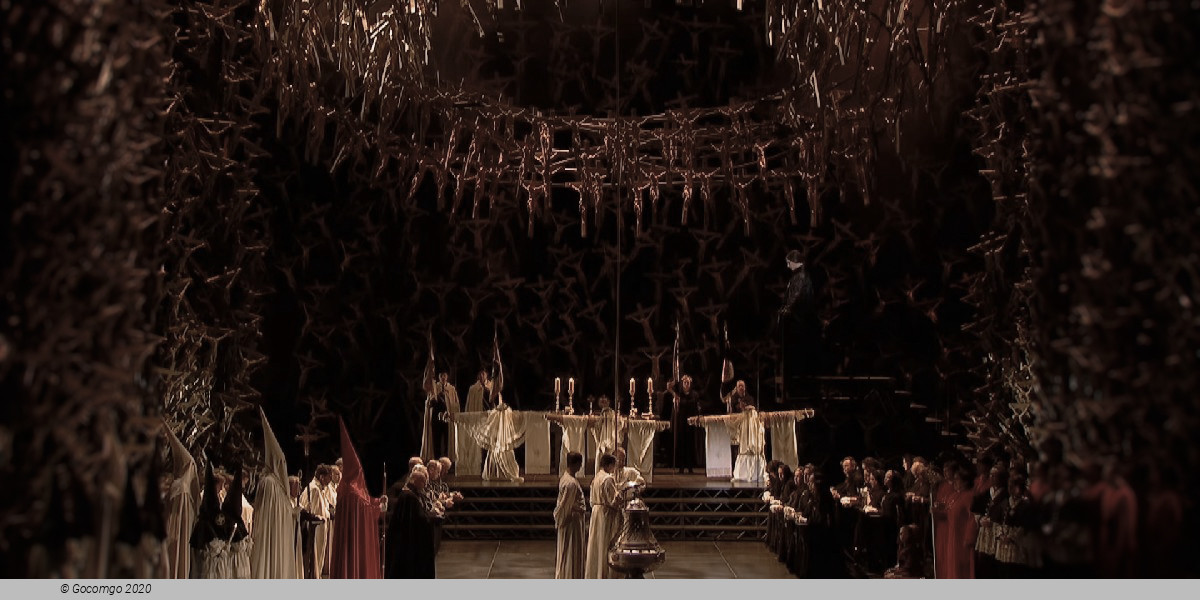
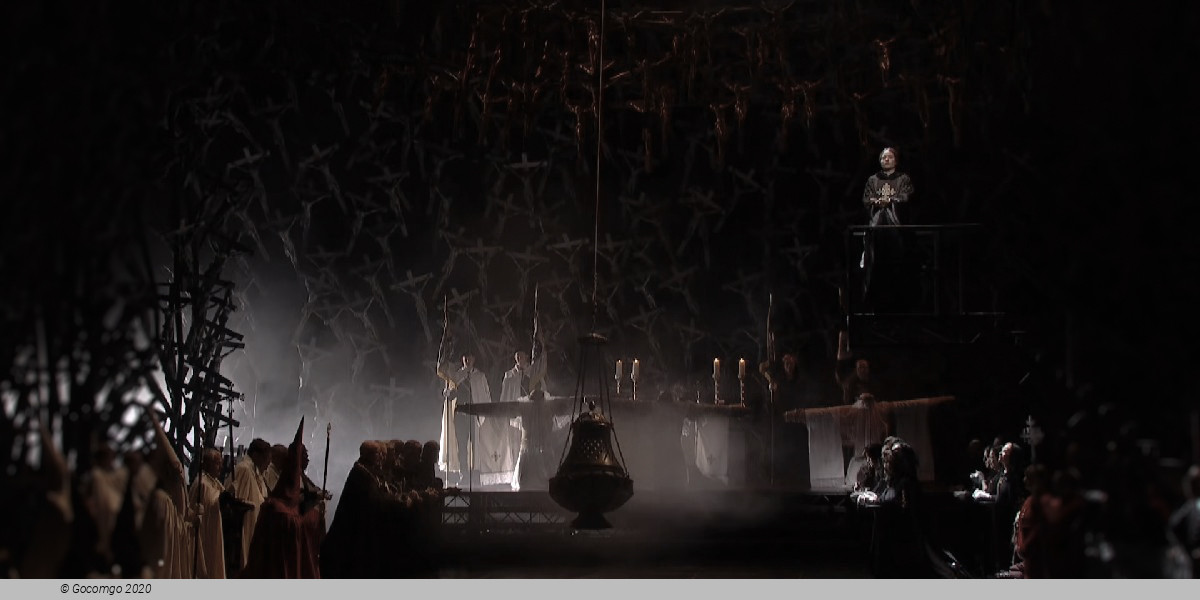
Oroveso leads the druids in a procession in the forest to pray for victory against the invading Romans: (Oroveso and druids: "Ite sul colle, o Druidi" / "Go up on the hill, O druids"). The druids pray that Norma will come and have the courage to broker peace with the Romans: (Druids and Oroveso: "Dell'aura tua profetica" / "With thy prophetic aura, imbue her, O terrible God".) All leave to go to the temple.
Pollione and Flavio enter. Although Norma has secretly broken her vows in order to love him and has borne him two children, Pollione tells Flavio that he no longer loves her, having fallen in love with the priestess Adalgisa. But he expresses some remorse, describing his dream in which Adalgisa was beside him at the altar of Venus and a huge storm arose: (Pollione, aria: "Meco all'altar di Venere" / "With me at the altar in Rome was Adalgisa dressed in white, veiled all in white.") The storm presaged disaster for them both: "Thus does Norma punish her faithless lover," he declares. They hear the trumpets sounding to announce Norma's arrival. Flavio urges his friend to leave, but Pollione stands firm, proclaiming that he will confront them with a superior power and overthrow their altars: (Cabaletta: "Me protegge, me difende" / "I am protected and defended")
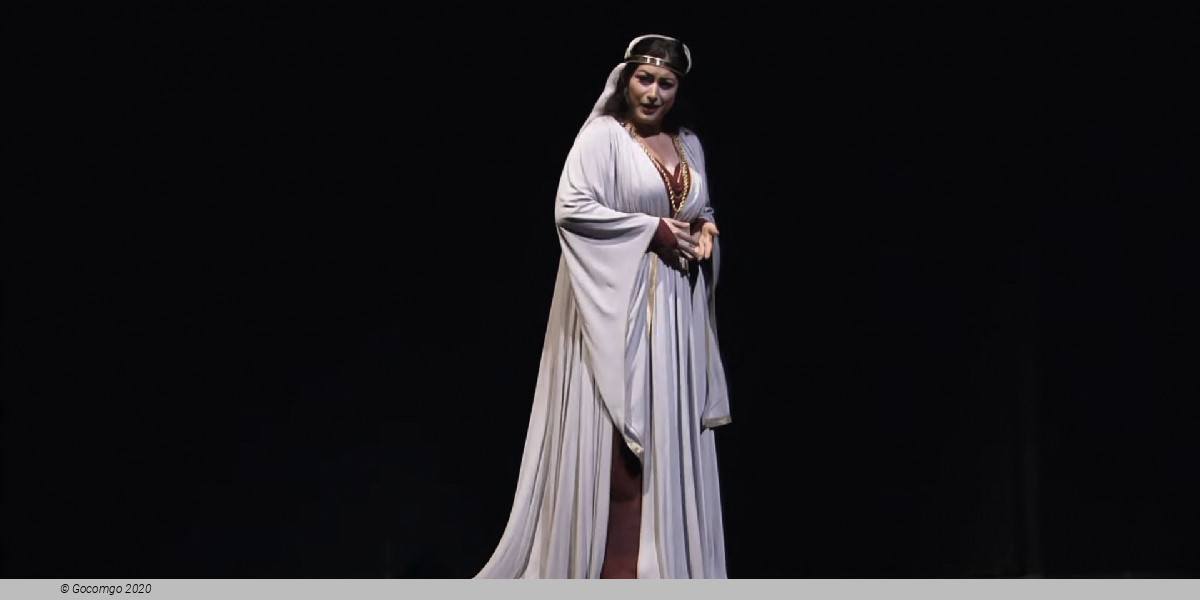
As Norma leads the druids and priestesses, the crowd proclaims: "Norma viene" / "Norma is coming" and, as Oroveso awaits her, they describe her dress and manner. All kneel as she approaches. "The time is not ripe for our revenge", she declares, stating that Rome will perish one day by being worn down. Then, with the mistletoe in hand, she approaches the altar with a plea to the moon (the "Chaste Goddess"): (cavatina: "Casta diva" / "Chaste goddess"). Continuing, she pleads that the goddess shed upon earth that peace which she has created in heaven. She calls for all to complete the rites and then clear the uninitiated from the grove. To herself, she declares that she cannot hurt Pollione, but desires that things return to where they used to be: (Cabaletta: "Ah! bello a me ritorna" / "Return to me, O beautiful one"). The assembled crowd accepts her cautious approach, and all leave the grove.
Later that night: The Temple of Irminsul in the grove
Adalgisa prays at the temple, remembering with some sorrow how she became involved with Pollione. He enters, telling her that she prays to a cruel god and is not trying to invoke the god of love. While she appears to reject him, he declares (Aria: "Va crudele" /"Go, O cruel one") but he is convinced that he cannot leave her; he is distraught, but she is equally torn, until the moment when he declares that he must return to Rome the following day. He begs Adalgisa to go with him: (Duet: Pollione, then Adalgisa, then together: "Vieni in Roma" / "Come to Rome"). She resists him, but finally appears to agree that they will leave together the following day.
Scene 2: Norma's dwelling
Alessandro Sanquirico's set design for act 1, scene 2, for the original production
Norma appears to be upset and orders her maid, Clotilde, to take the two children away from her, expressing very conflicted feelings about them. She tells Clotilde that Pollione has been recalled to Rome, but does not know if he will take her or how he feels about leaving his children. As Adalgisa approaches, the children are taken away.
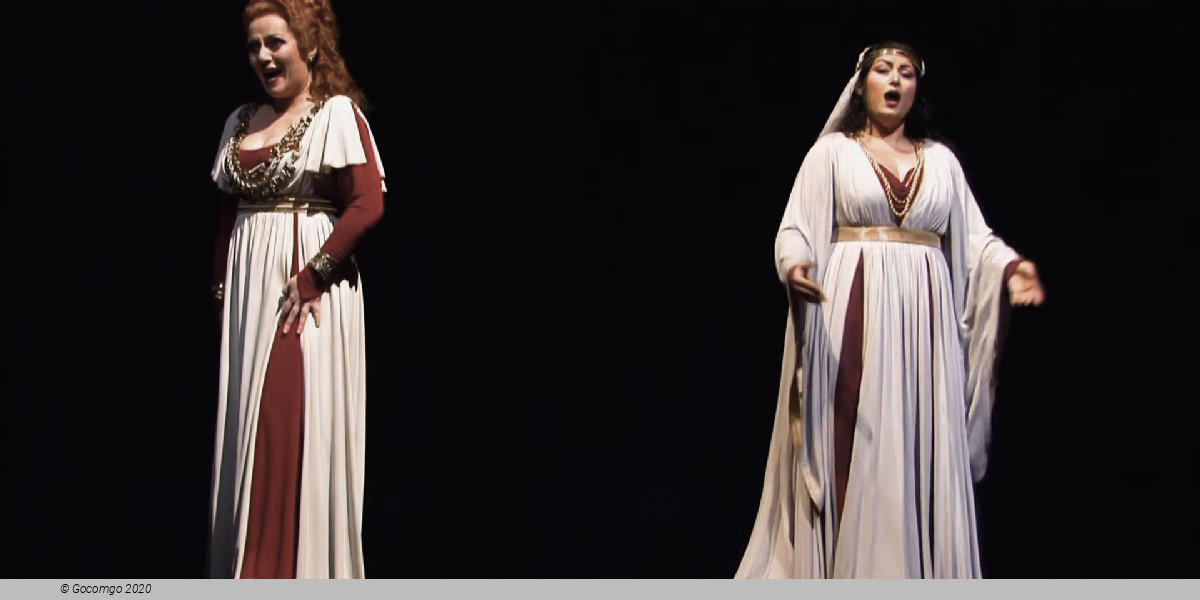
Adalgisa tells Norma she has fallen in love with a Roman, whom she does not name. As she describes how she fell in love while waiting at the temple and seeing "his handsome face" appear, Norma recalls (as an aside) her own feelings for Pollione ("my passions, too, burned like this"), and more and more, their experiences of falling in love run parallel: (Norma and Adalgisa, duet: "Sola, furtiva al tempio" / "Often I would wait for him"). Adalgisa pleads for help and forgiveness, and Norma pledges that she will do that and will also free her from her vows as a priestess: (Norma: "Ah! sì, fa core, abbracciami" / "Yes, take heart, embrace me". Adalgisa: "Ripeti, o ciel, ripetimi" / "Say that again, heavens, say again")
Norma asks Adalgisa to describe the man whom she loves. Responding, she tells her that he is a Roman, and, at that moment, turns to indicate that it is Pollione who is just then entering the room. As Norma furiously turns to confront Pollione, Adalgisa is confused: Norma: "Oh! non tremare, o perfido" / "O faithless man, do not tremble".
Forcing the priestess to realise that she is the victim of a huge deception, Norma addresses Adalgisa. (Trio: each sings in succession, beginning with Norma: "Oh! di qual sei tu vittima" / "Oh, you are the victim"; then Adalgisa: "Oh! qual traspare orribile" / "What horror has been revealed"; then the two women together, followed by Pollione alone: "Norma! de' tuoi rimproveri" / "Norma, do not reproach me now", continuing with "Please give this wretched girl some respite"; after which all three repeat their words, singing at first singly, then together.)
There follow angry exchanges among the three, Norma declaring Pollione to be a traitor; he trying to persuade Adalgisa to leave with him; and she angrily telling him to go away. When he declares that it is his fate to leave Norma, she encourages the young priestess to go with him, but the latter declares that she would rather die. Norma then demands that her lover go, leaving behind his children—and his honour. (Finale: brief duet, Adalgisa and Pollione: he declares his love, and she her desire to Norma not to be the cause of grief to her. Trio: Norma continues to rage at Pollione, Adalgisa repeats her desire to make him return to Norma, and Pollione curses the day when he met Norma.) Then the sound of the druids calling Norma to the temple is heard. They report that the angry god, Irminsul, has spoken. Pollione storms out.
Act 2
Orchestral introduction
Scene 1: Norma's dwelling
Norma looks at both of her sons, who are asleep. She considers killing them. Advancing towards them with knife upraised, she hesitates. (Recitative: "Dormono entrambi ... non vedran la mano che li percuote" / "They are both asleep ... they shall not see the hand which strikes them.") But she cannot bring herself to do it: (Aria: "Teneri, teneri figli" / "My dear, dear sons") The children wake up and she calls for Clotilde, demanding that Adalgisa be brought to her.
The young priestess enters, concerned at how pale Norma looks. Norma makes her swear to do everything she asks and, upon her agreement, tells her that she is entrusting the two children to her care and states that they should be taken to the Roman camp to their father Pollione, a man whom she hopes will make a better mate for Adalgisa than he was for her. Adalgisa is aghast. Norma: "I beg you for his children's sake." (Duet, first Norma: "Deh! con te, con te li prendi" / "Please, take them with you") Adalgisa tells her that she will never leave Gaul and only agreed to the request in order to do what was good for Norma. (Duet, Adalgisa: "Vado al campo") In the duet, Adalgisa agrees to go to the Roman camp and tell Pollione of Norma's grief but her hope is to persuade him to return to Norma. She then renounces Pollione: (Duet: "Mira, o Norma" / "Look, o Norma") They sing together, each expressing her own thoughts and feelings until Norma realises that Adalgisa will give up Pollione and remain with her: (Cabaletta: Duet, Norma and Adalgisa: "Si fino all'ore estreme" / "Until the last hour")
Scene 2: The grove
The druid warriors gather and prepare themselves to attack the Romans. Oroveso enters with news from the gods: the time has not arrived to strike. Somewhat frustrated, the soldiers accept the decision.
Scene 3: The temple of Irminsul
Norma enters. (Aria: "Ei tornerà" / "He will come back") Then Clotilde arrives with news that Adalgisa has failed to persuade Pollione to return. Although Norma questions whether she should have trusted her, she then learns from her servant that Adalgisa is returning and wishes to take her vows at the altar and that the Roman has sworn to abduct her from the temple. In anger, Norma strikes a gong-like shield as a summons to war. Trumpets sound and Oroveso and the druids all rush in, demanding to know what is happening. They hear Norma's answer and the soldiers take up the refrain: "Guerra, guerra!" / "War, war!", while Norma proclaims "Blood, blood! Revenge!"
In order for Norma to complete the rites to authorise going to war, Oroveso demands to know who will be the sacrificial victim. At that moment, Clotilde rushes in to announce that a Roman has desecrated the temple, but that he has been apprehended. It is Pollione who is led in, and Norma is urged to take the sacrificial knife to stab him but, approaching him, she is unable to perform the deed. The assembled crowd demands to know why, but she dismisses them, stating that she needs to question her victim.
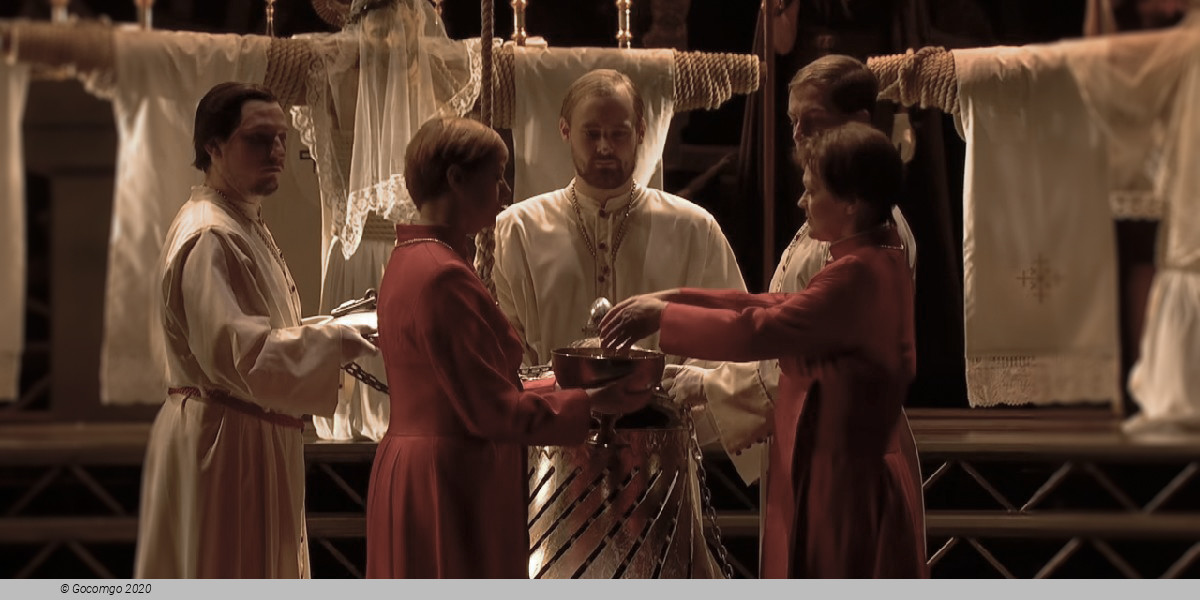
The crowd departs: (Duet, Norma and Pollione: "In mia man alfin tu sei" / "At last you are in my hands"). Norma demands that he forever shun Adalgisa; only then will she release him and never see him again. He refuses, and she vents her anger by telling him that she will then kill her children. "Strike me instead", he demands, "so that only I alone will die", but she quickly asserts that not only will all the Romans die, but so will Adalgisa, who has broken her vows as a priestess. This prompts him to plead for her life. (Cabaletta: Norma and Pollione: "Già mi pasco ne' tuoi sguardi" / "Already I take pleasure in the looks you give me".) When Pollione demands the knife, she calls the priests to assemble. Norma announces that it would be better to sacrifice a priestess who has broken her vows, and orders the pyre to be lit. Oroveso demands to know who is to be sacrificed while Pollione begs that she stays silent. Norma then wonders to herself if she is not in fact the guilty one, then reveals that it is she who is to be the victim: a high priestess who has broken her vows, has become involved with the enemy, and has borne his children. (Aria, Norma to Pollione: "Qual cor tradisti" / "The heart you betrayed"; Duet: Norma and Pollione; ensemble, Norma, Oroveso, Pollione, druids, priests: each expresses his/her sorrow, anger, pleas to Norma, with Oroveso learning for the first time that Norma is a mother.)
In the concerted finale, Norma pleads with Oroveso to spare her children ("Deh! non volerli vittime" / "Please don't make them victims"). As she prepares to leap into the flames, the re-enamoured Pollione joins her, declaring "your pyre is mine as well. There, a holier and everlasting love will begin".




 Piazza Vittorio Gui, 1