Teatro Massimo tickets 10 March 2027 - Lucia di Lammermoor | GoComGo.com

Lucia di Lammermoor

Teatro Massimo, Palermo, Italy
All photos (5)
Select date and time
6:30 PM
From
US$ 115

E-tickets: Print at home or at the box office of the event if so specified. You will find more information in your booking confirmation email.

You can only select the category, and not the exact seats.
If you order 2 or 3 tickets: your seats will be next to each other.
If you order 4 or more tickets: your seats will be next to each other, or, if this is not possible, we will provide a combination of groups of seats (at least in pairs, for example 2+2 or 2+3).

Important Info
Type: Opera
City: Palermo, Italy
Starts at: 18:30
Acts: 3

E-tickets: Print at home or at the box office of the event if so specified. You will find more information in your booking confirmation email.

You can only select the category, and not the exact seats.
If you order 2 or 3 tickets: your seats will be next to each other.
If you order 4 or more tickets: your seats will be next to each other, or, if this is not possible, we will provide a combination of groups of seats (at least in pairs, for example 2+2 or 2+3).

Cast
Performers
Conductor: Stefano Ranzani
Chorus: Teatro Massimo Chorus
Creators
Composer: Gaetano Donizetti
Director: Lorenzo Mariani
Librettist: Salvadore Cammarano
Poet: Walter Scott
Overview

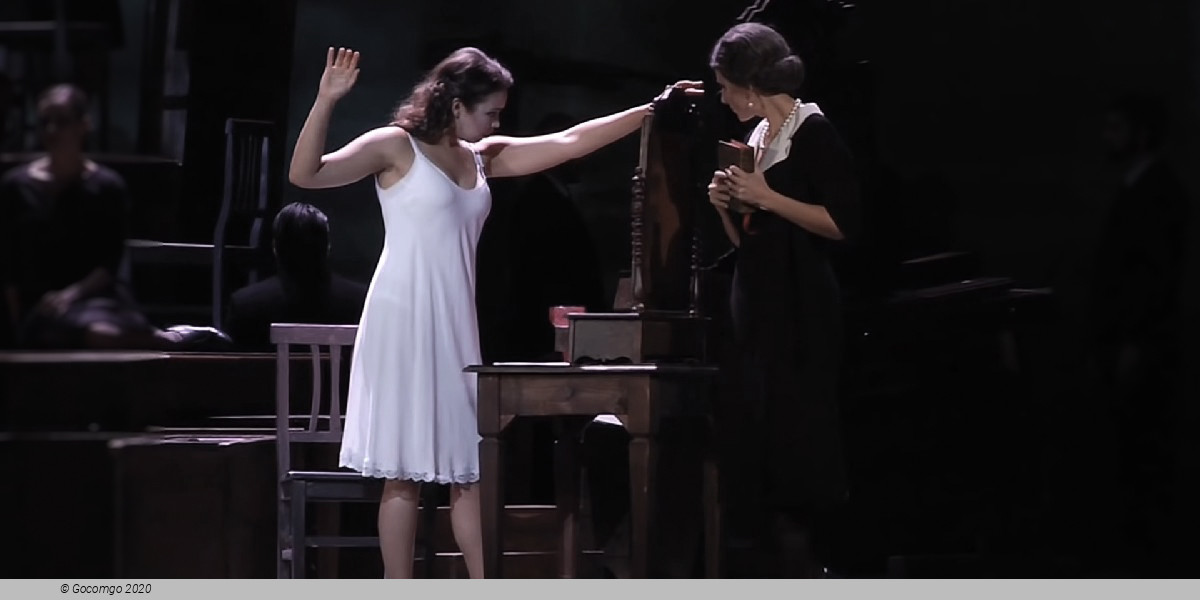
Love, betrayal, and madness converge in Gaetano Donizetti’s Lucia di Lammermoor, one of the crowning achievements of the bel canto repertoire. Based on Sir Walter Scott’s celebrated novel, this timeless opera tells a haunting story of passion destroyed by family rivalry, political ambition, and the cruel hand of fate. With its unforgettable melodies and extraordinary vocal writing, Lucia di Lammermoor continues to enchant audiences as one of opera’s most moving and emotionally charged masterpieces.

Set in the mist-covered Scottish Highlands, the opera follows Lucia Ashton, a young woman forced into a marriage that betrays her true love for Edgardo of Ravenswood. Trapped between duty and desire, Lucia is driven to despair, culminating in the legendary "Mad Scene"—one of the most celebrated moments in operatic history. Donizetti’s score unfolds with remarkable elegance and dramatic intensity, blending lyrical duets, brilliant ensembles, and breathtaking arias that showcase the expressive beauty of the human voice.

Production of the Teatro Carlo Felice in Genova

History
Premiere of this production: 26 September 1835, Teatro di San Carlo, Naples

Lucia di Lammermoor is a dramma tragico (tragic opera) in three acts by Gaetano Donizetti. Salvadore Cammarano wrote the Italian-language libretto loosely based upon Sir Walter Scott's historical novel The Bride of Lammermoor.

Synopsis

Time: Early 18th century
Place: Scotland

Act 1

Scene 1: The gardens of Ravenswood Castle

Normanno, captain of the castle guard, and other retainers are searching for an intruder. He tells Enrico that he believes that the man is Edgardo of Ravenswood, and that he comes to the castle to meet Enrico's sister, Lucia. It is confirmed that Edgardo is indeed the intruder. Enrico reaffirms his hatred for the Ravenswood family and his determination to end the relationship.

Scene 2: By a fountain at the entrance to the park, beside the castle

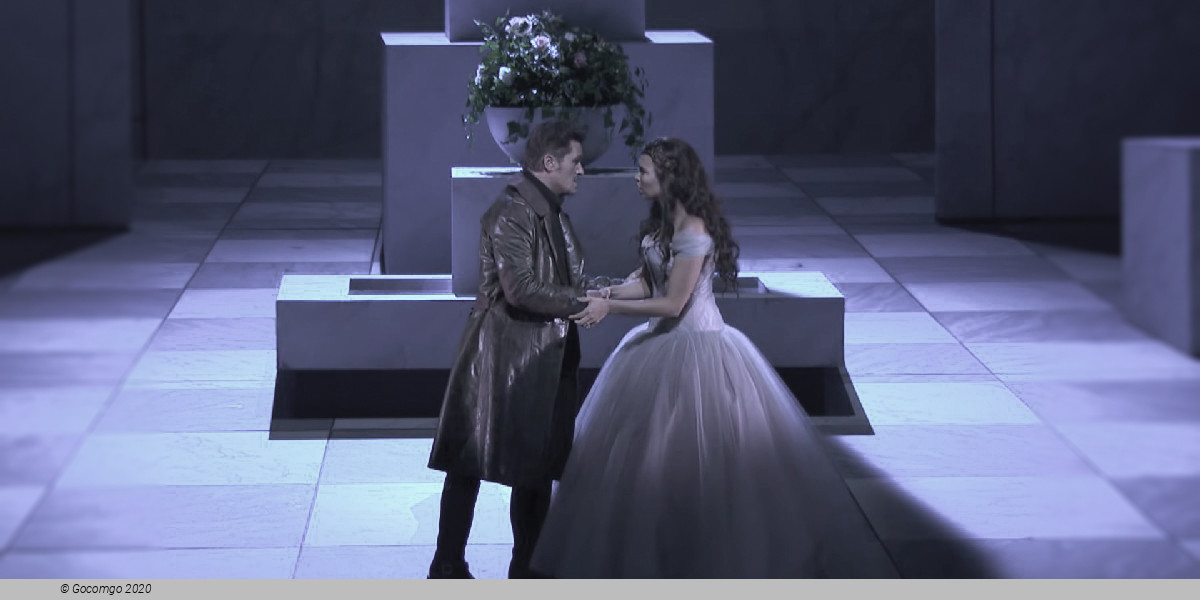
Lucia waits for Edgardo. In her famous aria "Regnava nel silenzio", Lucia tells her maid Alisa that she has seen the ghost of a girl killed on the very same spot by a jealous Ravenswood ancestor. Alisa tells Lucia that the apparition is a warning and that she must give up her love for Edgardo. Edgardo enters; for political reasons, he must leave immediately for France. He hopes to make his peace with Enrico and marry Lucia. Lucia tells him this is impossible, and instead they take a sworn vow of marriage and exchange rings. Edgardo leaves.

Act 2

Scene 1: Lord Ashton's apartments

Preparations have been made for the imminent wedding of Lucia to Arturo. Enrico worries about whether Lucia will really submit to the wedding. He shows his sister a forged letter seemingly proving that Edgardo has forgotten her and taken a new lover. Enrico leaves Lucia to further persuasion, this time by Raimondo, Lucia's chaplain and tutor, that she should renounce her vow to Edgardo, for the good of the family, and marry Arturo.

Scene 2: A hall in the castle

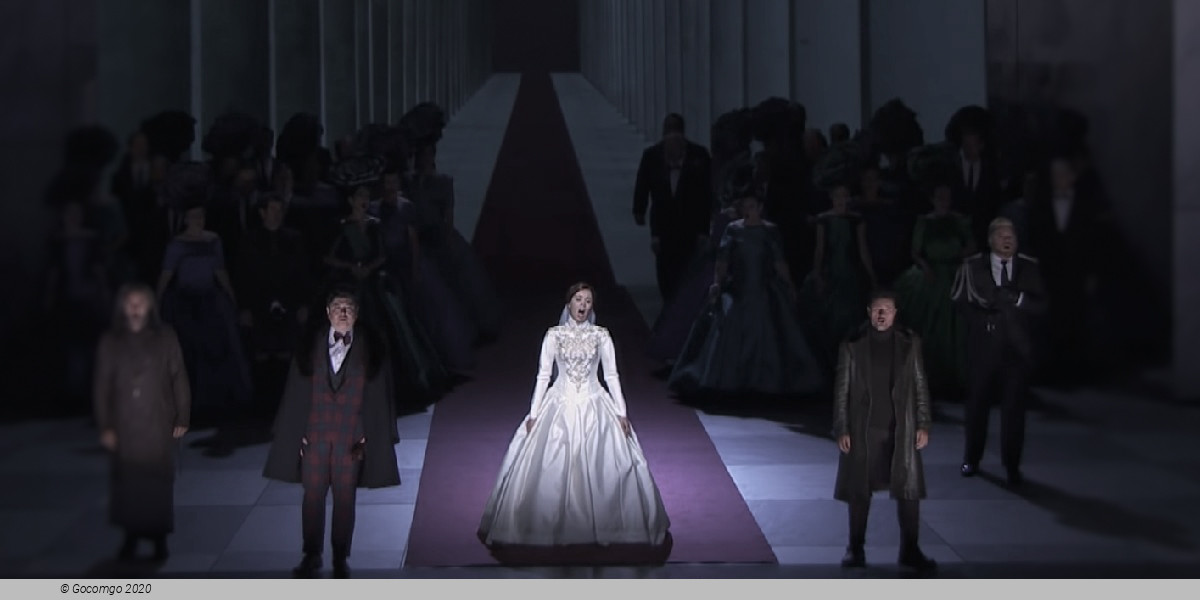
Arturo arrives for the marriage. Lucia acts strangely, but Enrico explains that this is due to the death of her mother. Arturo signs the marriage contract, followed reluctantly by Lucia. At that point Edgardo suddenly appears in the hall. Raimondo prevents a fight, but he shows Edgardo Lucia's signature on the marriage contract. Edgardo curses her, demanding that they return their rings to each other. He tramples his ring on the ground, before being forced out of the castle.

Act 3

Scene 1: Wolfcrag

Enrico visits Edgardo to challenge him to a duel. He tells him that Lucia is already enjoying her bridal bed. Edgardo agrees to fight him. They will meet later by the graveyard of the Ravenswoods, near the Wolf's Crag.

Scene 2: A Hall

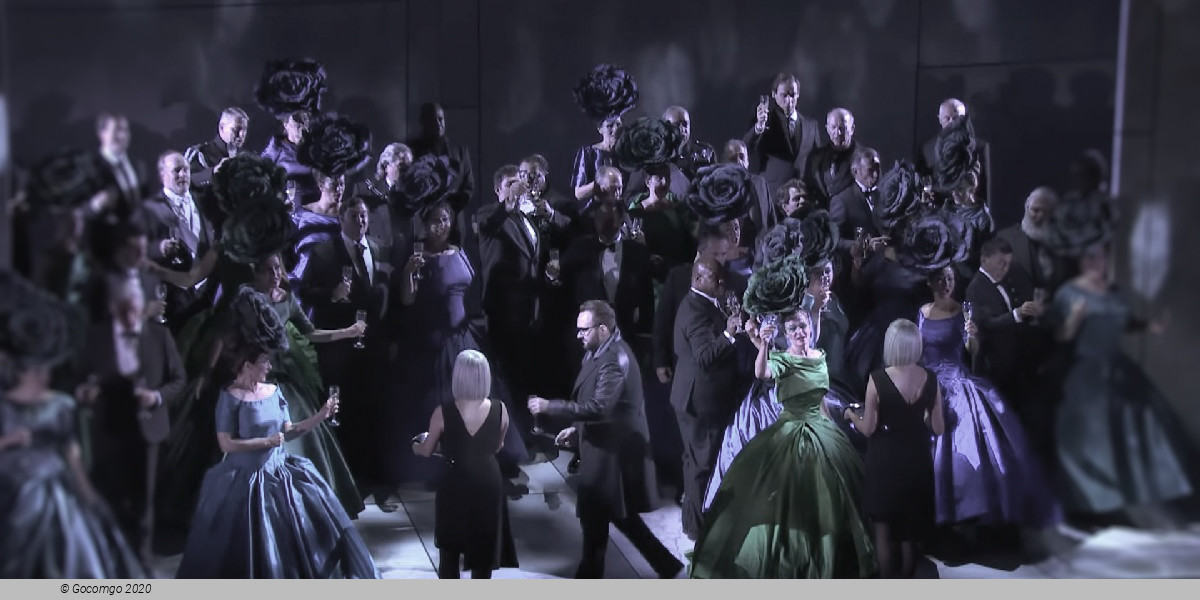
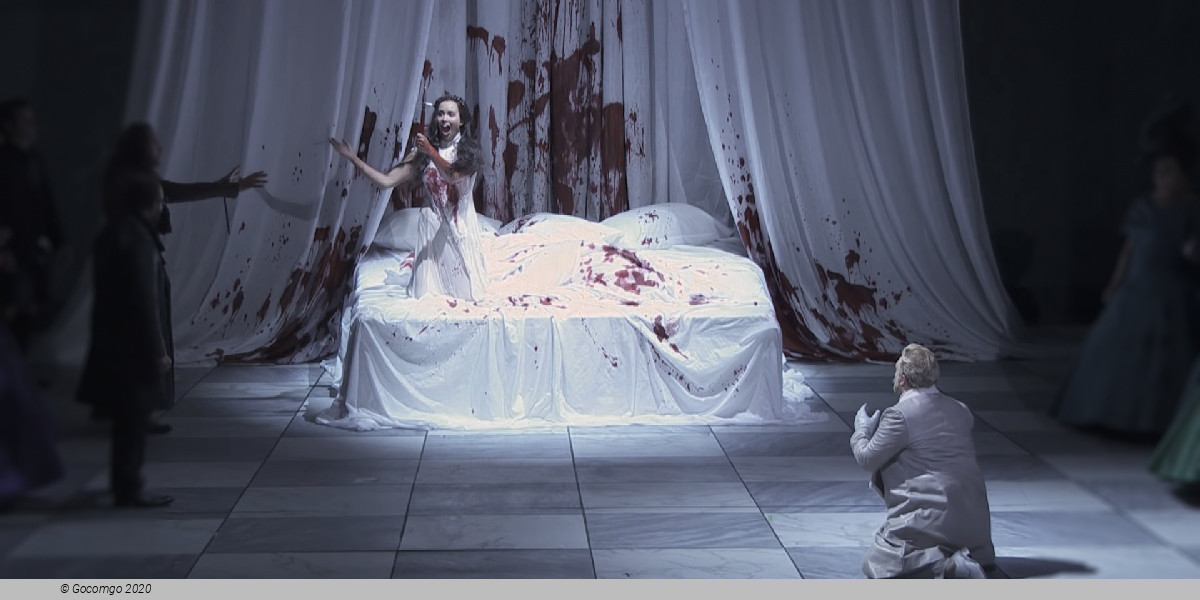
Raimondo interrupts the marriage celebrations to tell the guests that Lucia has gone mad and killed her bridegroom Arturo. Lucia enters. In the aria "Il dolce suono" she imagines being with Edgardo, soon to be happily married. Enrico enters and at first threatens Lucia but later softens when he realizes her condition. Lucia collapses. Raimondo blames Normanno for precipitating the whole tragedy.

Scene 3: The graveyard of the Ravenswood family

Edgardo is resolved to kill himself on Enrico's sword. He learns that Lucia is dying and then Raimondo comes to tell him that she has already died. Edgardo stabs himself with a dagger, hoping to be reunited with Lucia in heaven.

Venue Info

Teatro Massimo - Palermo
Location   Piazza Verdi

The Teatro Massimo Vittorio Emanuele is an opera house and opera company located on the Piazza Verdi in Palermo, Sicily. It was dedicated to King Victor Emanuel II. It is the biggest in Italy, and one of the largest of Europe (the third after the Opéra National de Paris and the K. K. Hof-Opernhaus in Vienna), renowned for its perfect acoustics.

The Teatro Massimo Vittorio Emanuele in Palermo opened its doors to the public on the evening of 16 May 1897, twenty-two years after the solemn public ceremony of the laying of the first stone.

This took place on 12 January 1875, and ended a chequered series of vicissitudes with interminable squabbles lasting over ten years.

The international competition for the project and realisation of the opera house had been announced by Palermo Council in 1864, and its prime mover was the mayor, Antonio Starrabba di Rudini.

For a long time there had been talk of building a big new theatre in Palermo, worthy of the second biggest city in southern Italy after Naples.

Palermo, in the second half of the nineteenth century, was engaged in getting itself a new identity in the light of the new national unity.

Cultural life was influenced by the new Italian State and the positive consequences of the activity of enlightened entrepreneurs like the Florios, who also made generous donations to the building of the opera house and for some years were also its no less enlightened managers.

Intense commercial relations led to the convergence and development in Palermo of interests with a European dimension and brought the city to be continually in touch with different cultural models than its own. This was the start of the Belle Epoque, a time of cultural and economic rebirth for Palermo which would in turn become almost mythical for the future generations and was only to be interrupted by the outbreak of World War I.

The opening night happened on May 16 1897: Giuseppe Verdi's Falstaff was the inaugural opera. The conductor was Leopoldo Mugnone. A ticket in the boxes would then cost 80 liras, one in the gallery just 3. At the time of its first opening, thanks to its surface of 7,730 square metres, the Teatro Massimo was the third in Europe, after the opera houses in Paris and Wien.

From the opening in 1897 to 1935 the opera seasons were put together by private firms, often a different one each year, that would organize the performances.

In 1935 the theatre was officially designated with a Decree from the Italian Ministry of Culture "Ente Teatrale Autonomo", and thus recognized as a public theatre.

In 1974 the theatre was closed for reconstruction works that were supposed to be finished in a relatively short time. It remained closed for 23 years and was reopened with the concert on May 12 1997, conducted by Franco Mannino in the first part and by Claudio Abbado in the second, with the Berliner Philharmoniker.

Important Info
Type: Opera
City: Palermo, Italy
Starts at: 18:30
Acts: 3
Top of page