Teatro Real tickets 5 March 2027 - Katia Kabanová | GoComGo.com

Katia Kabanová

Teatro Real, Main Auditorium, Madrid, Spain
All photos (8)
Select date and time
7:30 PM
From
US$ 107

E-tickets: Print at home or at the box office of the event if so specified. You will find more information in your booking confirmation email.

You can only select the category, and not the exact seats.
If you order 2 or 3 tickets: your seats will be next to each other.
If you order 4 or more tickets: your seats will be next to each other, or, if this is not possible, we will provide a combination of groups of seats (at least in pairs, for example 2+2 or 2+3).

Important Info
Type: Opera
City: Madrid, Spain
Starts at: 19:30

E-tickets: Print at home or at the box office of the event if so specified. You will find more information in your booking confirmation email.

You can only select the category, and not the exact seats.
If you order 2 or 3 tickets: your seats will be next to each other.
If you order 4 or more tickets: your seats will be next to each other, or, if this is not possible, we will provide a combination of groups of seats (at least in pairs, for example 2+2 or 2+3).

Cast
Performers
Conductor: Gustavo Gimeno (Tichon Ivanyč Kabanov)
Tenor: Bogdan Volkov (Váňa Kudrjaš)
Choir: Choir of the Teatro Real Madrid
Mezzo-Soprano: Christa Mayer (Marfa Ignatěvna Kabanová (Kabanicha))
Mezzo-Soprano: Jana Kurucová (Varvara)
Soprano: Laura Orueta (Fekluša)
Mezzo-Soprano: Laura Vila (Glaša)
Soprano: Mané Galoyan (Káťa (Katerina))
Baritone: Manel Esteve (Kuligin)
Tenor: Matthew Newlin (Boris Grigorjevič)
Tenor: Michael Laurenz (Tichon Ivanyč Kabanov)
Bass-Baritone: Peter Kálmán (Savël Prokofjevic Dikój)
Creators
Composer: Leoš Janáček
Playwright: Alexander Ostrovsky
Director: Christof Loy
Director: Étienne Pluss
Light: Fabrice Lebour
Musical Direction: Gustavo Gimeno
Chorus Master: José Luis Basso
Costume designer: Robby Duiveman
Librettist: Vincenc Červinka
Overview

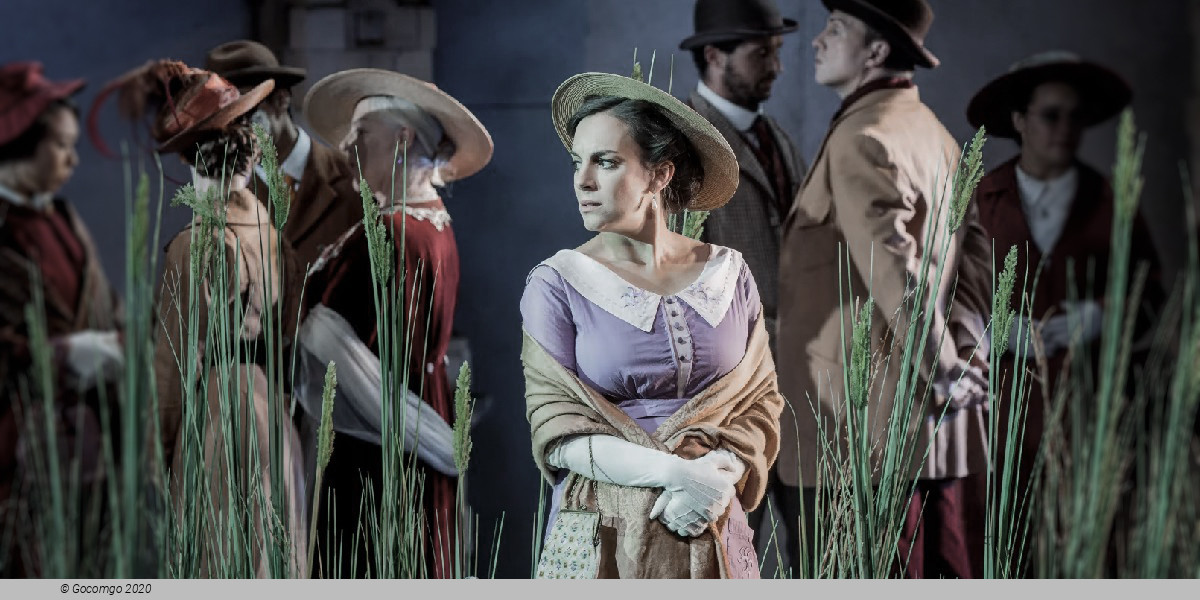
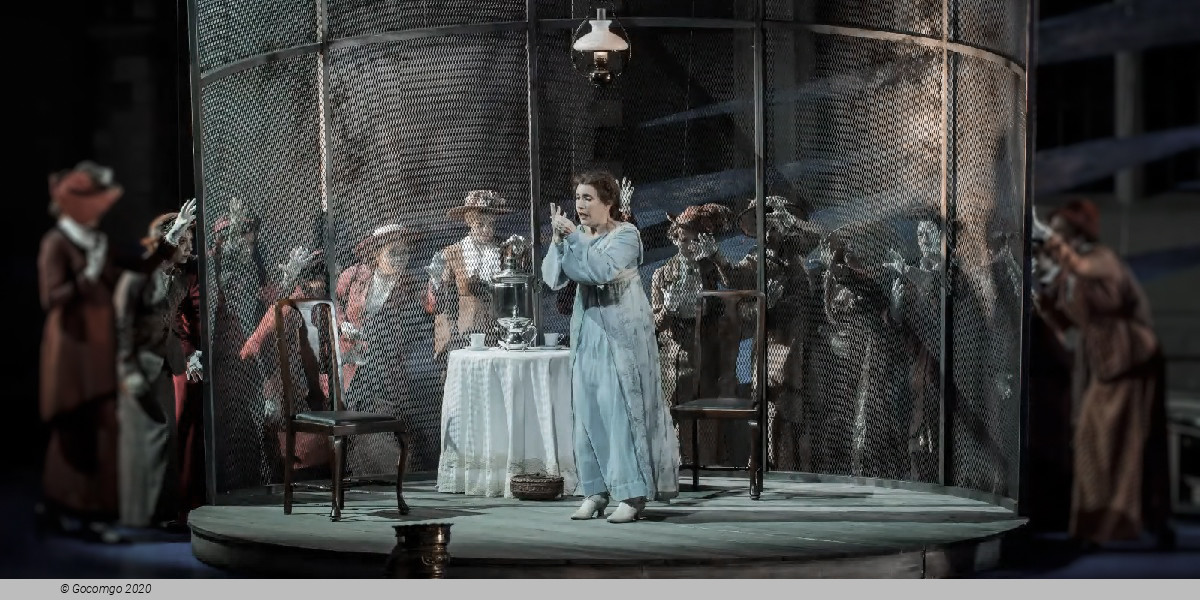
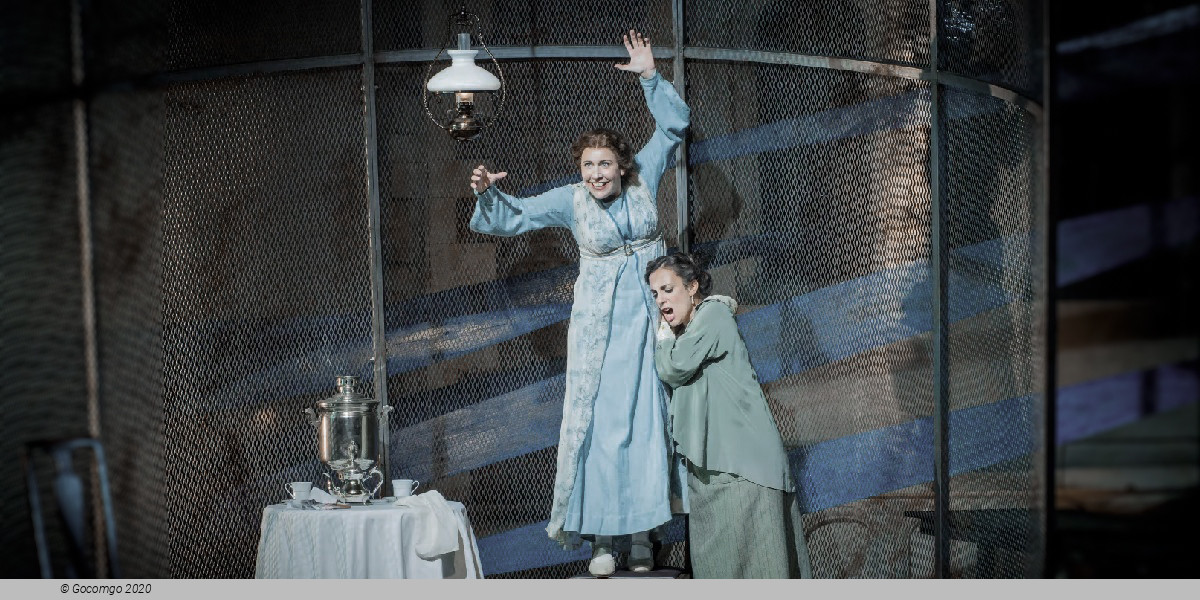
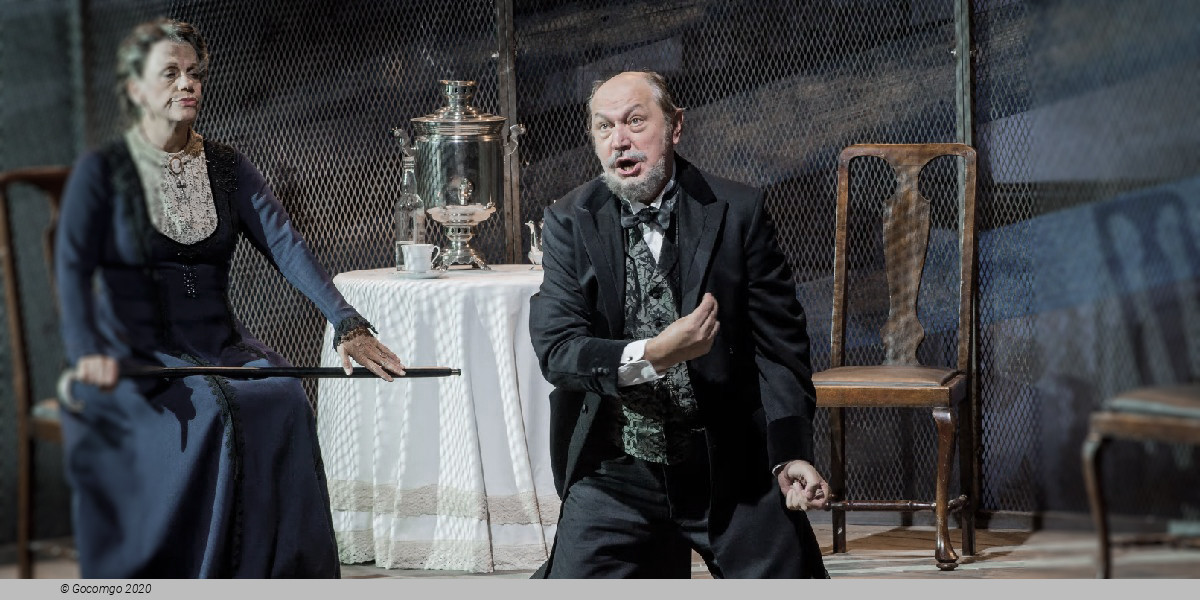
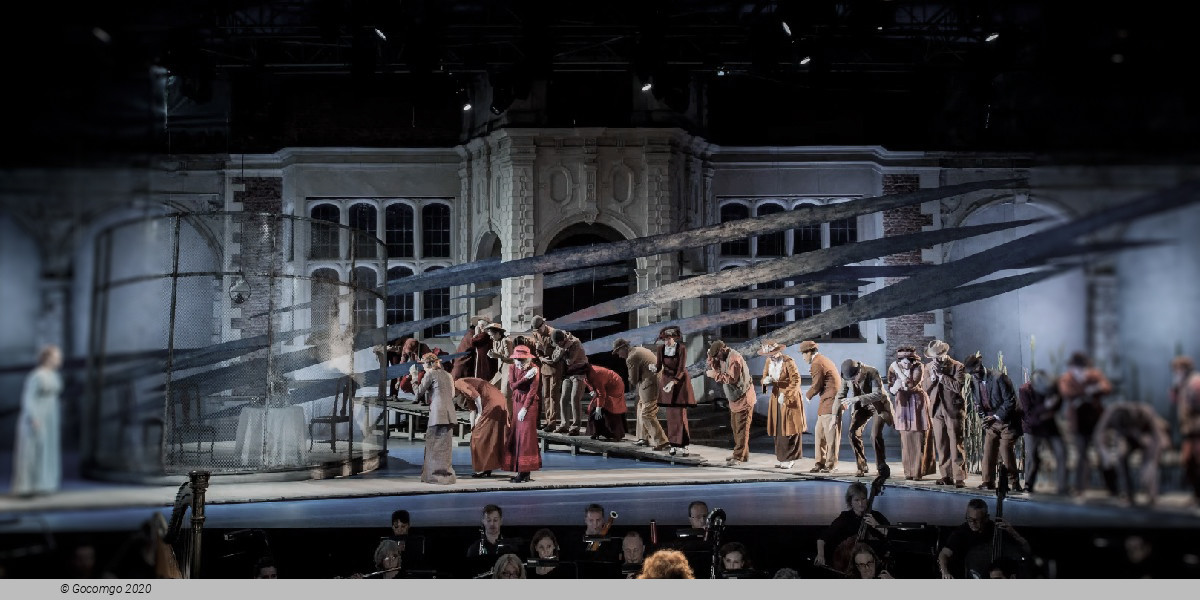
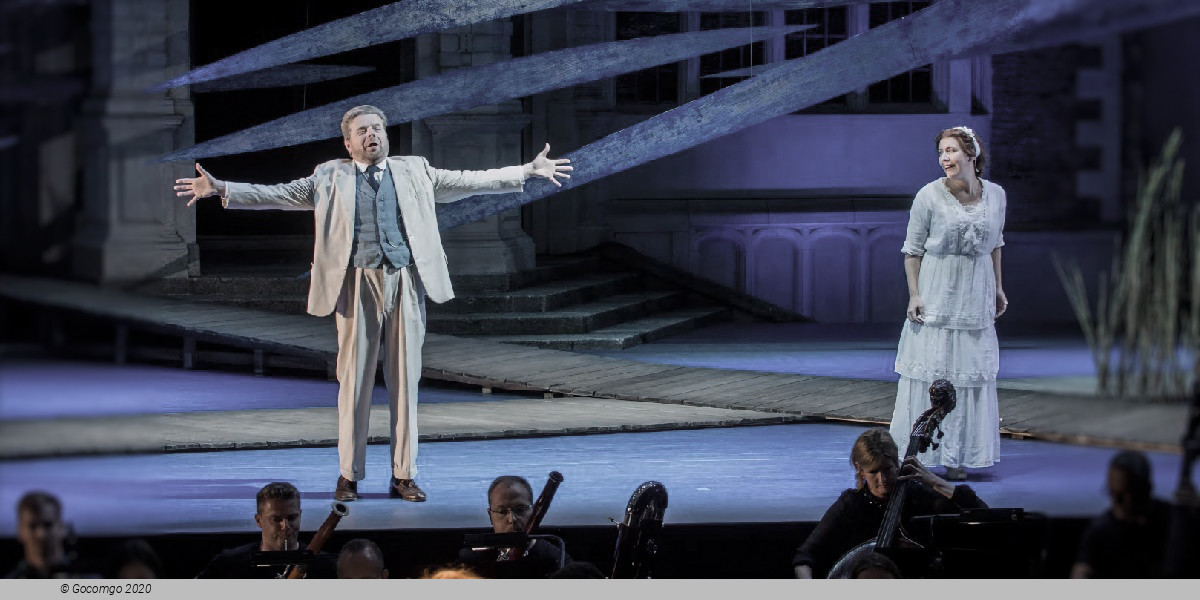
One of the most important operas of the 20th century returns to the Real in a new production by Christof Loy. Leoš Janáček’s shocking drama comes this time with Gustavo Gimeno at the helm of the Orchestra of Teatro Real and stars Mané Galoyan, Bogdan Volkov, Christa Mayer o Matthew Newlin, among other artists. 

History
Premiere of this production: 23 November 1921, National Theatre, Brno

Káťa Kabanová (also known in various spellings including Katia, Katja, Katya, and Kabanowa) is an opera in three acts, with music by Leoš Janáček to a libretto by Vincenc Červinka, based on The Storm, a play by Alexander Ostrovsky. The opera was also largely inspired by Janáček's love for Kamila Stösslová. This is often considered his first "mature" opera, despite the fact that he was 67 when it was premiered. Káťa Kabanová is a clear response to Janáček's feelings for Kamila, and the work is dedicated to her.

Synopsis

Place: The Russian town of Kalinov on the shores of the Volga River
Time: The 1860s

Act 1
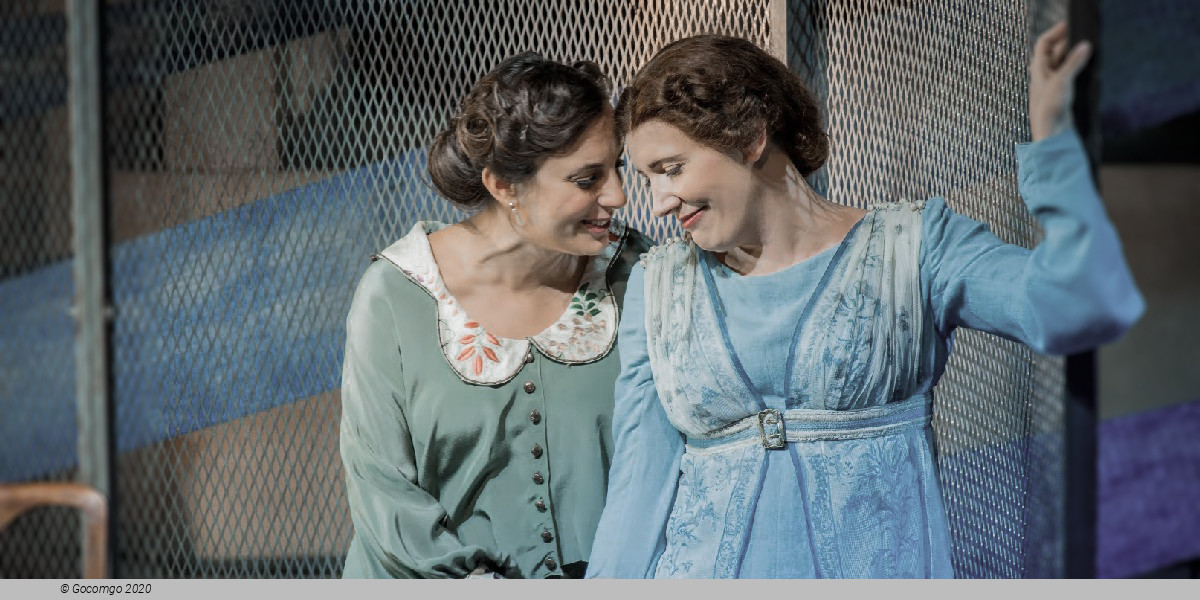
Vána Kudrjás admires the view of the Volga River, which amuses the more literal-minded housekeeper of the adjoining Kabanov estate. Two men approach, Dikoj and his nephew, Boris Grigorjevic, where Dikoj is berating Boris. Dikoj learns that Kabanicha, the Kabanov family matriarch, is not at home. Dikoj leaves, and Boris explains to Vána Kudrjás why he tolerates the abuse: his parents are dead, and to be able collect his inheritance, he must respect his uncle no matter what his uncle says to him. Boris also tells Vána Kudrjás that he is secretly in love with Káťa, the young wife of Tichon. Káťa appears and Kabanicha reproaches her son Tichon – Kata's husband – for his inattentiveness. Tichon and Káťa try to calm her down, but Kabanicha will have none of it, telling Tichon that he spoils Káťa. Tichon complains to Varvara, the family's foster daughter, who rebukes him for retreating into drinking more than defending Káťa.

In the house, Káťa tells Varvara of her happy childhood, and dreams of having a man who truly loves her. Tichon enters to say good-bye, as he is journeying to Kazan on business, for Kabanicha. Káťa asks to accompany him or for him not to go, but he insists. Káťa then asks him to make her swear an oath to speak to no strangers during his absence, which puzzles Tichon. Kabanicha announces that Tichon must go, but not before instructing Káťa how to behave in his absence. Tichon dutifully says that Káťa must treat Kabanicha like her own mother and always act properly. He bows to Kabanicha and kisses her and Kát'a before he departs.

Act 2
The women are working on embroidery. Kabanicha criticizes Káťa for not appearing more sorrowful at Tichon's absence. After Kabanicha leaves, Varvara shows Káťa the key to the far part of the garden. Varvara intends to meet Vána, her lover, there. She hints at the same suggestion for Káťa, and puts the key in her hand. Káťa is hesitant, but then surrenders to fate and will meet Boris. She steps outside as evening comes on. Kabanicha reappears with Dikoj, who is drunk and complaining that people take advantage of his softhearted nature. However, Kabanicha chastises him.

Vána Kudrjás is waiting for Varvara in the garden. Boris then unexpectedly appears, after receiving a message to go there. Varvara arrives, and she and Vána go for a walk by the river. Káťa then appears, and Boris declares his love for her. She is at first worried about social ruin, but finally she reciprocates, confessing her secret feelings for him. They embrace and themselves leave for a walk. Vána and Varvara return, as she explains her precautions in case Kabanicha suddenly appears. Káťa and Boris are heard in wordless, ecstatic duet as Vána and Varvara say that it is time to return home.

Act 3
Ten days later
Vána Kudrjás and Kuligin are strolling near the river when an approaching storm causes them to take shelter in a ruined building. Other people join them, including Dikoj. Vána tries to calm Dikoj with scientific explanations about a new invention, the lightning rod. However, this only angers Dikoj, who insists that lightning is not caused by electricity but is the punishment from God. The rain dies down, and people start to leave the shelter. Vána meets Boris and Varvara. Varvara says that Tichon has returned, and Káťa is very agitated. Kabanicha arrives with Tichon and Káťa. The storm returns, and people assume initially that this is what upsets Káťa. However, she confesses to Tichon in front of everyone her assignation with Boris during her husband's absence. Then she runs out into the storm.

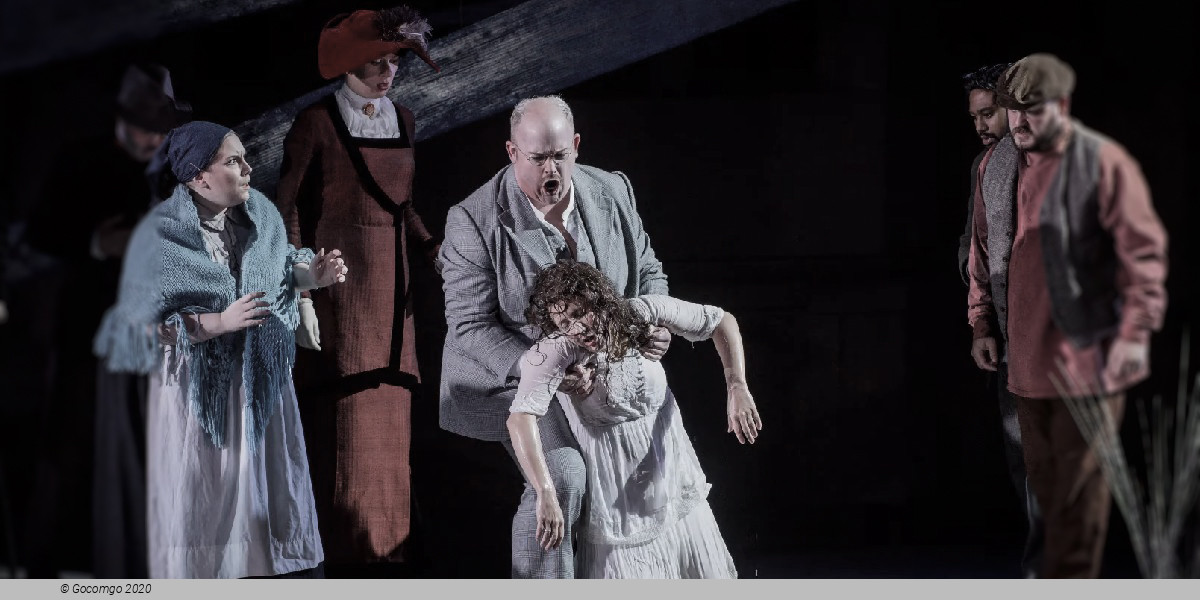
Evening approaches after the storm has ended. Tichon and a search party are looking for Káťa. At first among the party, Varvara and Vána then decide to leave the village for Moscow and start a new life. They leave, and as the searchers continue, Káťa appears. She knows that her confession has dishonoured her and humiliated Boris. She feels tormented and wants to meet Boris one more time. Boris appears and sees her, and the two embrace. Boris says that his uncle is sending him away to another town, but asks her what will become of her. As her sanity deteriorates, she first begs him to be allowed to accompany him, then insists that she could not and bids him farewell; he leaves in sorrow. After thinking of how nature will continue to flourish over her grave, Káťa throws herself into the river. Kuligin sees this from the far bank and calls for help. Tichon appears, followed by Kabanicha. Tichon tries to help Káťa but is restrained by Kabanicha; he blames her for Káťa's suicide. Dikoj appears with Káťa's body and lays her on the ground. Tichon cries over the body as, without any emotion, Kabanicha thanks the bystanders—or, as often done, the audience—for their help.

Venue Info

Teatro Real - Madrid
Location   Isabel II Square, s / n.

Teatro Real is a major opera house located in Madrid. Today the Teatro Real opera is one of the great theaters of Europe hosting large productions involving leading international figures in opera singing, musical direction, stage direction, and dance. Founded in 1818 and inaugurated on 19 November 1850, it closed in 1925 and reopened in 1966. Beginning in 1988 it underwent major refurbishing and renovation works and finally reopened in 1997 with a capacity of 1,746 seats. The theater offers visitors guided tours in several languages, including the auditorium, stage, workshops, and rehearsal rooms.

Founded by King Ferdinand VII in 1818, and after thirty-two years of planning and construction, a Royal Order on 7 May 1850 decreed the immediate completion of the "Teatro de Oriente" and the building works were finished within five months. The Opera House, located just in front of the Palacio Real, the official residence of the Queen who ordered the construction of the theatre, Isabel II, was finally inaugurated on 19 November 1850, with Donizetti's La Favorite.

The Teatro soon became one of the most prestigious opera houses in Europe. For over five decades it hosted the most renowned singers and composers of the time. In the early period, it saw famous opera singers such as Alboni, Frezzolini, Marietta Gazzaniga, Rosina Penco, Giulia Grisi, Giorgio Ronconi, Italo Gardoni, Mario de Candia and Antonio Selva among many others. In 1863, Giuseppe Verdi visited the theatre for the Spanish premiere of his La Forza del Destino. At its peak, in the last quarter of the 19th century, the Teatro hosted world renowned artists such as Adela Borghi, Marie Sasse, Adelina Patti, Christina Nilsson, Luisa Tetrazzini, Mattia Battistini, Julián Gayarre, Angelo Masini, Francesco Tamagno and Enrico Tamberlick. In 1925, the Ballets Russes of Diaghilev performed in the theatre with the presence of Nijinsky and Stravinsky.

From 1867 to 1925 the Teatro Real also housed the Madrid Royal Conservatory. In December of 1925 a Royal Order ordered its activities to be discontinued owing to the damage that the construction of the Metro de Madrid had caused to the building. The government set out to restore it and ordered numerous projects to be drawn out for its renovation, such as that from architect Urdanpilleta Flórez, who proposed a monumental remodeling of the building. However, financial difficulties prevented the completion of these projects and led to a simple restoration, sponsored by the Juan March Institute, and carried out first by the architect Manuel Gonzalez Valcárcel, and later by architects Miguel Verdú Belmonte and Francisco Rodriguez Partearroyo.

The theatre reopened in 1966 as a concert hall as well as the main concert venue for the Spanish National Orchestra and the RTVE Symphony Orchestra. The reopening was celebrated with a concert of the Spanish National Orchestra conducted by Rafael Frühbeck de Burgos, and the Orfeón Donostiarra. In 1969, the 14th Eurovision Song Contest was held at the theatre, featuring an onstage metal sculpture created by surrealist Spanish artist Salvador Dalí.

Important Info
Type: Opera
City: Madrid, Spain
Starts at: 19:30
Top of page