Teatro Regio di Parma tickets 14 October 2027 - La traviata | GoComGo.com

La traviata

Teatro Regio di Parma, Parma, Italy
Select date and time
8 PM
From
US$ 219

E-tickets: Print at home or at the box office of the event if so specified. You will find more information in your booking confirmation email.

You can only select the category, and not the exact seats.
If you order 2 or 3 tickets: your seats will be next to each other.
If you order 4 or more tickets: your seats will be next to each other, or, if this is not possible, we will provide a combination of groups of seats (at least in pairs, for example 2+2 or 2+3).

Important Info
Type: Opera
City: Parma, Italy
Starts at: 20:00

E-tickets: Print at home or at the box office of the event if so specified. You will find more information in your booking confirmation email.

You can only select the category, and not the exact seats.
If you order 2 or 3 tickets: your seats will be next to each other.
If you order 4 or more tickets: your seats will be next to each other, or, if this is not possible, we will provide a combination of groups of seats (at least in pairs, for example 2+2 or 2+3).

Cast
Performers
Conductor: Michele Spotti
Choir: Coro del Teatro Regio di Parma
Orchestra: Filarmonica Arturo Toscanini
Creators
Composer: Giuseppe Verdi
Author: Alexandre Dumas (fils)
Director: Emma Dante
Librettist: Francesco Maria Piave
Festival

Festival Verdi 2027

From 1 to 24 October 2027, Parma and Busseto celebrate the music and dramatic imagination of Giuseppe Verdi at the 27th edition of Festival Verdi. Centred on the theme La colpa e il perdono (Guilt and Forgiveness), the festival explores the clash between personal desire, social conventions and moral judgement through three operas written during a pivotal period in Verdi’s creative development.

Overview

The third in a succession of operas that, between 1851 and 1853, established Verdi as a composer deeply attuned to popular taste, La traviata was something of a disaster at its premiere at Venice’s La Fenice on 6 March 1853. Within a few months, however, it had more than redeemed itself, eventually becoming the most frequently performed opera in the world.

Among the outcasts of society who so fascinated Verdi — a theme first explored in Rigoletto two years earlier — the figure of Violetta Valéry, modelled on Marguerite Gautier from Alexandre Dumas fils’s La Dame aux camélias, introduced a more abrasive element: an indictment of bourgeois hypocrisy that displaced sentimental feeling as the central concern. Verdi had already explored this theme in Stiffelio, but in La traviata it reached full maturity.

Verdi combined this thematic innovation with extraordinary dramatic power, sustained by an inexhaustible melodic imagination, a vocal style that brings the music close to the rhythms of everyday conversation, and orchestration that is rich yet clear. Together, these qualities propelled the opera into a state of perpetual modernity — one that inevitably unsettled the Venetian audience at its premiere.

This is not an opera of flashing swords and shadowy intrigues, but of small, everyday gestures; not of characters pierced by daggers, but of a woman dying of consumption. Verdi places a woman who has until then lived by transactional love on the same moral footing as respectable women. There was enough here to provoke outrage at first, but with the passage of time, the opera has moved audiences to profound emotion, because La traviata speaks all too directly to every one of us.

Giuseppe Martini

History
Premiere of this production: 06 March 1853, Teatro La Fenice, Venice

La traviata is an opera in three acts by Giuseppe Verdi set to an Italian libretto by Francesco Maria Piave. It is based on La Dame aux camélias (1852), a play adapted from the novel by Alexandre Dumas fils. The opera was originally titled Violetta, after the main character. It was first performed on 6 March 1853 at the La Fenice opera house in Venice.

Synopsis

Set in and around Paris in about 1850.

Act I

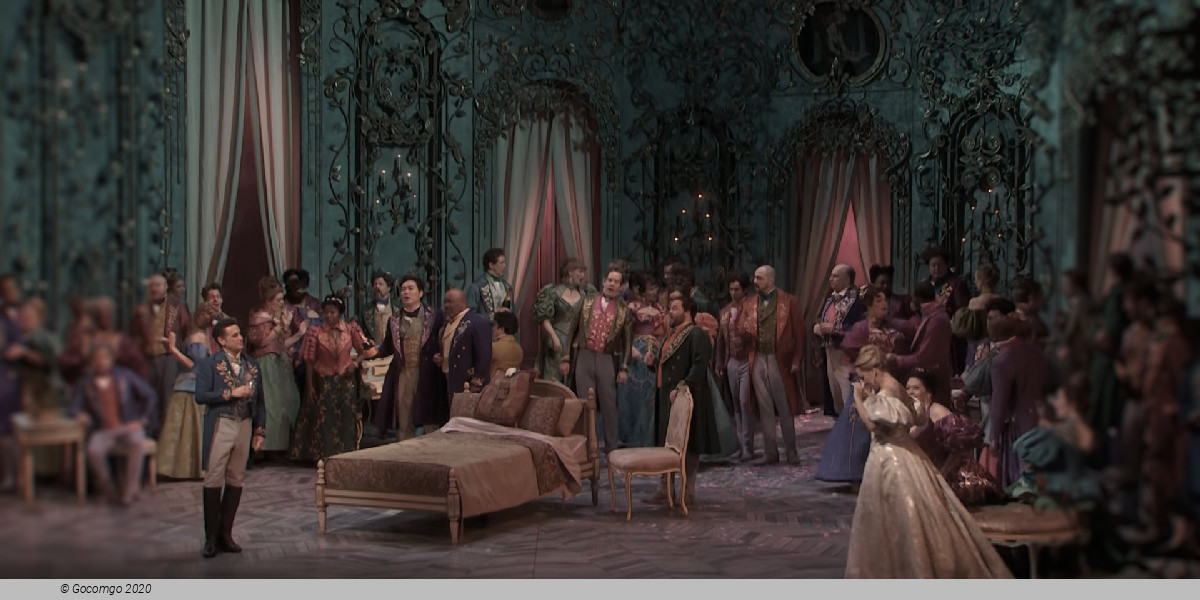
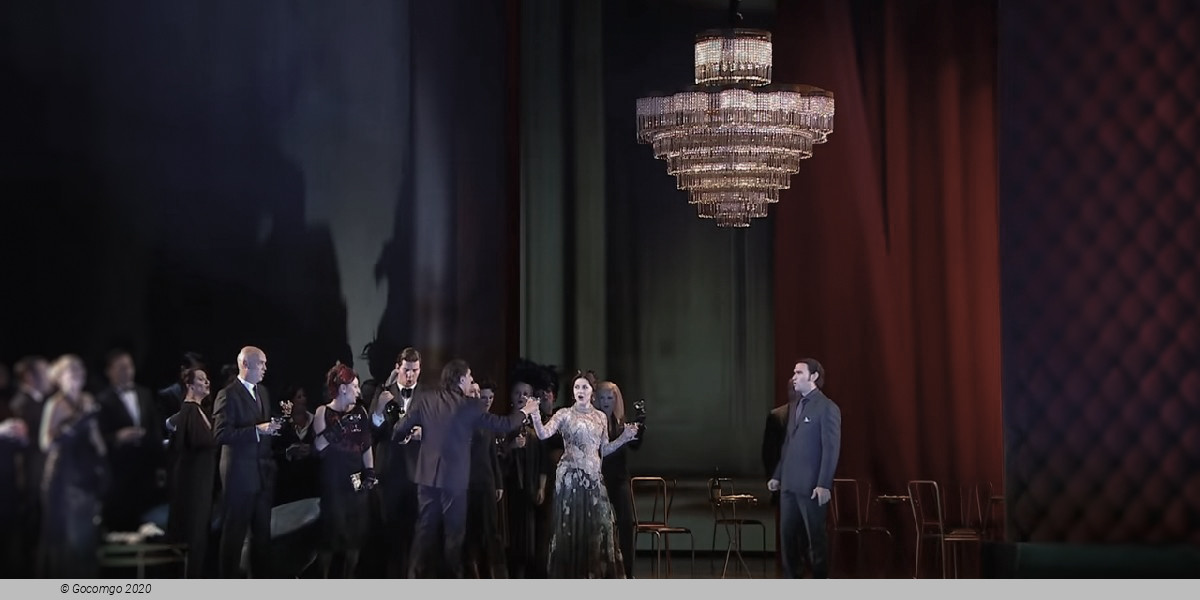
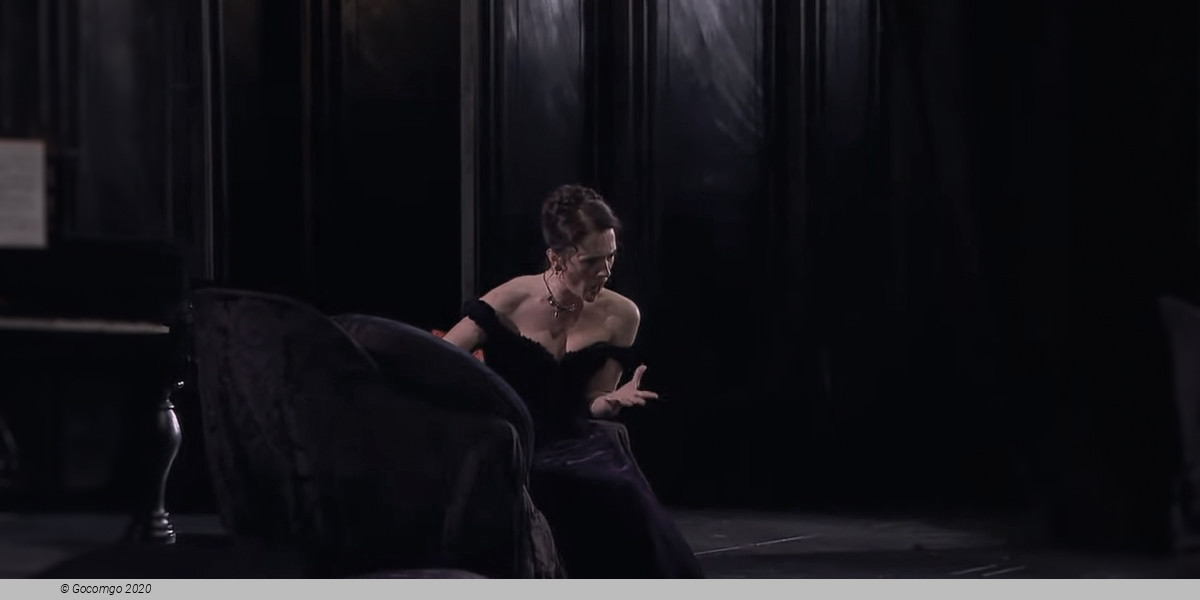
Violetta Valéry, a Parisian courtesan, greets the guests at her salon. Among them are Flora Bervoix, the Marchese D’Obigny, Baron Douphol and Gastone, who introduces Violetta to a new admirer of hers, Alfredo Germont. The young Germont, who has been admiring her from afar, joins her in a drinking song. An orchestra strikes up in an adjacent room, inviting the guests to dance. As the guests make their way to the ballroom, Violetta, who is suffering from consumption, feels faint; she therefore sends the guests on ahead and retires to her boudoir to recover. Alfredo enters and, realising that they are alone, admits his love for her. She replies that love means nothing to her. She
is, however, touched by the young man’s sincerity and promises to meet him the following day.
When the guests have departed, she asks herself whether Alfredo is the man she could love. Despite
the strains of Alfredo’s love song drifting in from outside, she decides she prefers her freedom.

Act II

scene 1
A few months later: Alfredo and Violetta have set up house together in the country, outside Paris. Alfredo says how happy they are, but when Violetta’s maid Annina lets on that Violetta has been selling her belongings to pay for the house, he hastens into town to raise the money himself. Violetta comes in search of him and discovers an invitation from her friend Flora to a soirée that very night. Violetta has no intention of returning to her former life, but she is forced to reconsider
on encountering Alfredo’s father. He is very taken with Violetta and her civilised manners but orders her to renounce Alfredo: his son’s scandalous liaison with Violetta is threatening his daughter’s forthcoming marriage. Violetta considers his demand unreasonable, but before long Germont succeeds in persuading her. Alone and desolate, Violetta sends a reply to Flora accepting her invitation and sits down to write a farewell letter to Alfredo. His return takes her by surprise, and she can barely restrain herself as she passionately reminds him how much she loves him before
rushing out. As the maid brings him Violetta’s farewell letter, Germont returns to console his son and reminds him of life in their family home in Provence. Alfredo spots Flora’s invitation and suspects that Violetta has left him for another man. In a rage, he decides to confront her at the soirée.

scene 2
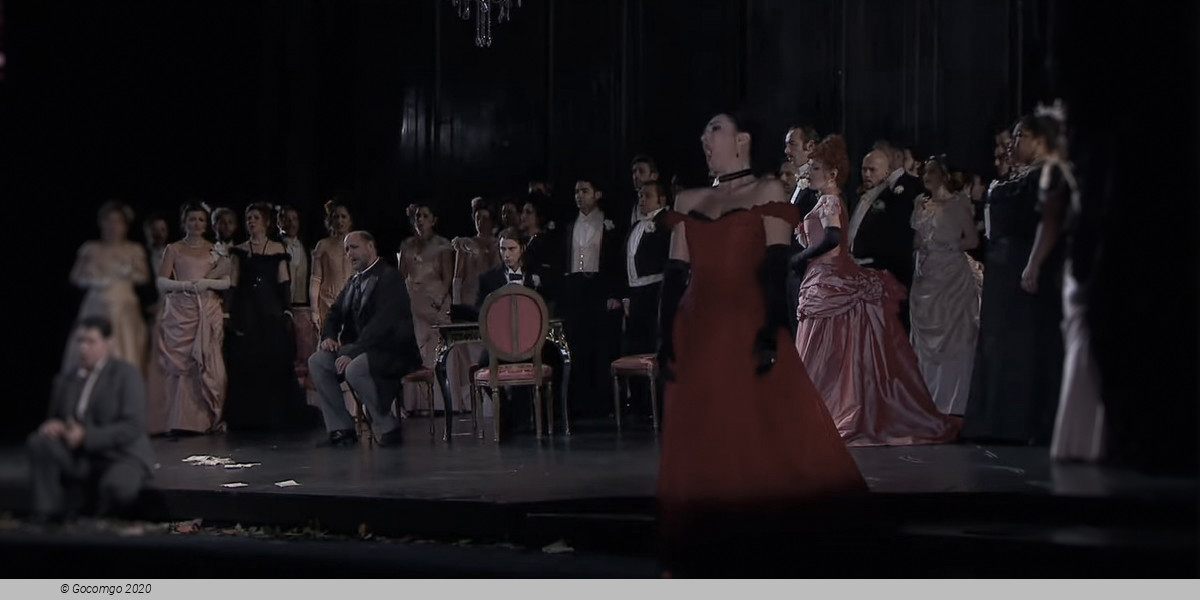
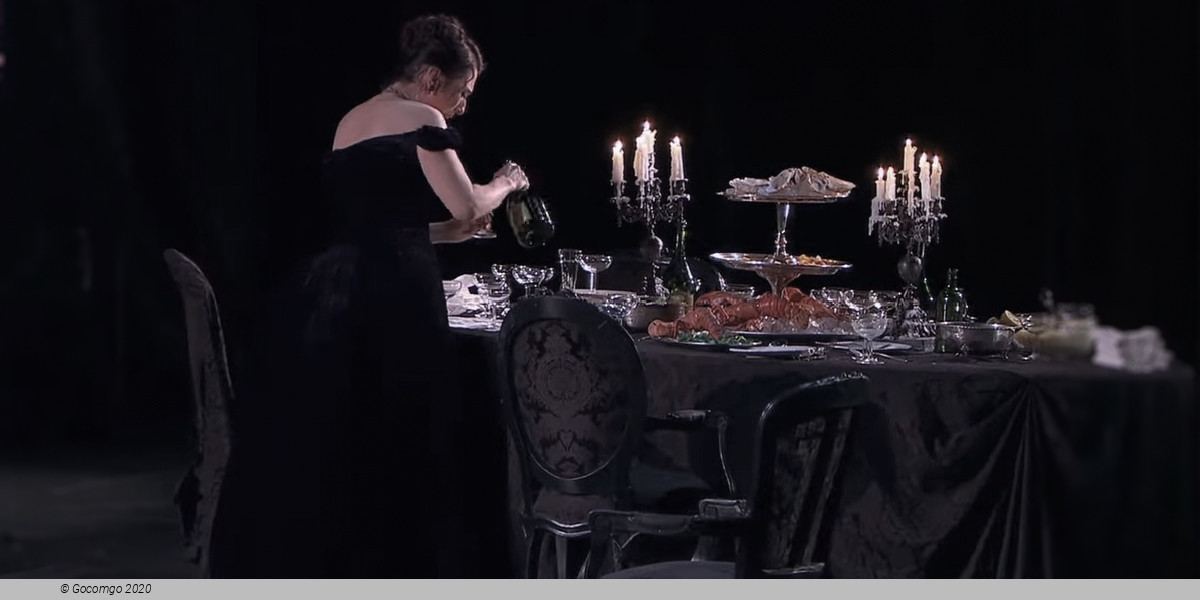
At the soirée, Flora hears from the Marchese that Violetta and Alfredo have parted. Flora asks the guests to make way for a visiting troupe of performing gypsies. They are followed by matadors and a song about Piquillo and his sweetheart. Alfredo rushes in and delivers some bitter comments about love and gambling. Violetta appears on the arm of Baron Douphol, who challenges Alfredo to a game of cards and loses a small fortune to him. As the guests go in to supper, Violetta asks to have a word with Alfredo in private. She is afraid the Baron will be enraged by his loss and urges Alfredo to leave. Alfredo misunderstands her and orders her to admit she loves the Baron. Disappointed by Alfredo’s reaction, Violetta lies and confesses that yes, she does. Alfredo calls the other guests to gather round in order to denounce his former beloved in public and throws the money he has won at her feet. Germont, arriving at that very moment, expresses his disapproval of his son’s behaviour. The guests likewise rebuke Alfredo and Douphol challenges him to a duel.

Act III

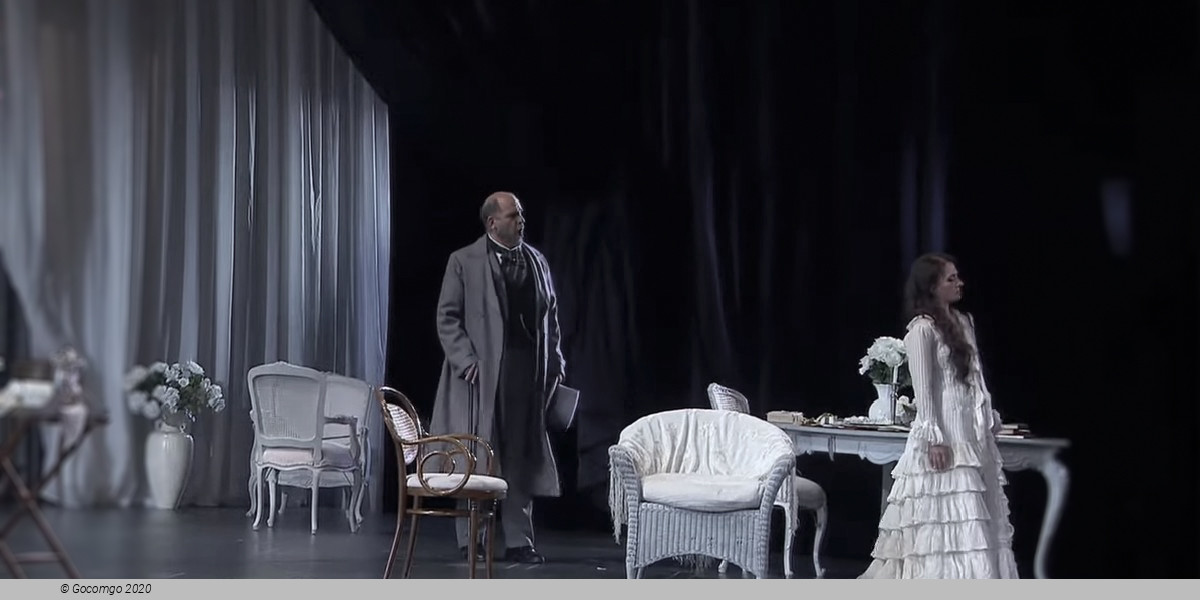
Violetta’s bedroom, six months later. Dr Grenvil tells Annina that her mistress has not long to live –
the consumption has taken its toll. Alone, Violetta rereads a letter from Germont saying that the Baron was only slightly wounded in his duel with Alfredo, that Alfredo has heard the truth and is
coming to beg her pardon. But Violetta realises it is too late. It is carnival time in Paris and, the sounds of the revellers having passed, Annina rushes in to announce Alfredo. The lovers ecstatically plan to leave Paris. Germont enters with the doctor just as Violetta rises from her bed with the last of her strength. Feeling a sudden rush of life, she sways and falls dead at her lover’s feet.

Venue Info

Teatro Regio di Parma - Parma
Location   Str. G. Garibaldi, 16 / a

The Teatro Regio di Parma is one of Italy’s most prestigious opera houses and a true sanctuary for lovers of Italian musical tradition. Located in the elegant historic center of Parma, this magnificent theatre has been at the heart of the city’s cultural life since its inauguration in 1829.

Commissioned by Duchess Marie Louise of Austria, the theatre embodies the refinement and grandeur of classic Italian opera architecture. Its richly decorated interiors, velvet-lined boxes, gilded balconies, and luminous chandelier create an atmosphere of timeless elegance, transporting audiences into the golden age of opera.

Teatro Regio is internationally renowned for its deep connection to the music of Giuseppe Verdi, who was born in the nearby town of Busseto. The theatre is considered one of the spiritual homes of Verdi’s works and hosts the celebrated Festival Verdi, attracting opera enthusiasts from around the world each season. Performances here are known for their passion, artistic integrity, and exceptionally discerning audiences, whose love for opera forms part of the theatre’s unique identity.

Beyond Verdi, the theatre presents a rich program of opera, ballet, concerts, and special cultural events, featuring internationally acclaimed singers, conductors, directors, and orchestras. Despite its historic prestige, Teatro Regio retains an intimate atmosphere where every performance feels emotionally immediate and deeply immersive.

Located near Parma’s charming piazzas, cafés, and historic landmarks, the theatre is an essential destination for cultural travelers exploring northern Italy.

Elegant, historic, and profoundly connected to the soul of Italian opera, Teatro Regio di Parma offers an unforgettable experience where tradition, artistry, and passion come together on one extraordinary stage.

Important Info
Type: Opera
City: Parma, Italy
Starts at: 20:00
Top of page