Vienna State Opera: Il tabarro Tickets | Event Dates & Schedule | GoComGo.com

Il tabarro Tickets

Vienna State Opera, Vienna, Austria
All photos (4)
1 / 4
Available Dates: 21 - 30 Jun, 2026 (4 events)
Important Info
Type: Opera
City: Vienna, Austria

E-tickets: Print at home or at the box office of the event if so specified. You will find more information in your booking confirmation email.

You can only select the category, and not the exact seats.
If you order 2 or 3 tickets: your seats will be next to each other.
If you order 4 or more tickets: your seats will be next to each other, or, if this is not possible, we will provide a combination of groups of seats (at least in pairs, for example 2+2 or 2+3).

Cast
Performers
Choose the date to see the peformers
Creators
Composer: Giacomo Puccini
Poet: Dante Alighieri
Librettist: Giovacchino Forzano
Librettist: Giuseppe Adami
Director: Tatjana Gürbaca
Overview

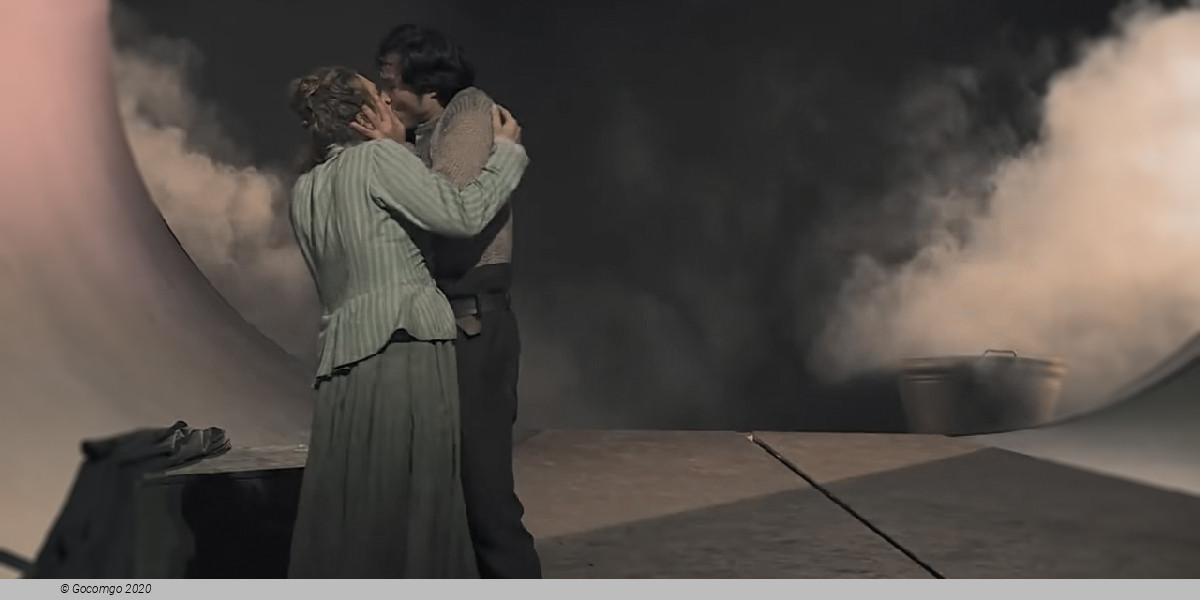
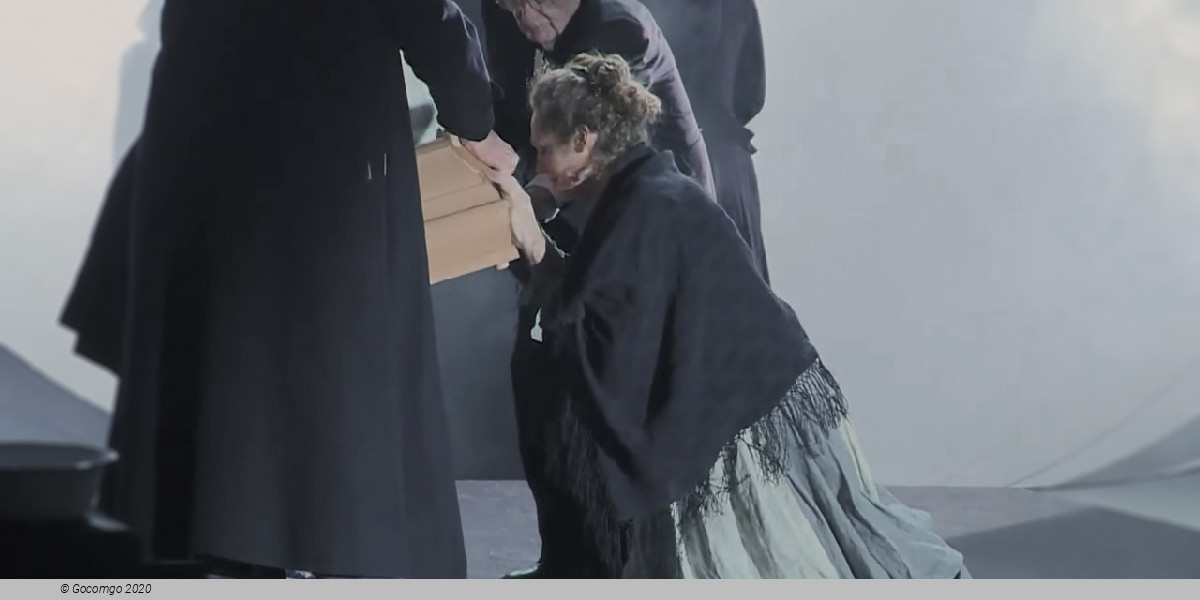
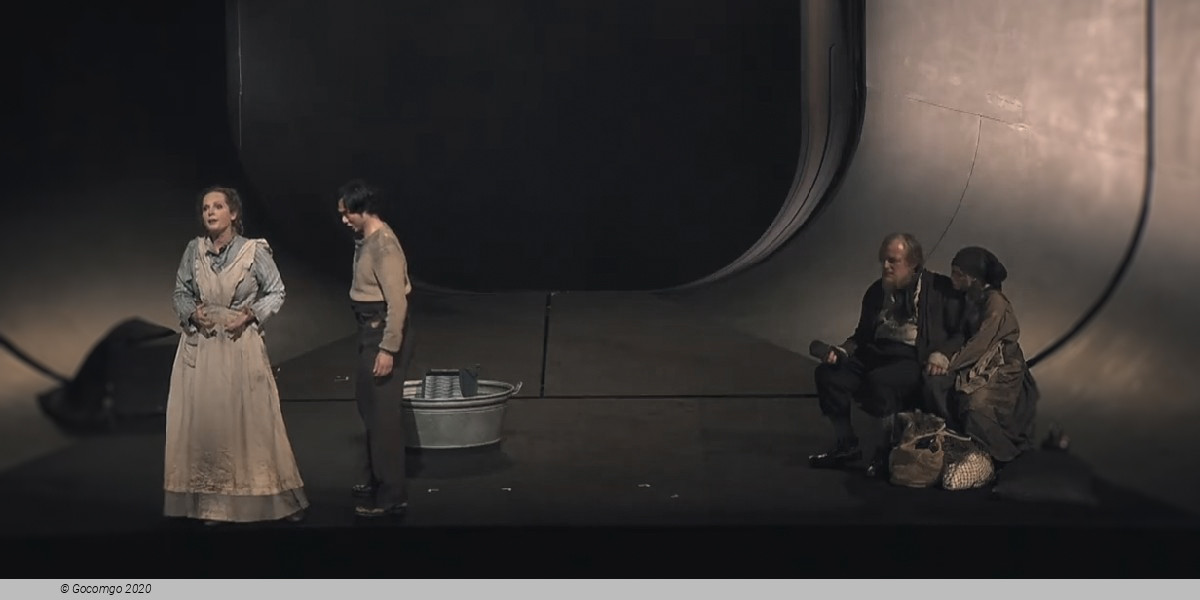
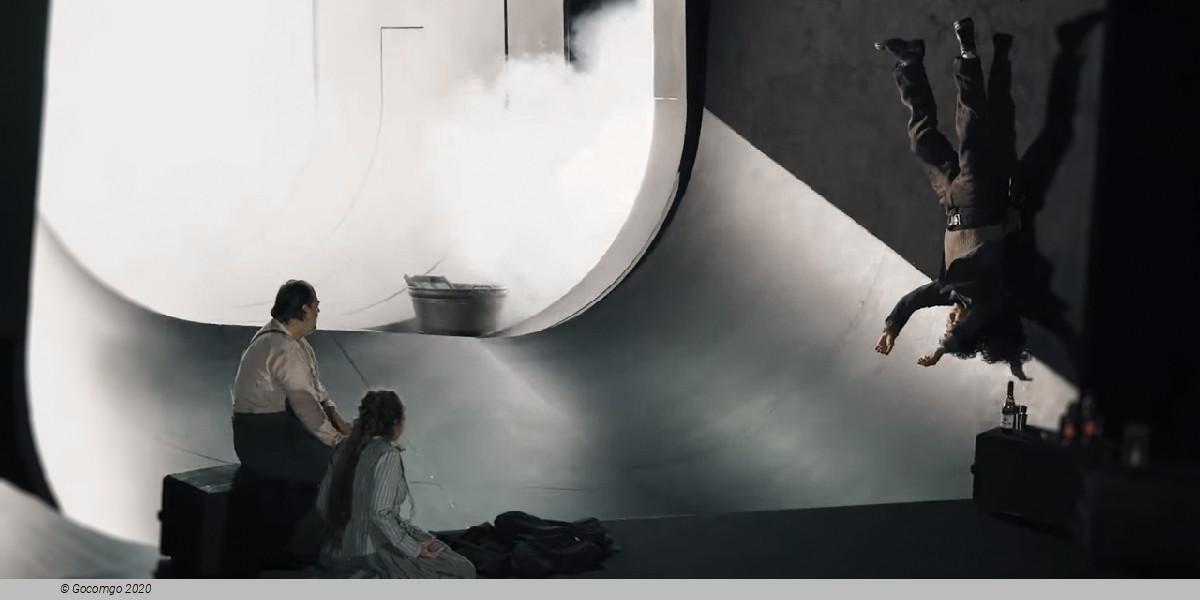
Il tabarro is a gloomy marital drama set in the milieu of Parisian boatmen on the Seine: Grief for their deceased child stands between the couple Michele and Giorgetta, Giorgetta's affair with the worker Luigi ends in tragedy.

History
Premiere of this production: 14 December 1918, Metropolitan Opera

Il tabarro (The Cloak) is an opera in one act by Giacomo Puccini to an Italian libretto by Giuseppe Adami, based on Didier Gold's play La houppelande. It is the first of the trio of operas known as Il trittico. The first performance was given on 14 December 1918 at the Metropolitan Opera in New York City.

Synopsis

Place: A barge on the Seine in Paris.
Time: 1910.

It is close to sundown in Paris, and the stevedores work unloading Michele's barge. Giorgetta, Michele's wife, asks her husband if she can bring wine to the workers. He agrees but does not join them because she refuses his kiss. The stevedores start dancing to the music of a nearby organ grinder and one of them steps on Giorgetta's foot. Luigi, a stevedore, dances with her, and it is evident that there is something between them. Upon hearing of Michele's return the stevedores' gathering breaks up.

Work is getting scarce and Giorgetta and Michele discuss which of the stevedores should be dismissed; she prefers that it be anyone other than Luigi despite him being Michele's first choice. Soon the conversation turns into a fight. La Frugola enters, looking for Talpa, her husband and one of the stevedores. She shows everyone the fruits of her scavenging in Paris and scolds the men for their drinking. Luigi laments his lot in life, and La Frugola sings of her wish to one day buy a house in the country where she and her husband can retire. Giorgetta and Luigi sing a duet about the town where they were both born.

The stevedores depart except for Luigi, who asks Michele to dismiss him and let him off in Rouen, but Michele convinces him against this, saying there is not enough work in Rouen. When they are alone, Giorgetta asks Luigi why he requested to be dismissed; the pair acknowledge their love. They plan to meet later that evening upon the signal of a match being lit on board. By now Luigi seems determined to kill Michele and flee with Giorgetta.

Michele later reminisces with Giorgetta of the days before their child died and how he could cover the two of them under his cloak. He is distressed about being twice her age; she comforts him but she still will not kiss him, and goes off.

Michele wonders aloud if Giorgetta is still faithful to him and ponders who might have changed her so much. He reviews the list of men who have shared in their lives but dismisses each of them as improbable. Michele lights his pipe and Luigi, seeing it from afar, thinks that it is Giorgetta's signal. He returns to the barge and is confronted by Michele. In the ensuing fight, Michele gets the upper hand and forces Luigi to confess his affair before killing him and hiding the body under his cloak. Giorgetta returns to the barge, feigning remorse, and Michele opens wide the cloak to reveal her dead lover.

Venue Info

Vienna State Opera - Vienna
Location   Opernring 2

The Vienna State Opera is one of the leading opera houses in the world. Its past is steeped in tradition. Its present is alive with richly varied performances and events. Each season, the schedule features 350 performances of more than 60 different operas and ballets. The members of the Vienna Philharmonic are recruited from the Vienna State Opera's orchestra. The building is also the home of the Vienna State Ballet, and it hosts the annual Vienna Opera Ball during the carnival season.

The 1,709-seat Renaissance Revival venue was the first major building on the Vienna Ring Road. It was built from 1861 to 1869 following plans by August Sicard von Sicardsburg and Eduard van der Nüll, and designs by Josef Hlávka. The opera house was inaugurated as the "Vienna Court Opera" (Wiener Hofoper) in the presence of Emperor Franz Joseph I and Empress Elisabeth of Austria. It became known by its current name after the establishment of the First Austrian Republic in 1921. The Vienna State Opera is the successor of the Vienna Court Opera, the original construction site chosen and paid for by Emperor Franz Joseph in 1861.

The opera house was the first major building on the Vienna Ringstrasse commissioned by the Viennese "city expansion fund". Work commenced on the house in 1861 and was completed in 1869, following plans drawn up by architects August Sicard von Sicardsburg and Eduard van der Nüll. It was built in the Neo-Renaissance style by the renowned Czech architect and contractor Josef Hlávka.

Gustav Mahler was one of the many conductors who have worked in Vienna. During his tenure (1897–1907), Mahler cultivated a new generation of singers, such as Anna Bahr-Mildenburg and Selma Kurz, and recruited a stage designer who replaced the lavish historical stage decors with sparse stage scenery corresponding to modernistic, Jugendstil tastes. Mahler also introduced the practice of dimming the lighting in the theatre during performances, which was initially not appreciated by the audience. However, Mahler's reforms were maintained by his successors.

Herbert von Karajan introduced the practice of performing operas exclusively in their original language instead of being translated into German. He also strengthened the ensemble and regular principal singers and introduced the policy of predominantly engaging guest singers. He began a collaboration with La Scala in Milan, in which both productions and orchestrations were shared. This created an opening for the prominent members of the Viennese ensemble to appear in Milan, especially to perform works by Wolfgang Amadeus Mozart and Richard Strauss.

Ballet companies merge

At the beginning of the 2005–2006 season, the ballet companies of the Staatsoper and the Vienna Volksoper were merged under the direction of Gyula Harangozó.

From the 2010–2011 season a new company was formed called Wiener Staatsballet, Vienna State Ballet, under the direction of former Paris Opera Ballet principal dancer Manuel Legris. Legris eliminated Harangozós's policy of presenting nothing but traditional narrative ballets with guest artists in the leading roles, concentrated on establishing a strong in-house ensemble and restored evenings of mixed bill programs, featuring works of George Balanchine, Jerome Robbins, Jiří Kylián, William Forsythe, and many contemporary choreographers, as well as a reduced schedule of the classic ballets.

Opera ball

For many decades, the opera house has been the venue of the Vienna Opera Ball. It is an internationally renowned event, which takes place annually on the last Thursday in Fasching. Those in attendance often include visitors from around the world, especially prominent names in business and politics. The opera ball receives media coverage from a range of outlets.

Important Info
Type: Opera
City: Vienna, Austria

E-tickets: Print at home or at the box office of the event if so specified. You will find more information in your booking confirmation email.

You can only select the category, and not the exact seats.
If you order 2 or 3 tickets: your seats will be next to each other.
If you order 4 or more tickets: your seats will be next to each other, or, if this is not possible, we will provide a combination of groups of seats (at least in pairs, for example 2+2 or 2+3).

From
$ 96
Top of page