Vienna State Opera: Suor Angelica Tickets | Event Dates & Schedule | GoComGo.com

Suor Angelica Tickets

Vienna State Opera, Vienna, Austria
All photos (6)
1 / 6
Available Dates: 21 - 30 Jun, 2026 (4 events)
Important Info
Type: Opera
City: Vienna, Austria

E-tickets: Print at home or at the box office of the event if so specified. You will find more information in your booking confirmation email.

You can only select the category, and not the exact seats.
If you order 2 or 3 tickets: your seats will be next to each other.
If you order 4 or more tickets: your seats will be next to each other, or, if this is not possible, we will provide a combination of groups of seats (at least in pairs, for example 2+2 or 2+3).

Cast
Performers
Choose the date to see the peformers
Creators
Composer: Giacomo Puccini
Poet: Dante Alighieri
Librettist: Giovacchino Forzano
Librettist: Giuseppe Adami
Director: Tatjana Gürbaca
Overview

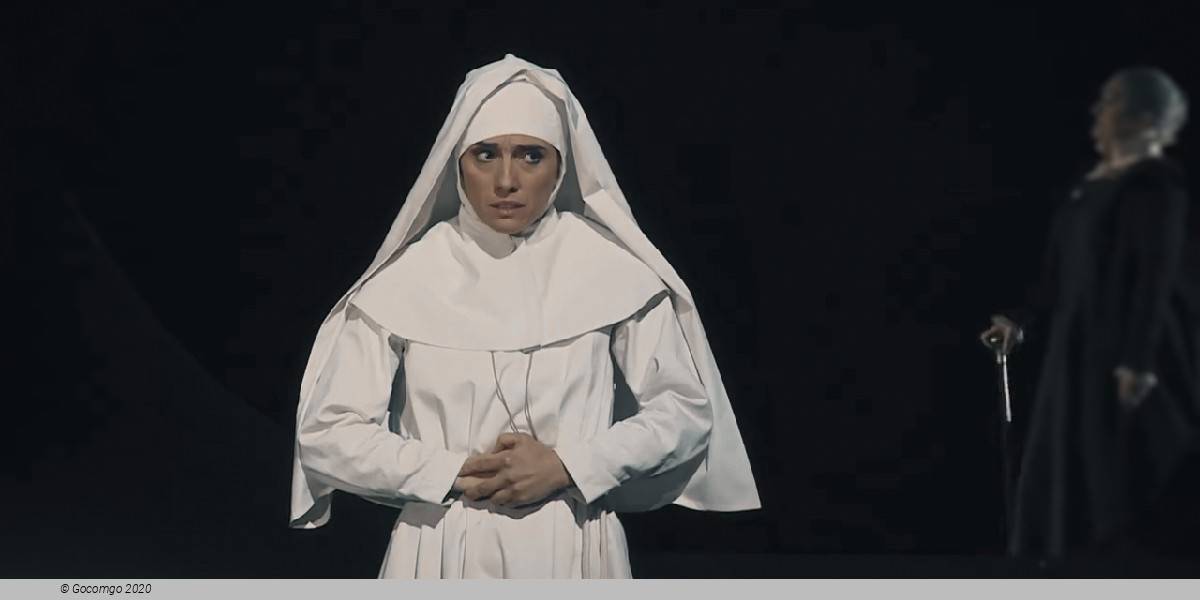
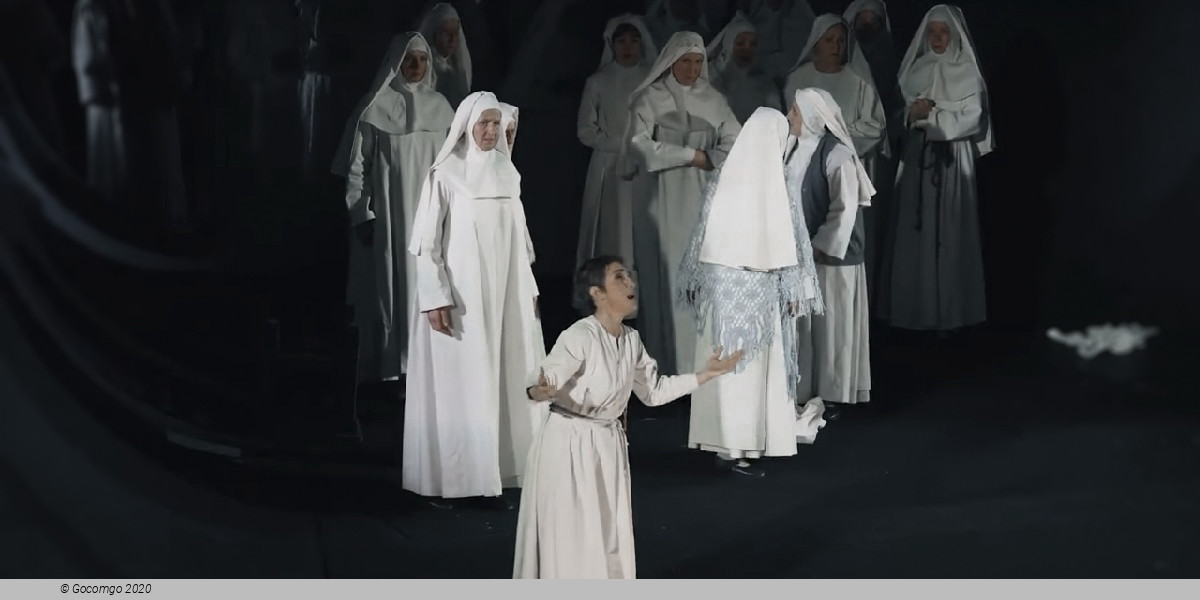
Suor Angelica, the "sentimental" story for which Giovacchino Forzano wrote the libretto, tells of the suffering of the eponymous nun, who draws her vitality from the memory of her son - the result of the "misstep" that brought her to this place - until she is robbed of this support.

History
Premiere of this production: 14 December 1918, Metropolitan Opera

Suor Angelica (Sister Angelica) is an opera in one act by Giacomo Puccini to an original Italian libretto by Giovacchino Forzano. It is the second opera of the trio of operas known as Il trittico (The Triptych). It received its world premiere at the Metropolitan Opera on December 14, 1918.

Synopsis

Place: A convent in Italy
Time: The latter part of the 17th century


The opera opens with scenes showing typical aspects of life in the convent – all the sisters sing hymns, the Monitor scolds two lay-sisters, everyone gathers for recreation in the courtyard. The sisters rejoice because, as the mistress of novices explains, this is the first of three evenings that occur each year when the setting sun strikes the fountain so as to turn its water golden. This event causes the sisters to remember Bianca Rosa, a sister who has died. Sister Genevieve suggests they pour some of the "golden" water onto her tomb.

The nuns discuss their desires. While the Monitor believes that any desire at all is wrong, Sister Genevieve confesses that she wishes to see lambs again because she used to be a shepherdess when she was a girl, and Sister Dolcina wishes for something good to eat. Sister Angelica claims to have no desires, but as soon as she says so, the nuns begin gossiping – Sister Angelica has lied, because her true desire is to hear from her wealthy, noble family, whom she has not heard from in seven years. Rumors are that she was sent to the convent in punishment.

The conversation is interrupted by the Infirmary Sister, who begs Sister Angelica to make a herbal remedy, her specialty. Two tourières arrive, bringing supplies to the convent, and news that a grand coach is waiting outside. Sister Angelica becomes nervous and upset, thinking rightly that someone in her family has come to visit her. The Abbess chastises Sister Angelica for her inappropriate excitement and announces the visitor, the Princess, Sister Angelica's aunt.

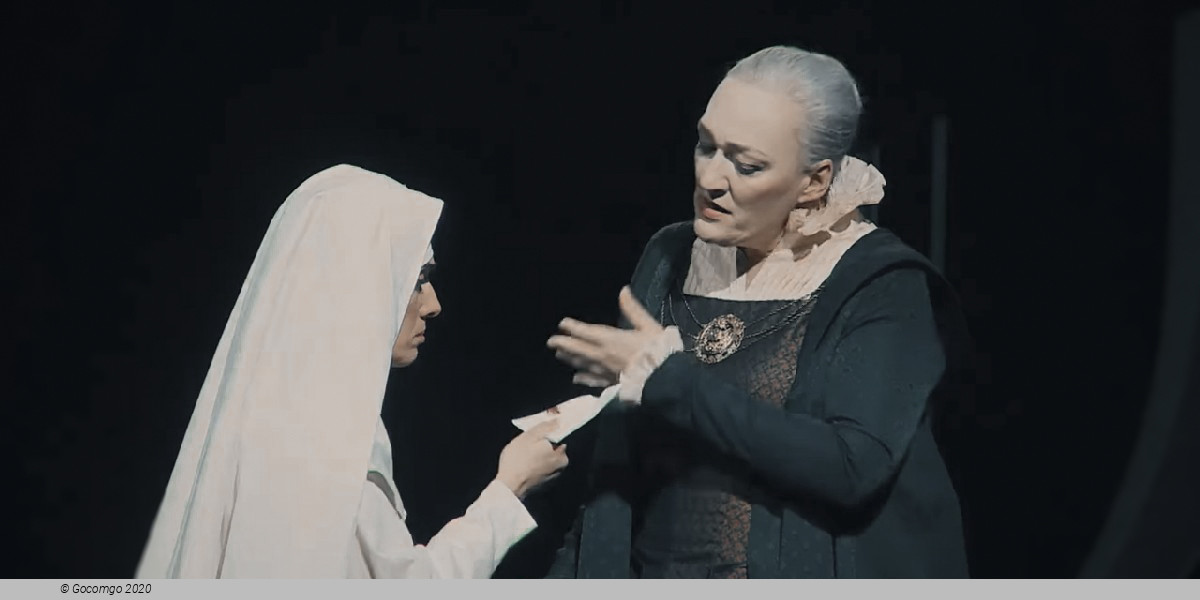
The Princess explains that Angelica's sister is to be married and that Angelica must sign a document renouncing her claim to her inheritance. Angelica replies that she has repented for her sin, but she cannot offer up everything in sacrifice to the Virgin – she cannot forget the memory of her illegitimate son, who was taken from her seven years ago. The Princess at first refuses to speak, but finally informs Sister Angelica that her son died of fever two years ago. Sister Angelica, devastated, signs the document and collapses in tears. The Princess leaves.

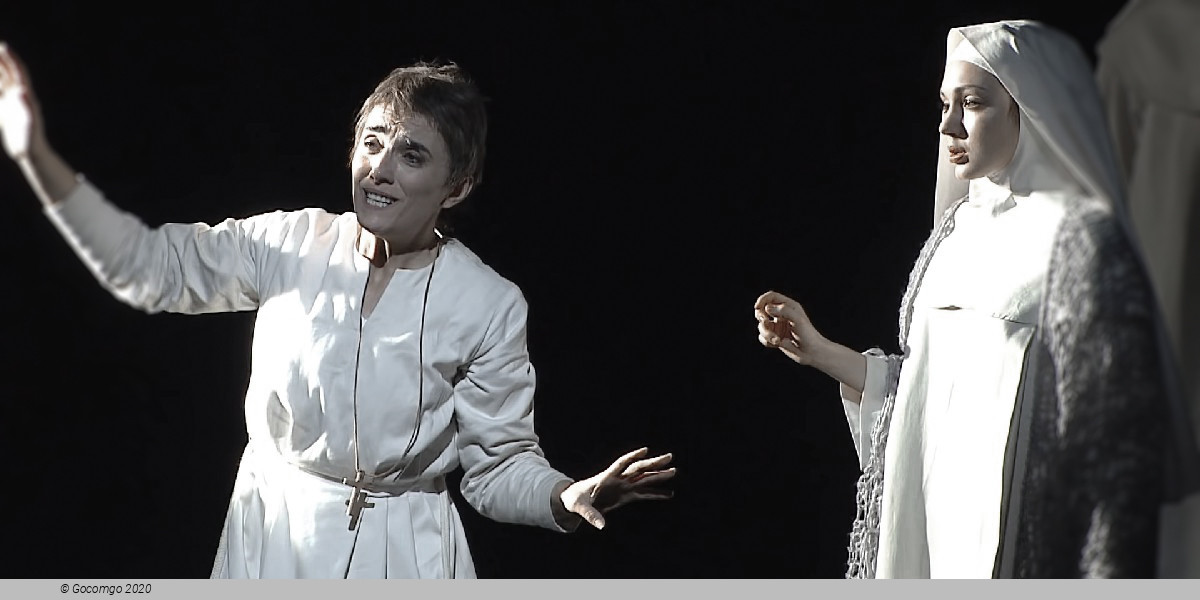
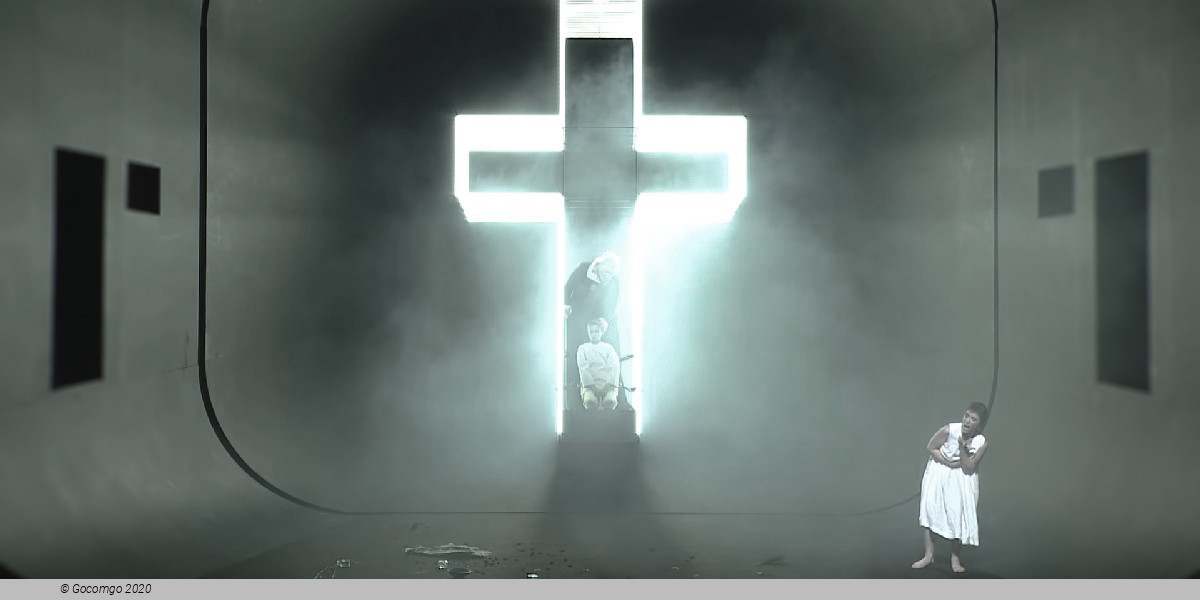
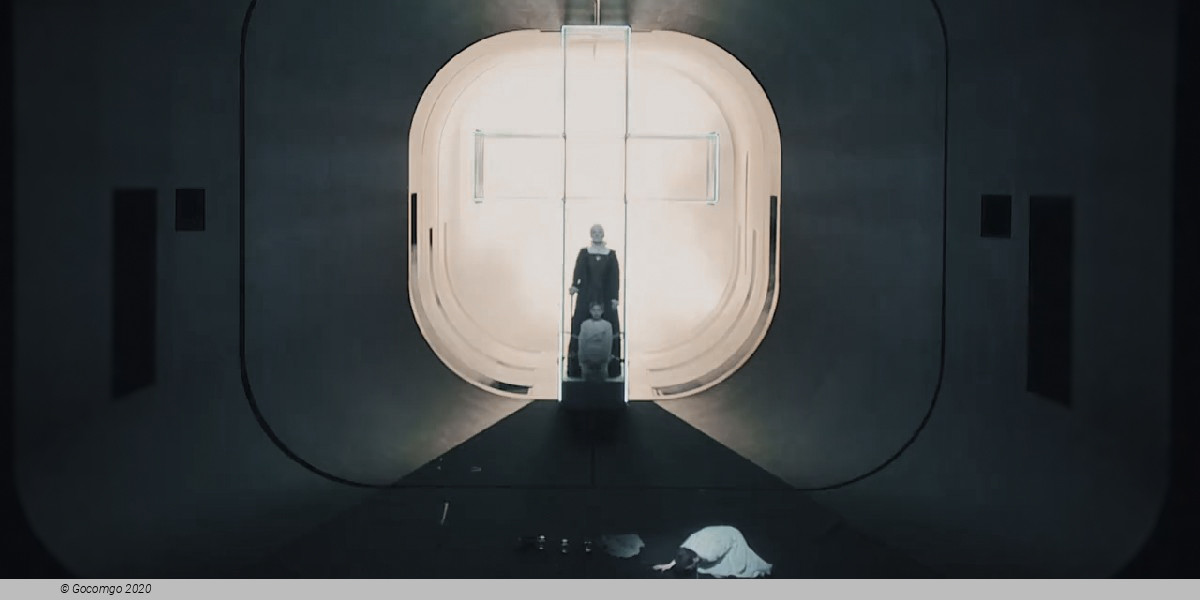
Sister Angelica is seized by a heavenly vision – she believes she hears her son calling for her to meet him in paradise. She makes a poison and drinks it, but realizes that in committing suicide, she has committed a mortal sin and has damned herself to eternal separation from her son. She begs the Virgin Mary for mercy and, as she dies, she sees a miracle: the Virgin Mary appears, along with Sister Angelica's son, who runs to embrace her.

Venue Info

Vienna State Opera - Vienna
Location   Opernring 2

The Vienna State Opera is one of the leading opera houses in the world. Its past is steeped in tradition. Its present is alive with richly varied performances and events. Each season, the schedule features 350 performances of more than 60 different operas and ballets. The members of the Vienna Philharmonic are recruited from the Vienna State Opera's orchestra. The building is also the home of the Vienna State Ballet, and it hosts the annual Vienna Opera Ball during the carnival season.

The 1,709-seat Renaissance Revival venue was the first major building on the Vienna Ring Road. It was built from 1861 to 1869 following plans by August Sicard von Sicardsburg and Eduard van der Nüll, and designs by Josef Hlávka. The opera house was inaugurated as the "Vienna Court Opera" (Wiener Hofoper) in the presence of Emperor Franz Joseph I and Empress Elisabeth of Austria. It became known by its current name after the establishment of the First Austrian Republic in 1921. The Vienna State Opera is the successor of the Vienna Court Opera, the original construction site chosen and paid for by Emperor Franz Joseph in 1861.

The opera house was the first major building on the Vienna Ringstrasse commissioned by the Viennese "city expansion fund". Work commenced on the house in 1861 and was completed in 1869, following plans drawn up by architects August Sicard von Sicardsburg and Eduard van der Nüll. It was built in the Neo-Renaissance style by the renowned Czech architect and contractor Josef Hlávka.

Gustav Mahler was one of the many conductors who have worked in Vienna. During his tenure (1897–1907), Mahler cultivated a new generation of singers, such as Anna Bahr-Mildenburg and Selma Kurz, and recruited a stage designer who replaced the lavish historical stage decors with sparse stage scenery corresponding to modernistic, Jugendstil tastes. Mahler also introduced the practice of dimming the lighting in the theatre during performances, which was initially not appreciated by the audience. However, Mahler's reforms were maintained by his successors.

Herbert von Karajan introduced the practice of performing operas exclusively in their original language instead of being translated into German. He also strengthened the ensemble and regular principal singers and introduced the policy of predominantly engaging guest singers. He began a collaboration with La Scala in Milan, in which both productions and orchestrations were shared. This created an opening for the prominent members of the Viennese ensemble to appear in Milan, especially to perform works by Wolfgang Amadeus Mozart and Richard Strauss.

Ballet companies merge

At the beginning of the 2005–2006 season, the ballet companies of the Staatsoper and the Vienna Volksoper were merged under the direction of Gyula Harangozó.

From the 2010–2011 season a new company was formed called Wiener Staatsballet, Vienna State Ballet, under the direction of former Paris Opera Ballet principal dancer Manuel Legris. Legris eliminated Harangozós's policy of presenting nothing but traditional narrative ballets with guest artists in the leading roles, concentrated on establishing a strong in-house ensemble and restored evenings of mixed bill programs, featuring works of George Balanchine, Jerome Robbins, Jiří Kylián, William Forsythe, and many contemporary choreographers, as well as a reduced schedule of the classic ballets.

Opera ball

For many decades, the opera house has been the venue of the Vienna Opera Ball. It is an internationally renowned event, which takes place annually on the last Thursday in Fasching. Those in attendance often include visitors from around the world, especially prominent names in business and politics. The opera ball receives media coverage from a range of outlets.

Important Info
Type: Opera
City: Vienna, Austria

E-tickets: Print at home or at the box office of the event if so specified. You will find more information in your booking confirmation email.

You can only select the category, and not the exact seats.
If you order 2 or 3 tickets: your seats will be next to each other.
If you order 4 or more tickets: your seats will be next to each other, or, if this is not possible, we will provide a combination of groups of seats (at least in pairs, for example 2+2 or 2+3).

From
$ 96
Top of page