



About
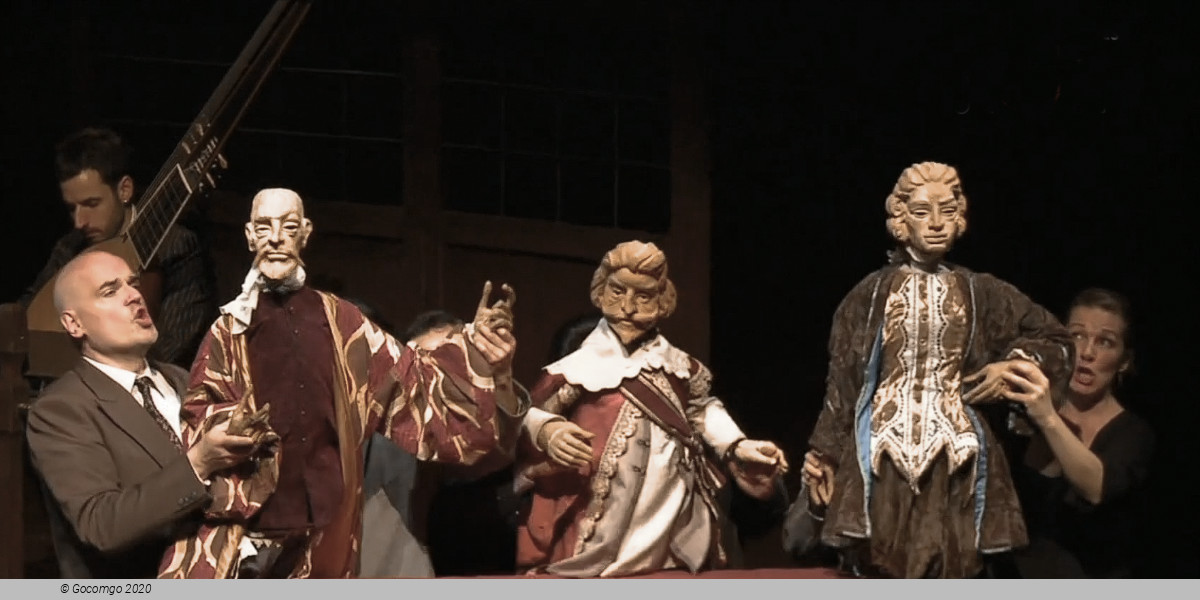
The eighteenth century, to its decline, had already consecrated the success and fortune of marionettes in Milan. And not only for the ancient masks of the Commedia dell'Arte but, above all, for a new curious character particularly appreciated by the Milanese public: Gerolamo della Crina. The uncertain news about his birth, partly real and in fantastic parts as for all the characters that have become a myth, want him to come from a town in the Asti area, Caglianetto, towards the first half of the seventeenth century, and entertainer of a vast public on squares of small towns and villages. In the eighteenth century he was the absolute protagonist of the performances of the puppeteer Sales who caused not a few troubles for the homonymy with some characters in flesh and blood who boasted noble prosapies and illustrious relatives. In Genoa, in fact, the Sales was invited to leave the city because it was not pleasing to the Doge Gerolamo Durazzo that a puppet, always ready to throw arrows at the powerful and to wink to the public on human affairs, would bear his own name.
Moving to Turin, the puppeteer and his famous puppet found an equally hostile reception; in an epoch of French domination it was not appreciated that in Borgo Doragrossa the public crowded happily to watch the semi-serious drama with the unequivocal title "Artabanus universal tyrant, with Gerolamo his faithful squire". The clear allusion to Napoleon Bonaparte, future emperor, and to his brother Giuseppe, offered the right hand to the police officials to expel puppets and puppeteers.
The city of Milan, on the other hand, received with warm cordiality this funny wooden figure who wore a dark red livery of an eighteenth-century cut, with a white knotted tie, halfway between a neckerchief for country use and a neglected floated at the Vallière, she wore red stockings and shoes with a large buckle, wore a light-filled hat of clear fashion in her head and spoke a language that reminded the Milanese spectators of a free and independent land: Piedmont. He moved and squirmed on the stage, he put his hands on his hips, turning his head now towards his interlocutors now towards the audience and downing on the scene a quintino of good wine that a small tank concealed in the upper cavity of the body returned, once the canvas
Who gave life to the character this time was the puppeteer Giuseppe Fiando who presented his shows first in a place located in Piazza del Duomo at the Albergo del Dazio Grande and then in a building in Piazza dei Tribunali, today's Via area Mercanti.
A painting by Angelo Inganni, depicting the Piazza del Duomo in Milan on the side of the Loggia dei Mercanti, shows the "bridge" (thus, in ancient times, they were called the illustrated posters of puppet shows, divided into "quarters" that presented the highlights of the 'stage action' bearing the notice of a performance by the Teatro Fiando called Gerolamo, based on a crime story that occurred in the Netherlands: "The Moon on March 13 with Gerolamo, defense lawyer".
The ability of Fiando and the richness of his shows collected, over the years, great success and acclaimed fame to the point that with a decree of March 24, 1807 he was granted the Oratory of Bellarmino located in Piazza Cesare Beccaria where today the monument of the illustrious statesman to whom the Milanese named the square.
The restaurant was transformed into a theatrical hall by the Canonica, a pupil of Piermarini and the facade entrusted to Tazzini. It must be said that in the city of Milan there were many puppet theaters and all very popular as the Lentasio, the Sant'Antonio, the Santa Redegonda and the puppeteers who acted there or acted there were very illustrious as the King, the Nardi who presented the character of Gianduja, and the Macchi. But the repertoire of Giuseppe Fiando was able to withstand so much competition (including a mechanical theater at Porta Orientale) also for the punctual insistence with which he forwarded a request to the city authorities to host various kinds of shows in his restaurant. The marionette repertoire was however of great attraction not only for the variety but, above all, for the constant attention of our marionettist to the shows that triumphed on the stages of the city: the dramas and the tragedies presented by the actors in flesh and bones (just think of the " Themistocles "by Metastasio or to" Alvaros hand of blood "workhorse of the famous Bon), the great dances signed by the famous choreographers and dancers of the Teatro alla Scala as" Prometeo "or" Il noce di Benevento ", Carlo's fairy tales Gozzi "The blue monster" and "The queen serpent", the reductions of the great novels like "Robinson Crusoe", the numerous comedies performed by the masks of the Commedia dell'Arte and the great melodramas with orchestras (Giovanni Ricordi played the violin at the Gerolamo) and live singers. In the second half of the century the City Council decided the fate of Fiando and its theater: the demolition of the buildings Fiando, Daverio, Mevola, Carretti.
But only after two years on the Piazza del Palazzo di Giustizia a new theater for puppets was built: drawing by Paolo Ambrosini Spinella, builders Rivolta and Pellini, the two masters who oversaw the building of the Galleria Vittorio Emanuele on a project by Mengoni. The new building is defined by an elegant chronicler of the time for the columns, the iron beams, the decorations in gilded stucco and the ornament in flowers of the vault. Two years after its inauguration, the dialect theater, which for some time alternated with puppet shows until 1871, began in the Sala del Gerolamo, when they were the masters of a space built to their size and size. Only sporadically the dialect companies will return to the Jerome. The Fiare Company, directed by the widow of the famous puppeteer, presents a rich program, alternating the shooting of highly successful shows with new productions. Of particular interest in these years are the theatrical magazines, imported from Paris, which see Gerolamo and Meneghino as protagonists of contemporary events. Of particular interest are the magazines of 1897 and 1898; the latter, in the final picture, presented the protagonists of the Risorgimento intent on playing cards disturbed by the Pedreterno, intent on sending someone on earth who would bring a bit of disarray.
After a decade the Fiando family abandons the Theater which, from that moment entrusted to an impresario, will host the most famous marionettist formations of the moment: the Company Zane, who will return to the favored room of Piazza Beccaria on several occasions, with great success until triumph due to messainscena of the "Excelsior" dance; the Company of Antonio Colla (the eldest of the progenitor Giuseppe's sons) who, in different seasons, presented shows such as "Guarany" and "Dogali" forcing the authorities to intervene for fear of renewed popular agitations against colonial politics; and the Compagnia Gorno dell'Acqua.
In 1906 the impresario Gittardi who directed the Gerolamo, rather discontented for the last experiences lived with the marionettiche companies, had decided not to entertain more actors of wood. But when he went to Vigevano to attend "Pietro Micca", a performance by the Carlo Colla and Figli Company, he hired those puppeteers for that and other seasons. Thus the Company Carlo Colla e Figli made its entrance to the Teatro Gerolamo in Milan, where it will remain until 1957, taking over the management of the Piazza Beccaria hall from 1911 onwards. But to learn about the history of Colla we need to walk backwards for almost a century.
A few steps from the Duomo, between the Corsia dei Servi and Piazza Beccaria, stood the San Martino alley. Here, between the late eighteenth and early nineteenth centuries, there was the palace of Giovanbattista Colla, a wealthy merchant who owned a resale of wood, coal and fodder ("sostra" was the name given to these buildings), supplier first of the Imperial Austrian Army and then of the Armies of the French invaders.
In 1805 he baptized in the church of Santa Maria at the Corsia dei Servi, today San Carlo, his son Carlo Gaspare Gioachino, known as Giuseppe, "Compadre the Lord D. Gioachino Valcharzer Cordoba son of the late D. Pietro of the Parish of San Sepolcro", as attests the baptismal certificate found in the parish archive signed by the Curato Borroni.
The high-sounding name of the godfather emphasizes the good-natured friendships, the same ones that, very probably, crowded the halls of the Colla house and witnessed the puppet shows that were held there for pleasure. The Colla, in fact, according to the use of time, had used one of the halls of the palace to give you a show by having a puppet theater built with sets and characters about 40 centimeters tall.
The puppet show in the home theater was a fad common to the aristocratic and bourgeois families, as Goethe attests, whose boy Guglielmo Maister attends the paternal grandmother's house, in the enchanted Christmas atmosphere, to the spectacle of Davide against the giant Goliath. Carlo Goldoni as an adolescent, in the delights of Wipack, guest of the Counts Lantieri, performs as a puppeteer using a theater with rich decorations with changes of sumptuous sets, representing "Lo sternuto d'Ercole" on verses by Martelli and music by Hasse. The precious theatrical materials of Casa Borromeo on Isola Madre, built by renowned and illustrious artists, are a rare and rich document of this custom.
Certainly no one in the Colla family would have ever imagined that private recreation could give rise to true and proper puppet training. It was in fact a reversal of fortune due to the very stormy times, to the sudden changes of master, which forced the Colla family to leave Milan and seek refuge elsewhere.
There is no news of what happened in the years that immediately followed the purges that took place after the Congress of Vienna for those who had had relations with the French, nor of the peregrinations to which the family was forced after leaving the Lombard capital. Only from 6 March 1835, while the Company was holding shows in the "piazza" of Borgo Vercelli, were the movements of the formation in the various towns and cities of Piedmont written down on a ledger, the works represented, the collections and the expenses incurred. This is the date by which the Colla family's professional activity, led by Giuseppe Colla, now in his thirties, is officially indicated.
It is curious to note that the repertoire of this period has very little in common with that of the other companies. The titles of shows such as "The prisons of Lambergher", "The coming of the Antichrist", "The mock creditor", "The sacrifice of the Virgins", "The misunderstandings in confusion" are not reflected by other marionettist formations. We can think that there was a production of its own or that the Colla drew on totally foreign sources from the big cities but closer to the tradition of the people and inspired by a much more genuine and immediate concept of theater. This hypothesis is amply confirmed by the protagonist of the shows, the Famiola mask, unknown to the marionette companies that in those years and in the following ones, at least until 1861, gave shows in the different regions of northern Italy.
Famiola was the name derived from the translation of the Piedmontese expression "J l'ai fam" (I am hungry) that the singular character pronounced arising from an enormous egg that stood out at the center of the scene; a scenic game common to the characters born from the popular imagination since in July 1806, in Milan, the Fiando represented the comedy "The poor superb and the rich ignorant with Gerolamo born from the egg". A century later, and precisely in April 1908, the puppeteer Campogalliani presented the show "Fasolino that is born and dies from the egg" to the Milanese public.
Famiola wore trousers, a vest and a red cloth jacket with white edging, red and white striped stockings, black shoes with an eighteenth-century buckle, a black wig with a small tail held up by a red ribbon, a red zucchini on her head and a striking green neck butterfly, set of colors that should not have gone unnoticed in Piedmontese territory!
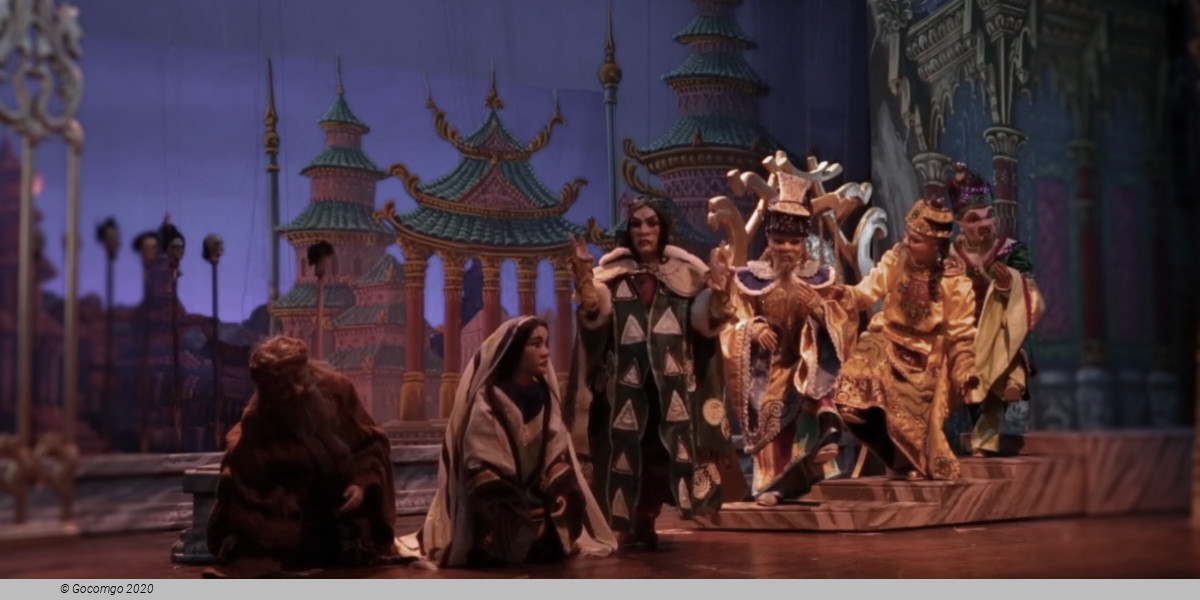
In those years in which the history of Italy, and in particular of Piedmont, was preparing for important events, the activity continued with the same rhythm respecting the same itineraries in the choice of "squares" that, without a real theater and just, without the possibility of hosting actors and singers in the flesh, they began to welcome with particular sympathy the marionette companies of passage (and this of the Colla in particular), to get excited about the adventures of Famiola, a deaf-mute fake buffoon to help a persecuted master unjustly or naively interlocutor of an angry Sultan, in the attempt to reunite lovers separated by ineluctable destiny.
To the interest for the repertory comedies, which preceded dances with historical background as "The fire of Moscow" or to mythological background like "Pluto" and "Minerva", the fervor was added moved of the new times when the Company Colla introduced itself with the show "La battaglia di Palestro".
It had happened that Giuseppe Colla, at the end of May 1859, had found himself in the middle of the battle of Palestro and had in the distance witnessed the clash between the Piedmontese and the Austrians, working validly with the population. And of course the public triumphantly received the show which showed events of which only a confused echo had come.